
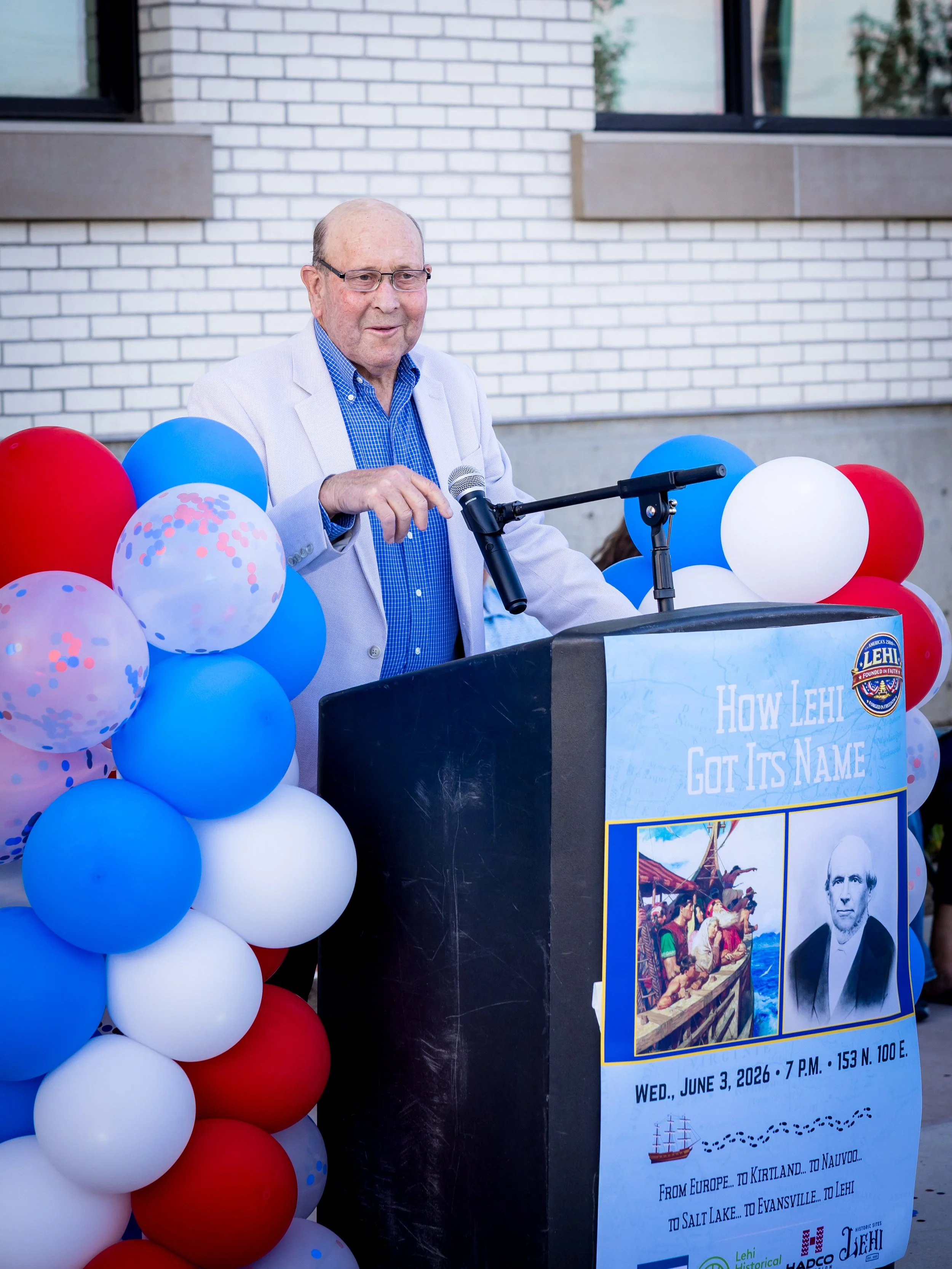
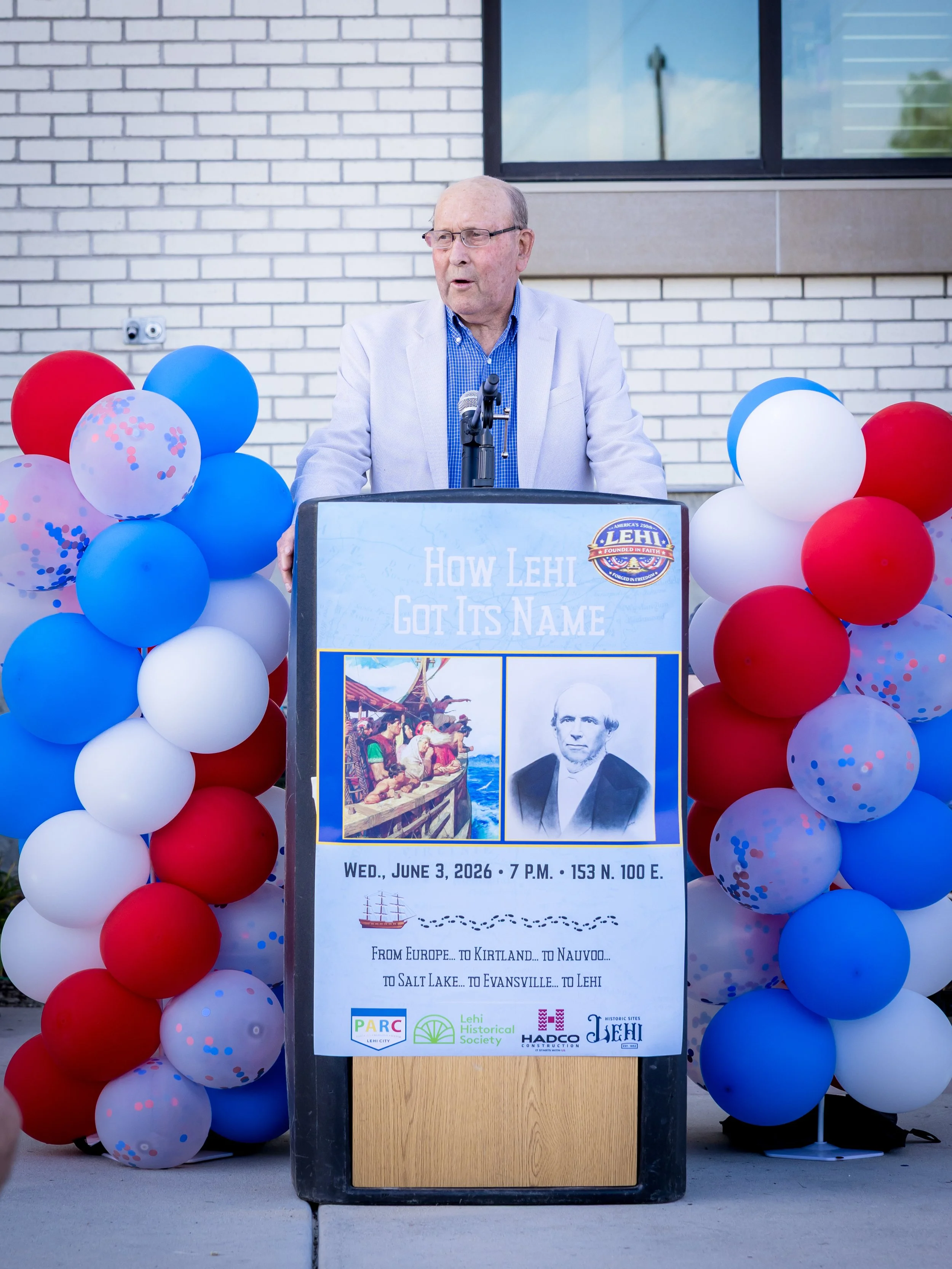
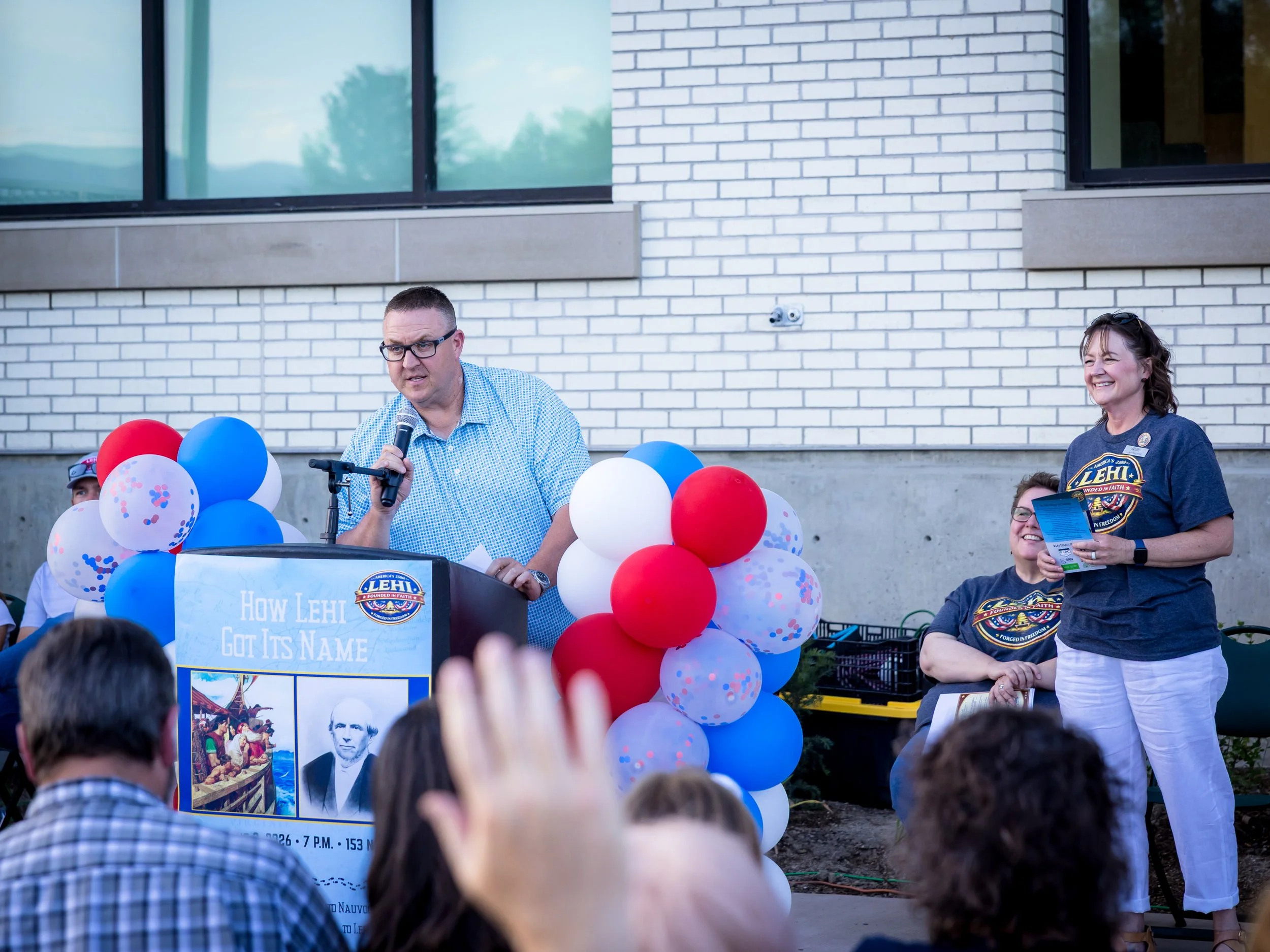
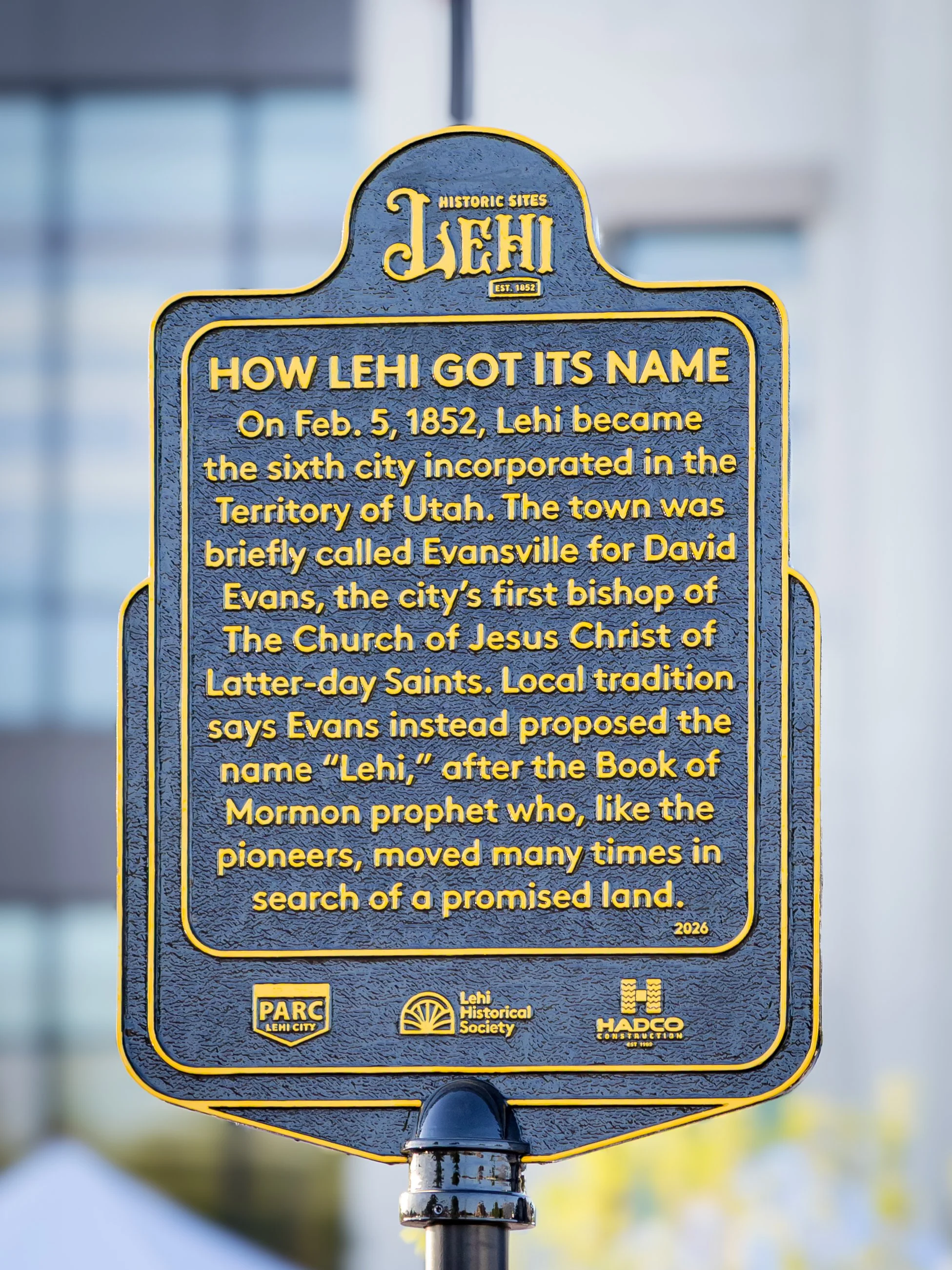
How Lehi Got Its Name
Feb. 5, 1852
153 North 100 East Lehi, Utah
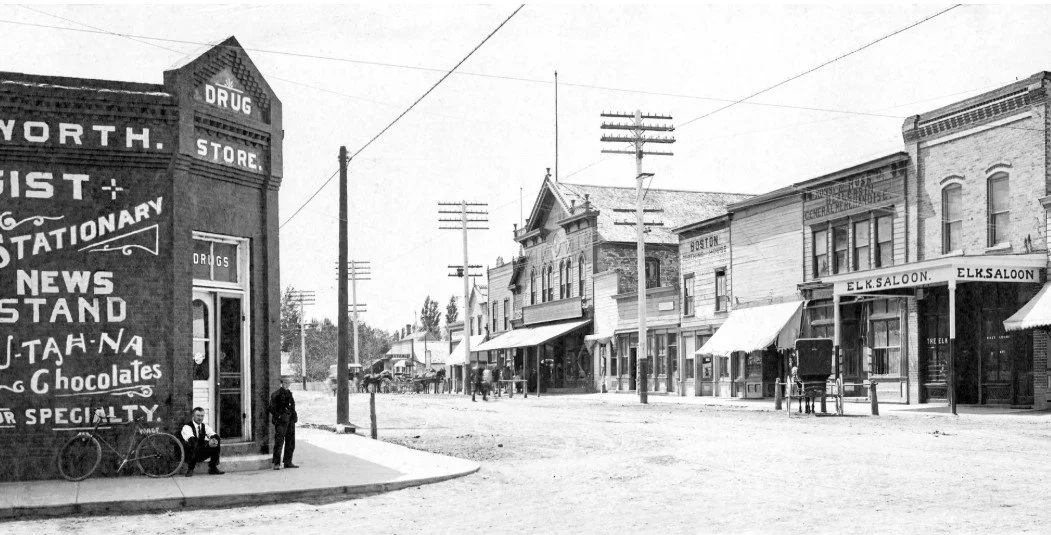
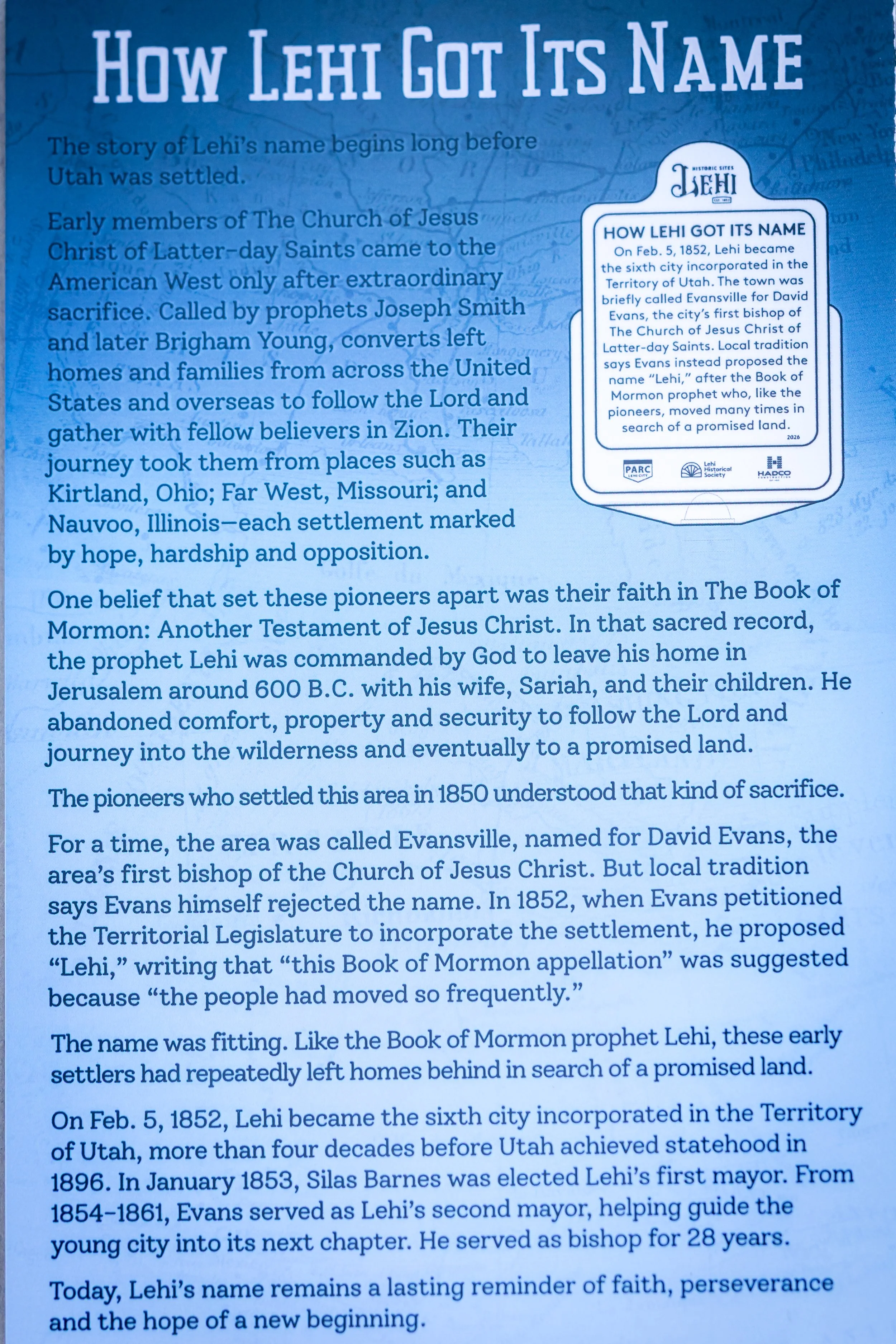
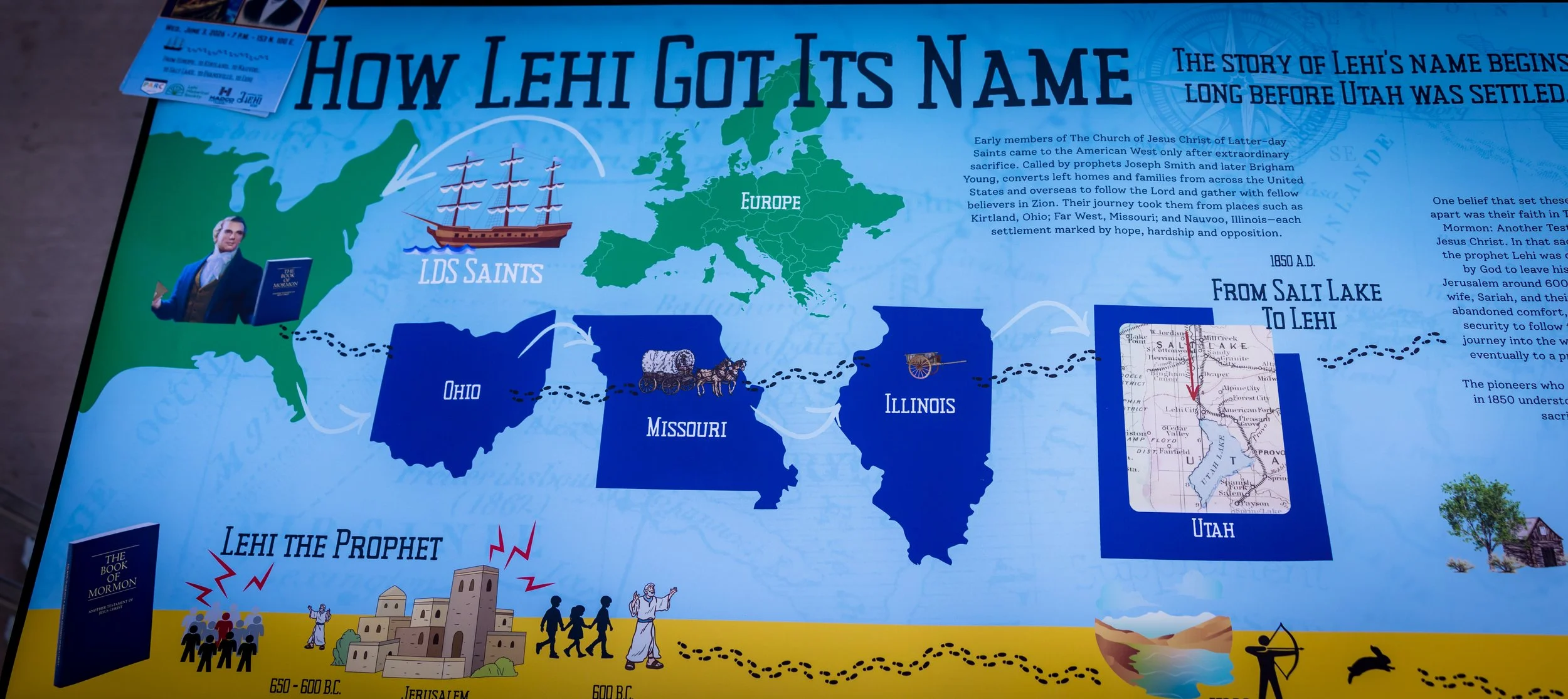
The story of Lehi’s name begins long before Utah was settled.
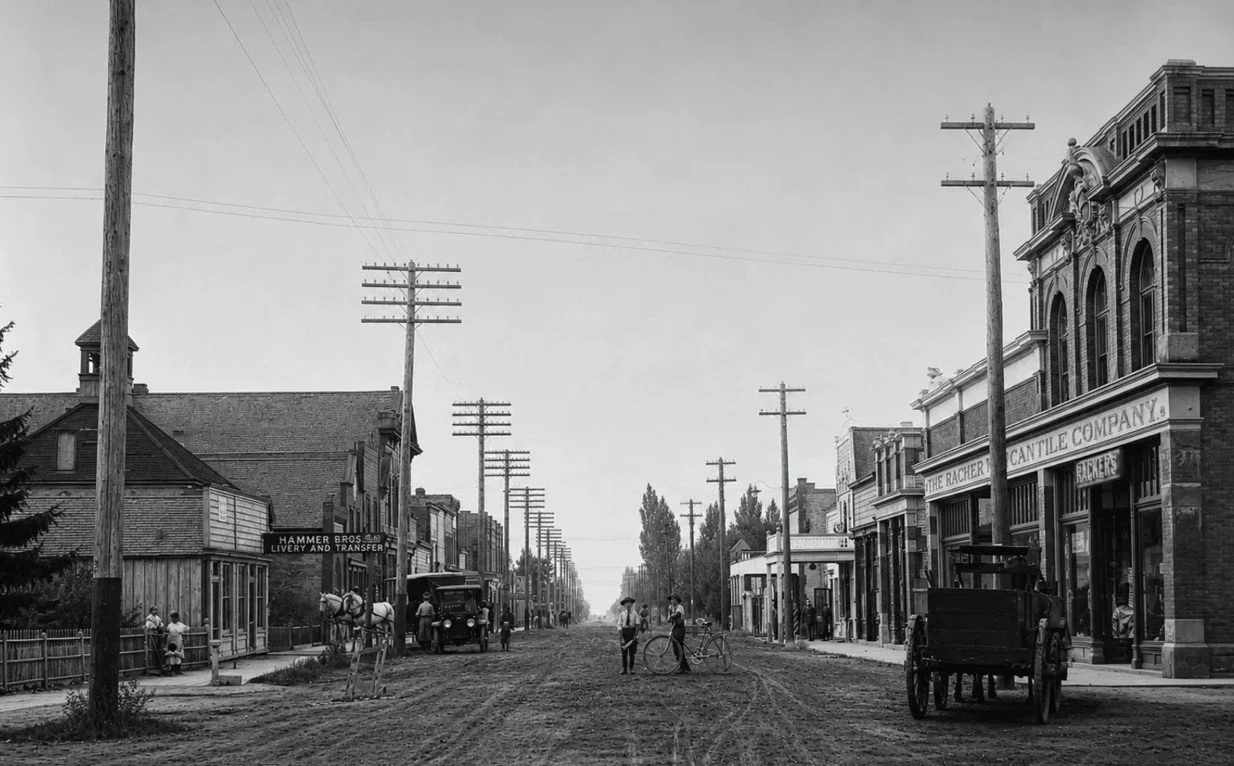
What’s In a Name?
Early members of The Church of Jesus Christ of Latter-day Saints came to the American West only after extraordinary sacrifice. Called by prophets Joseph Smith and later Brigham Young, converts left homes and families from across the United States and overseas to follow the Lord and gather with fellow believers in Zion. Their journey took them from places such as Kirtland, Ohio; Far West, Missouri; and Nauvoo, Illinois—each settlement marked by hope, hardship and opposition.
One belief that set these pioneers apart was their faith in The Book of Mormon: Another Testament of Jesus Christ. In that sacred record, the prophet Lehi was commanded by God to leave his home in Jerusalem around 600 B.C. with his wife, Sariah, and their children. He abandoned comfort, property and security to follow the Lord and journey into the wilderness and eventually to a promised land.
The pioneers who settled this area in 1850 understood that kind of sacrifice.
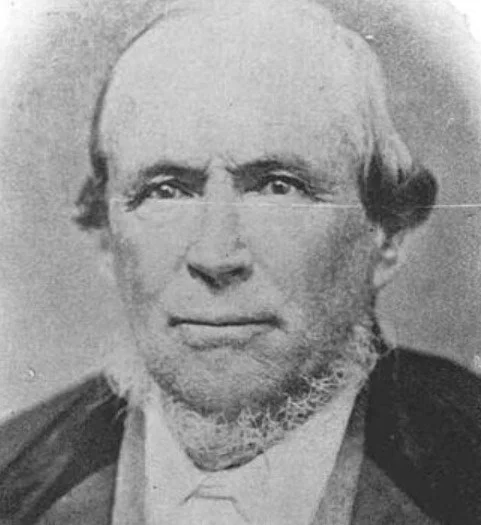
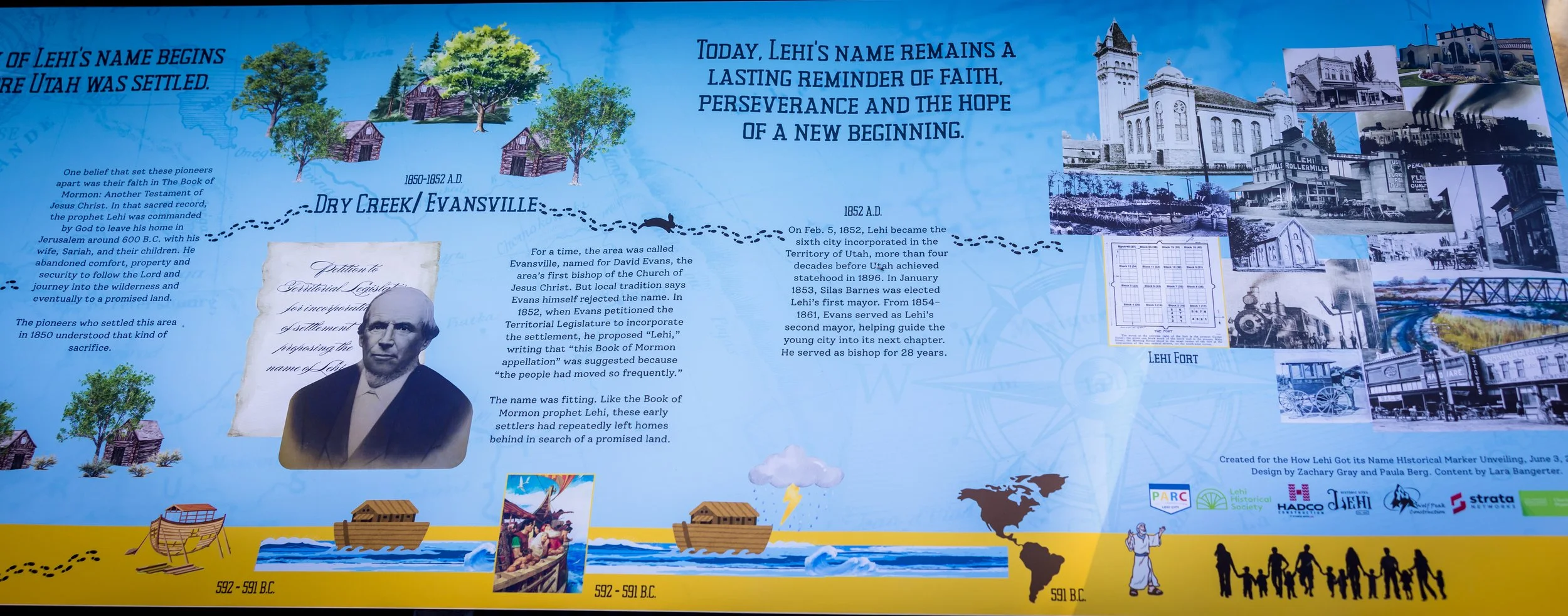
For a time, the area was called Evansville, named for David Evans, the area’s first bishop of the Church of Jesus Christ. But local tradition says Evans himself rejected the name. In 1852, when Evans petitioned the Territorial Legislature to incorporate the settlement, he proposed “Lehi,” writing that “this Book of Mormon appellation” was suggested because “the people had moved so frequently.”
The name was fitting. Like the Book of Mormon prophet Lehi, these early settlers had repeatedly left homes behind in search of a promised land.
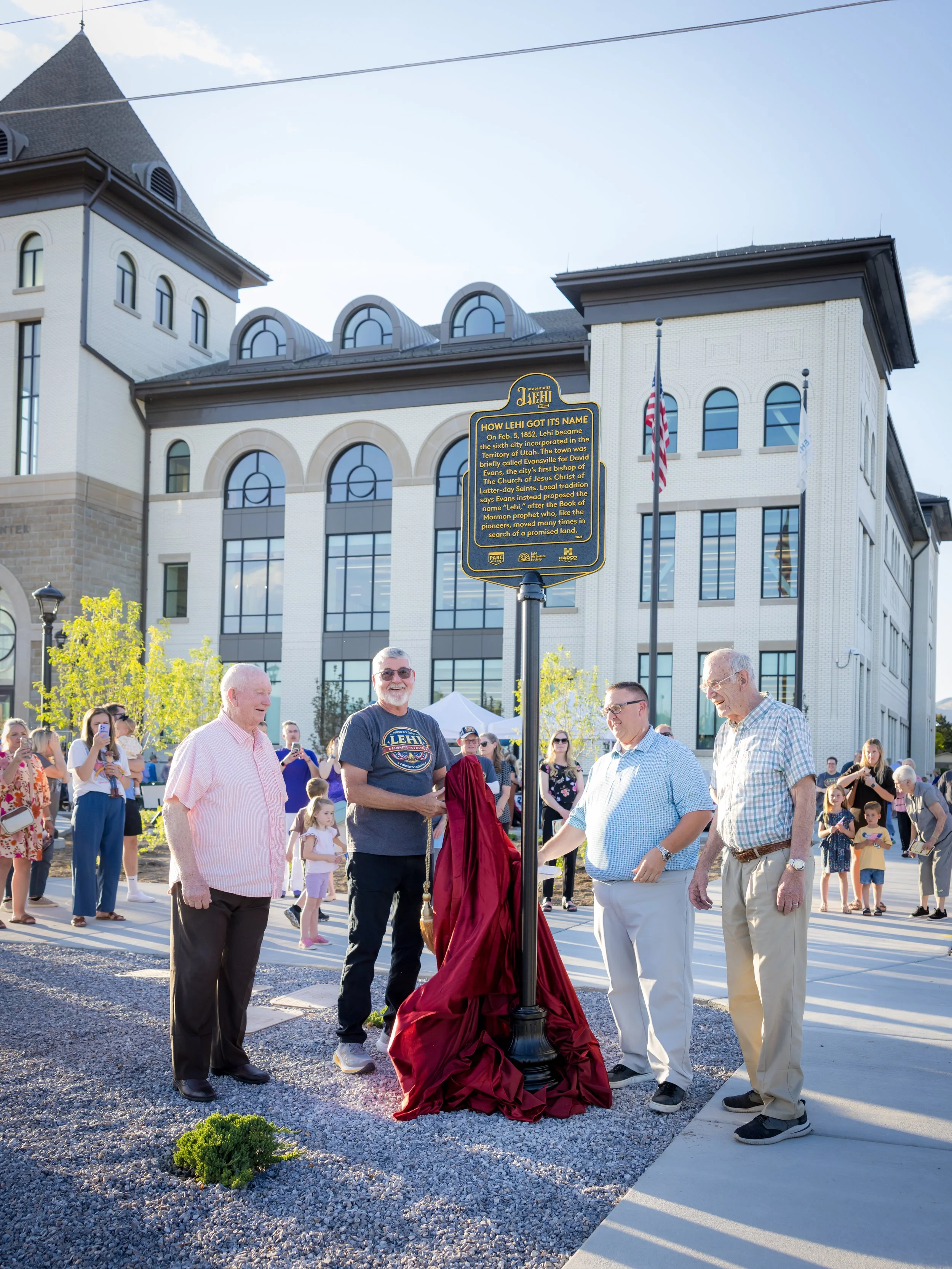
On Feb. 5, 1852, Lehi became the sixth city incorporated in the Territory of Utah, more than four decades before Utah achieved statehood in 1896. In January 1853, Silas Barnes was elected Lehi’s first mayor. From 1854-1861, Evans served as Lehi’s second mayor, helping guide the young city into its next chapter. He served as bishop for 28 years.
Today, Lehi’s name remains a lasting reminder of faith, perseverance and the hope of a new beginning.
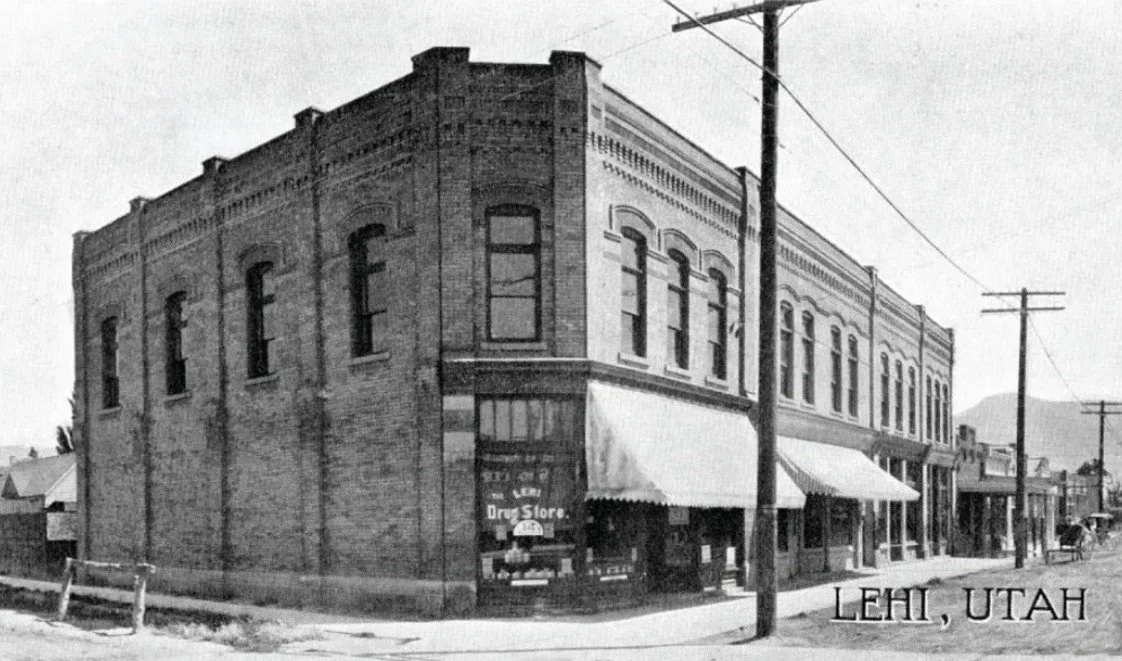
How Lehi Got Its Name
-
![]()
1850: Sulfer Springs/Snow Springs
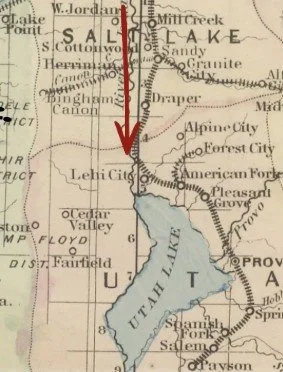
In July 1850, a party of men composed of Canute Peterson, David Savage, Charles Hopkins, Henry Royle, William S. Empey, William Wadsworth, and Surveyor Lemmon, entered Utah valley looking for a place to settle. The pristine valley was covered with sagebrush, and greasewood, with an occasional splash of color from a patch of Indian Paint Brush and sunflowers. The land surrounding the lake was covered with meadows of thick grass, perfect for farming and raising livestock. As they were exploring, they came across a spring about three-fourths of a mile north of the lake, and one mile east of the river. The spring had a peculiar taste which prompted them to name it Sulfur Springs, (it was later renamed Snow Springs.)
-
![]()
1851: Dry Creek
In 1851, other families moved into the area and settled around nearby springs on the north end of Utah Lake. The people left the Snow Springs Fort May 1851 and moved to Dry Creek as they found going further up would insure better water, a more healthy place and they would be nearer the main traveled road. As new families came into the valley most settled in Dry Creek but some preferred the Lott Settlement which was located at the South end of 500 West.
-
![]()
1851: Evansville
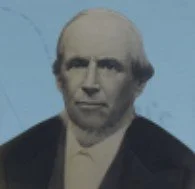
In February 1851, David Evans was called to serve as the bishop of the Dry Creek and surrounding settlements. Bishop Evans was a typical pioneer and possessed the leadership skills required to direct the work of founding a community. He immediately began working on problems the community faced one of which was the lack of water. Bishop Evans organized the men to begin digging a seven-mile ditch from the only supply available which was the stream in American Fork Canyon. By the latter part of August, the water reached the farms and helped save the wheat and potato crops.
-
![Lehi Fort]()
1852: Lehi
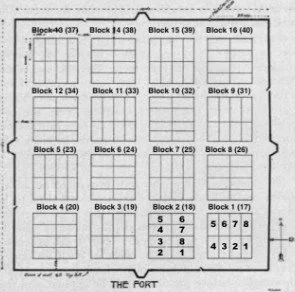
In 1852, David Evans petitioned the Territorial Legislature, requesting that the new community be incorporated uder the name of Lehi, “this Book of Mormon appellation being suggested because the people had moved so frequently.” Lehi became the sixth city in the Territory of Utah to be incorporated. In January 1853, Silas Barnes was elected the first mayor of Lehi.
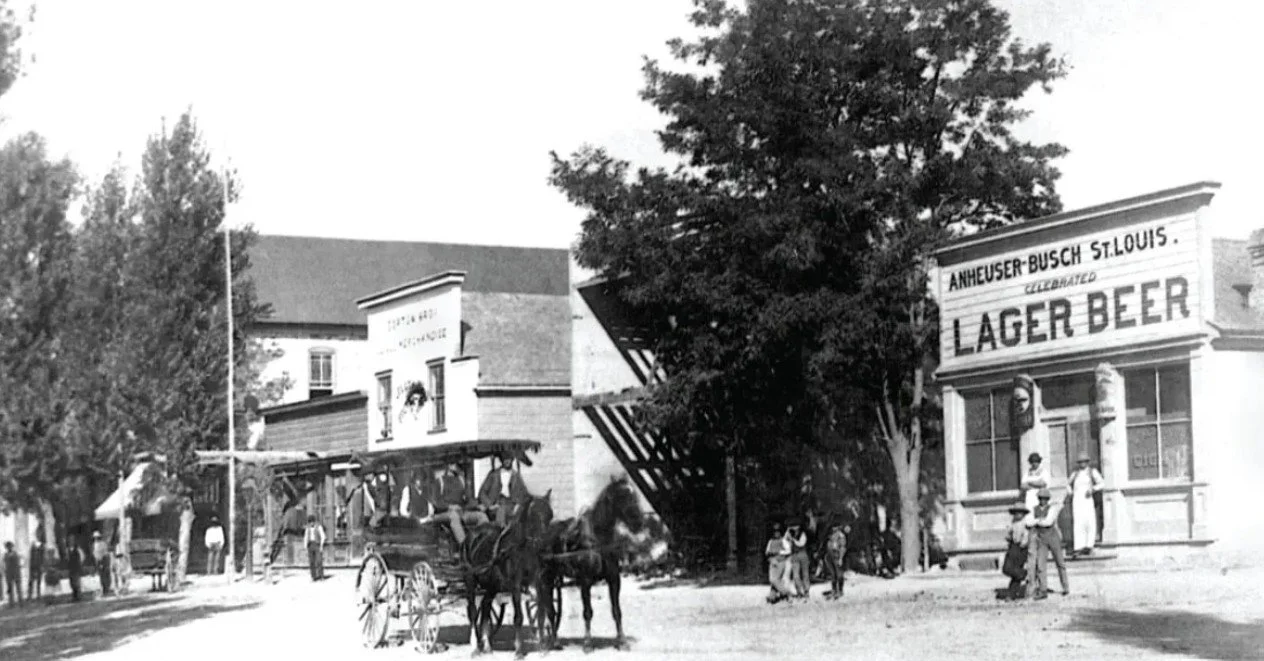
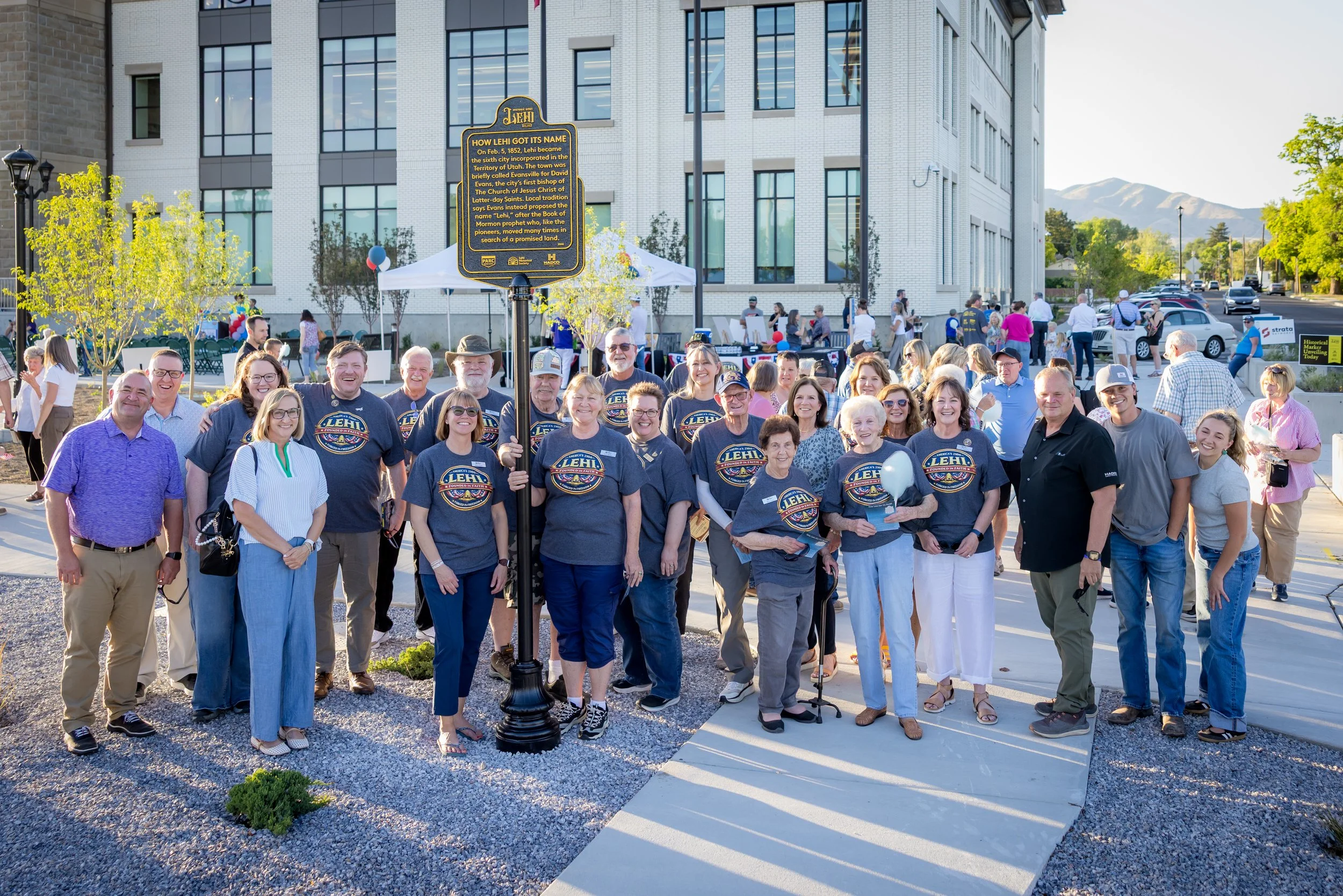
Marker Location
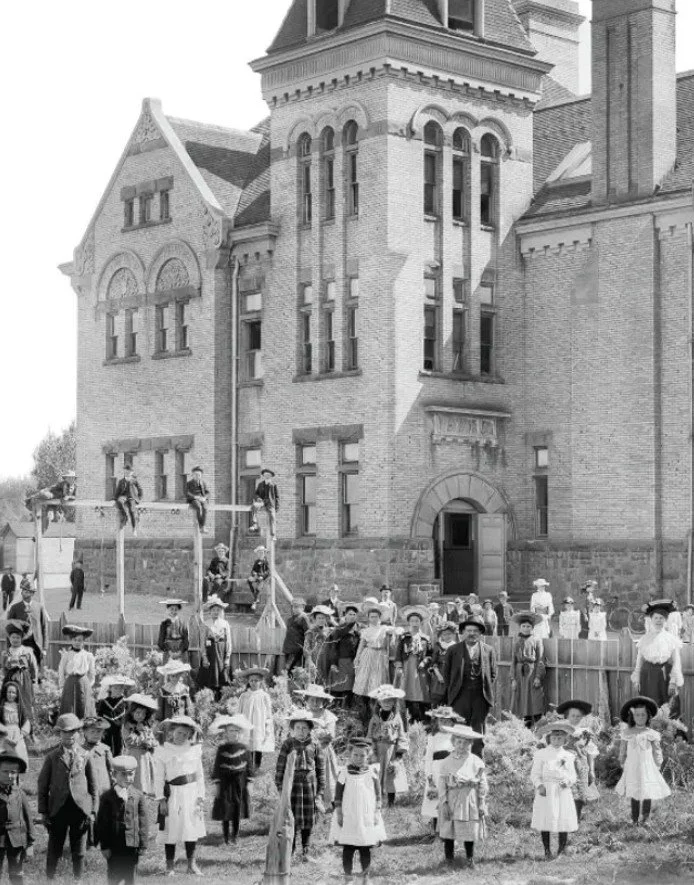
153 North 100 East Lehi, Utah
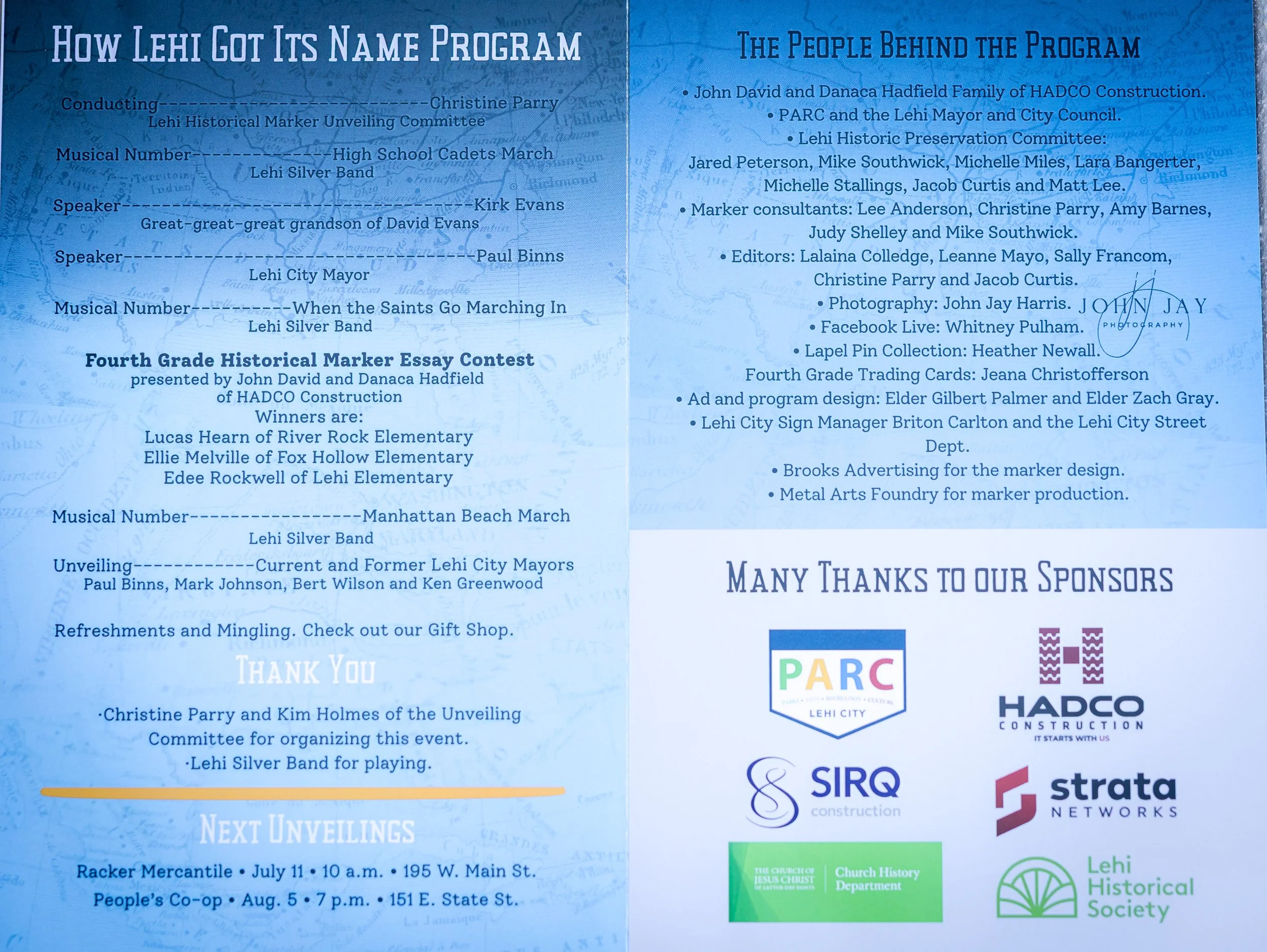
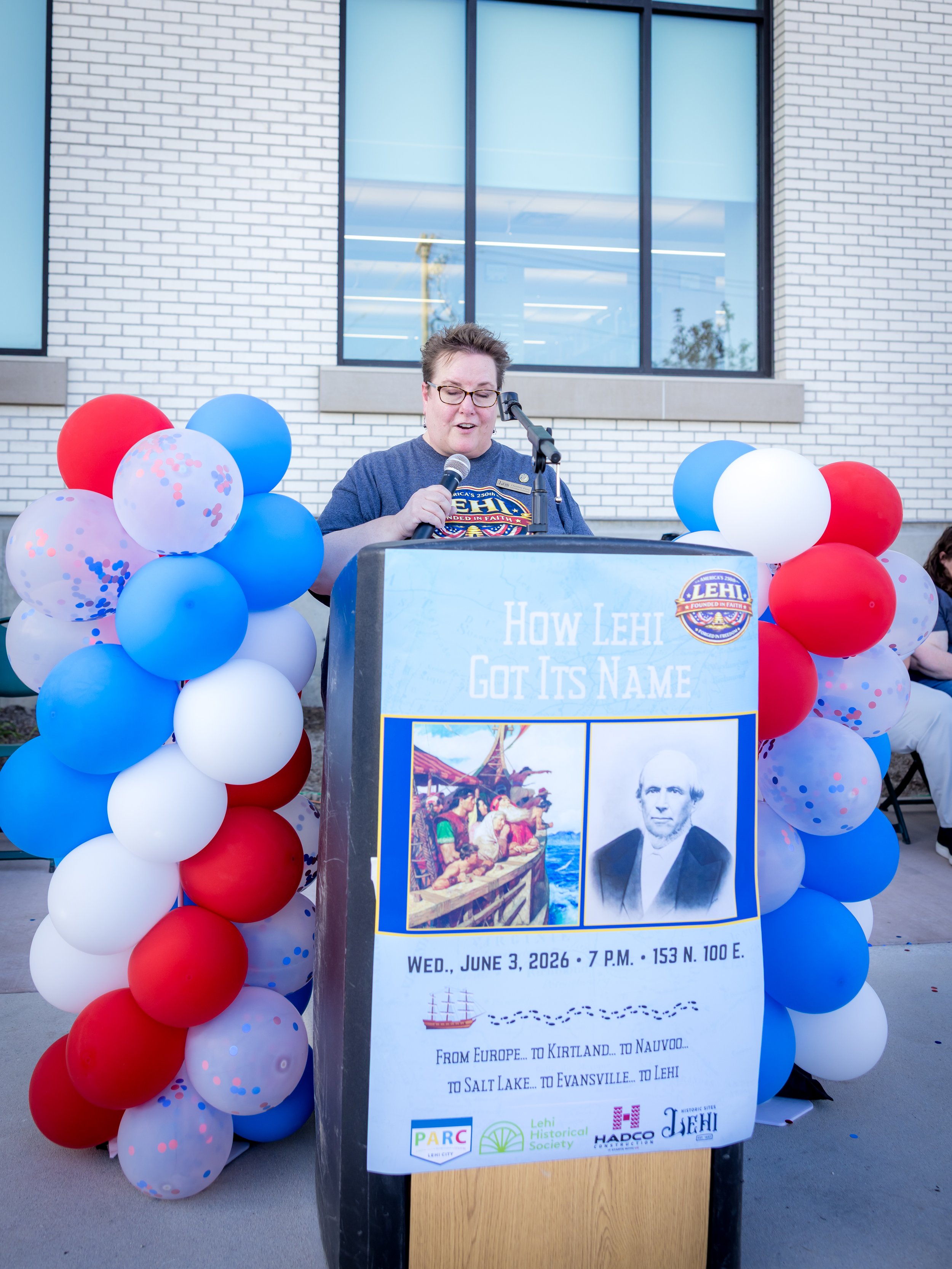
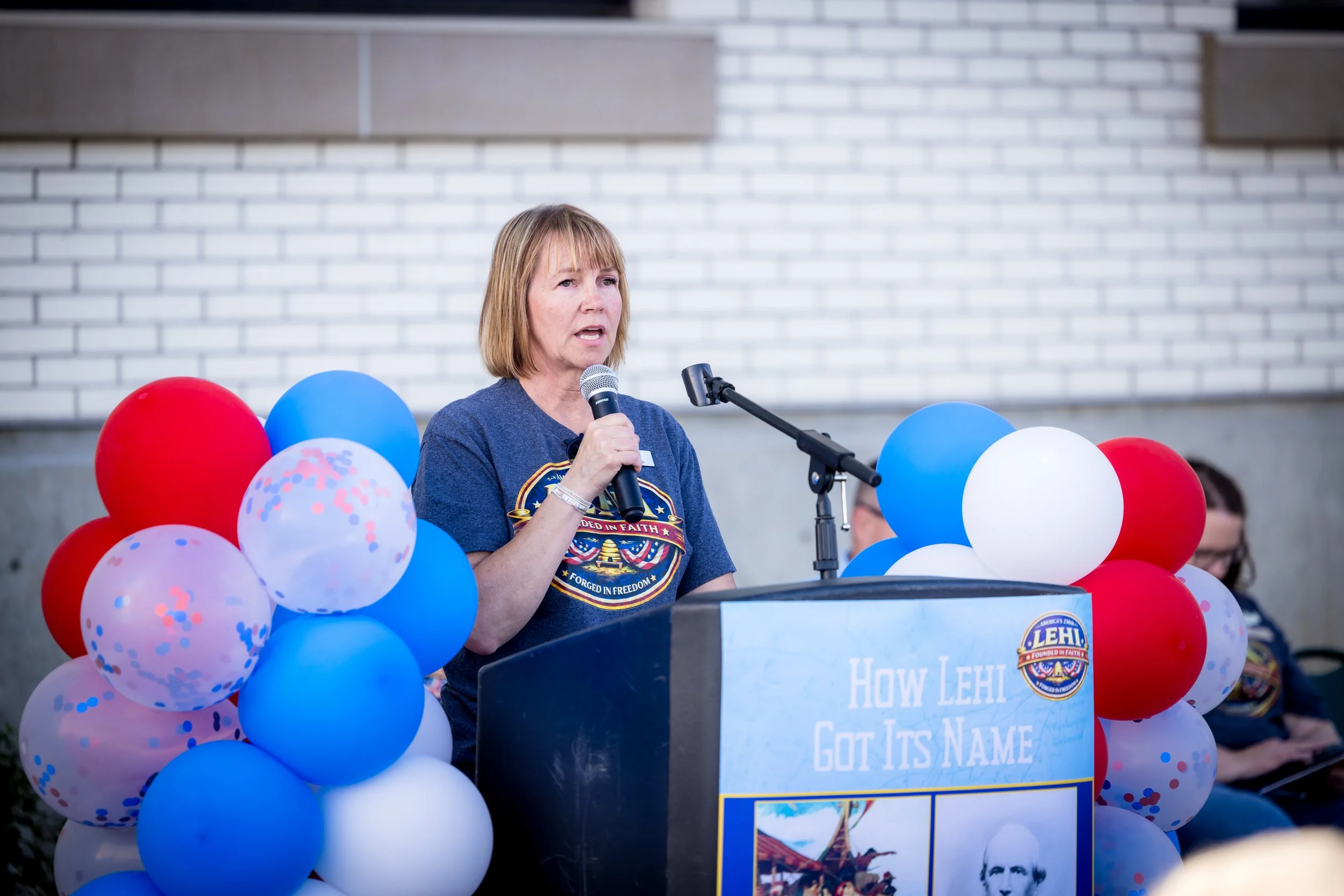
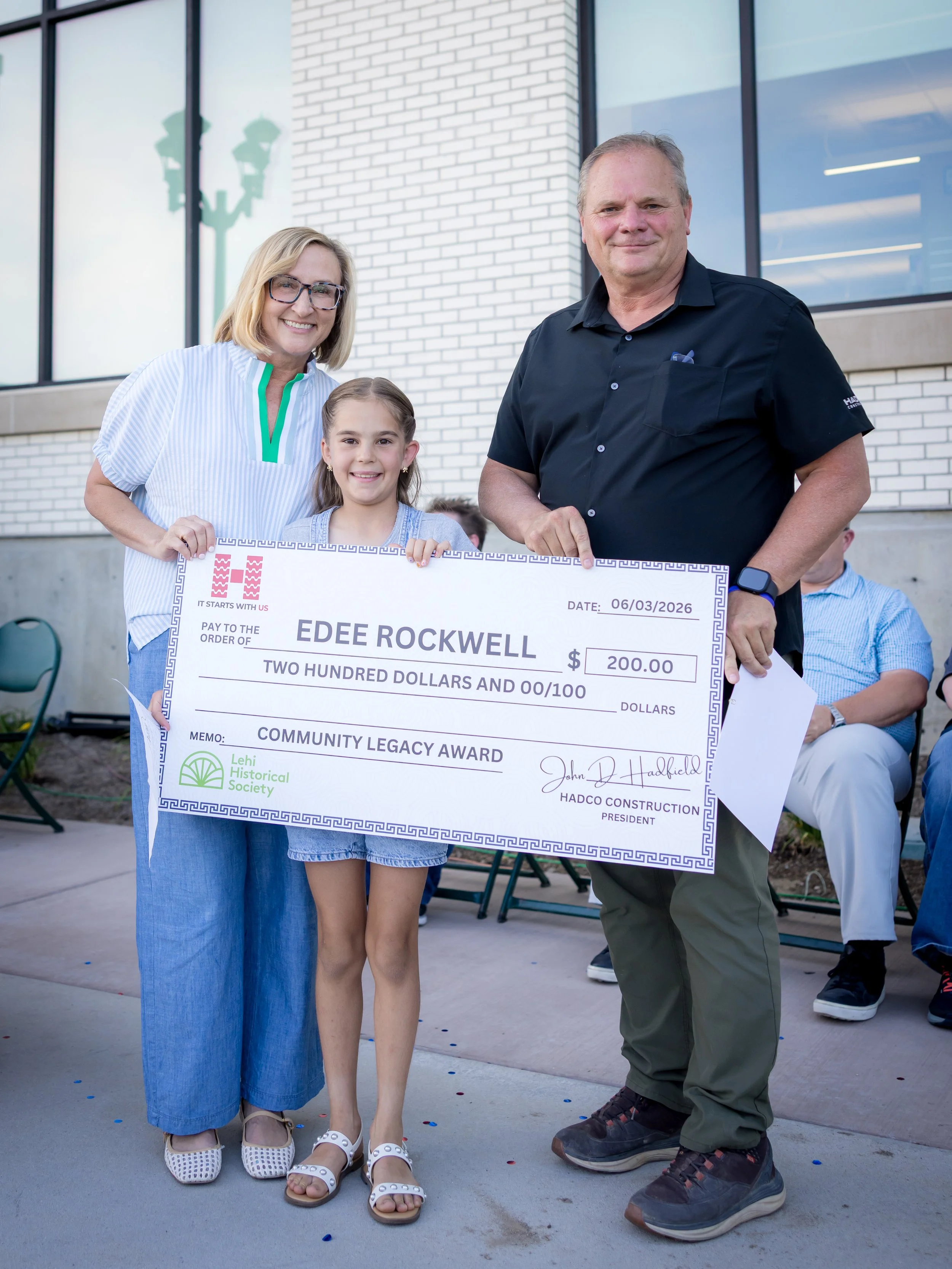
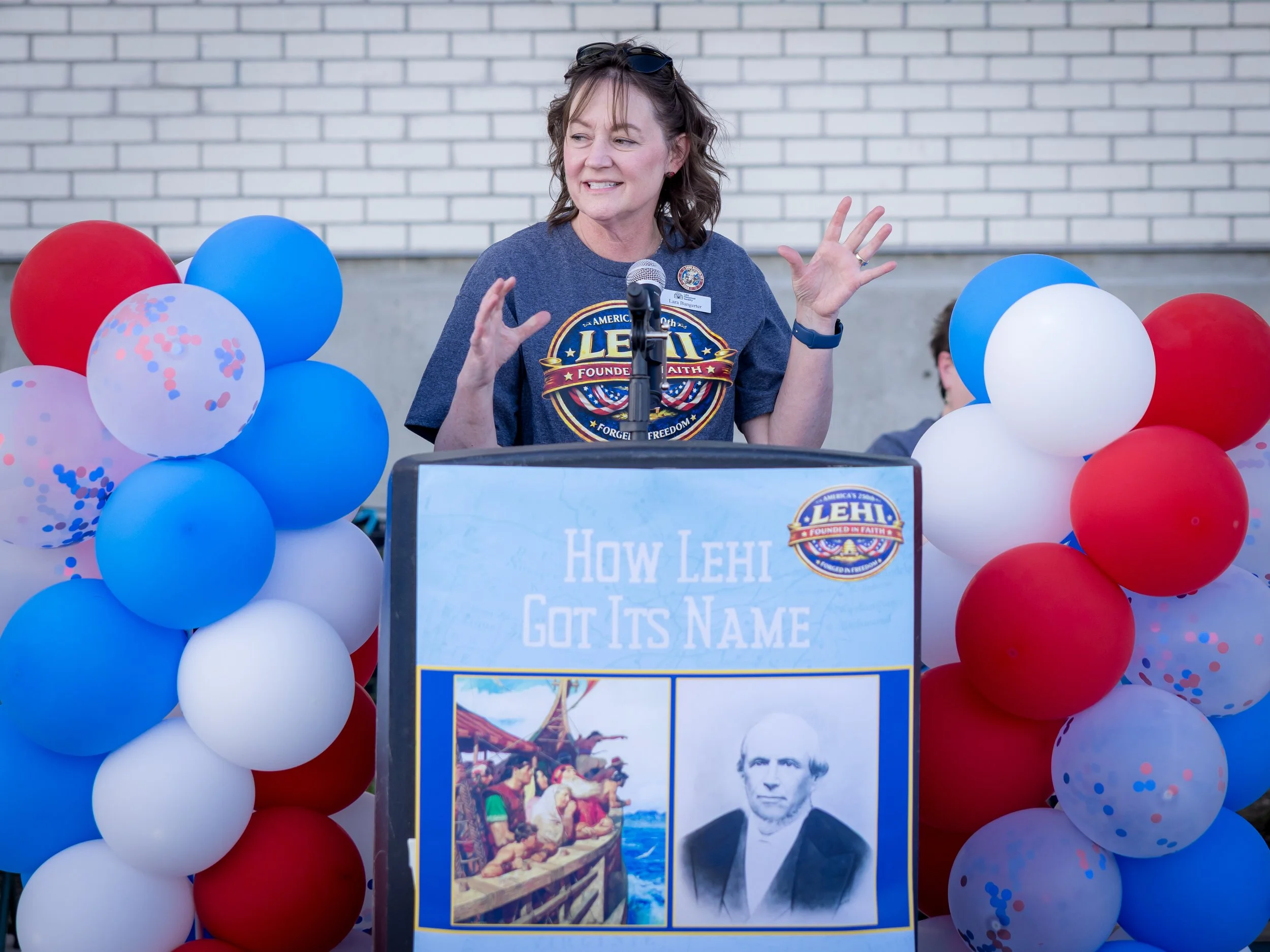
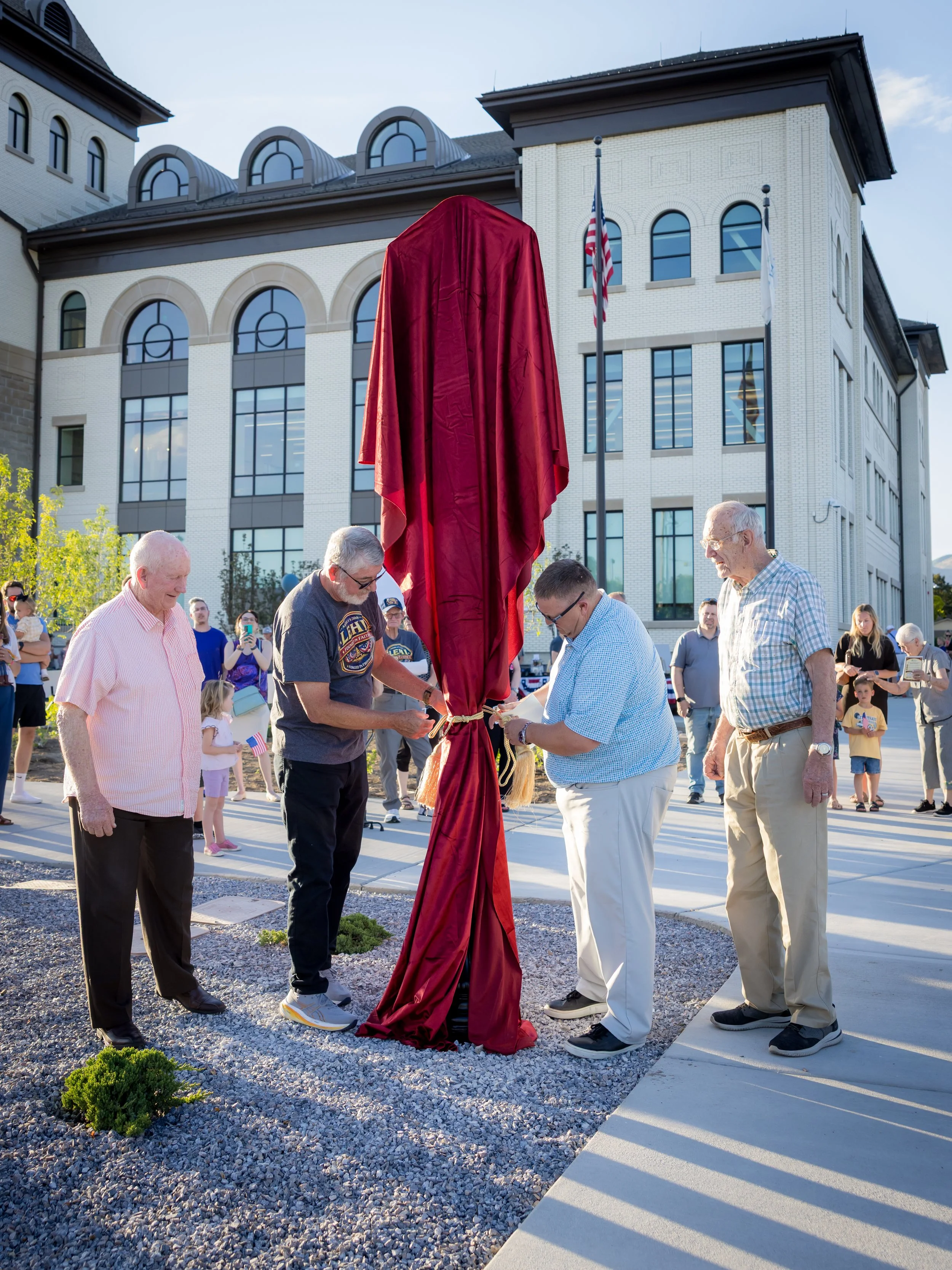
Marker Unveiling
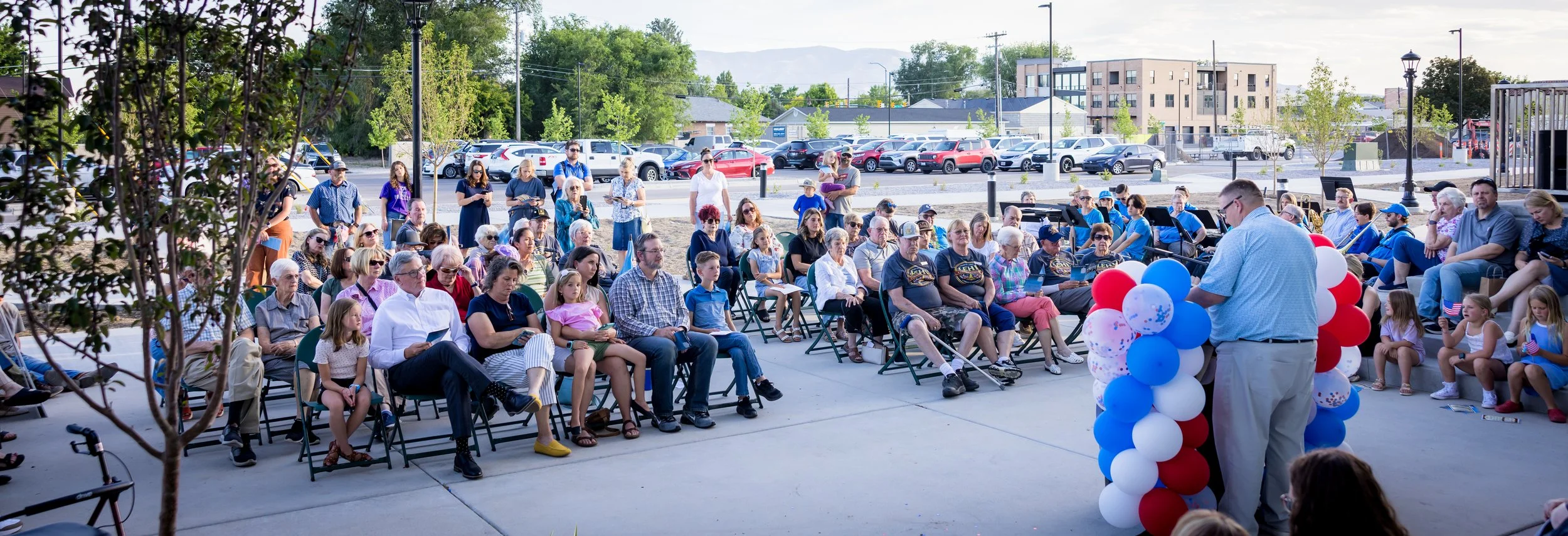
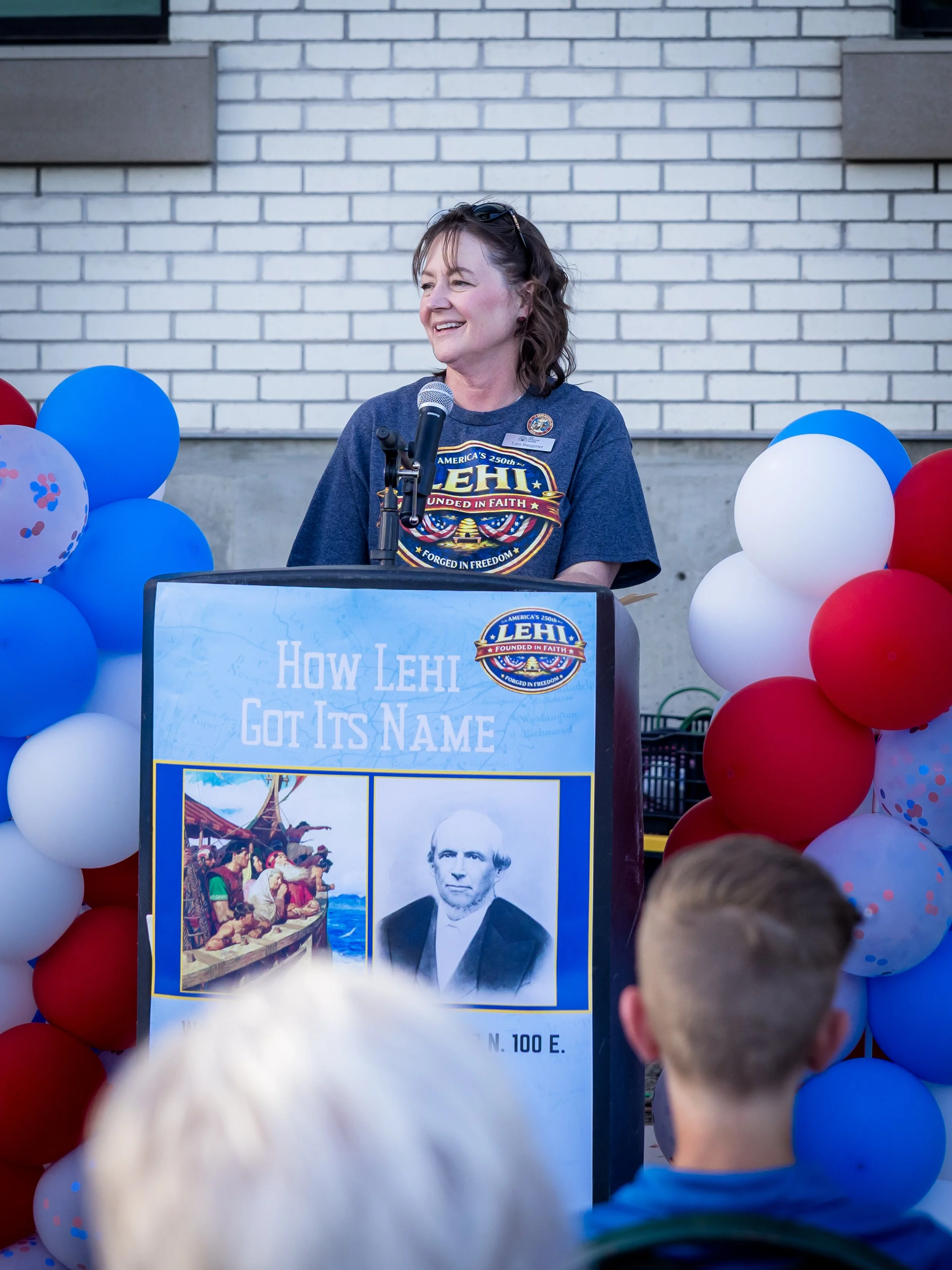
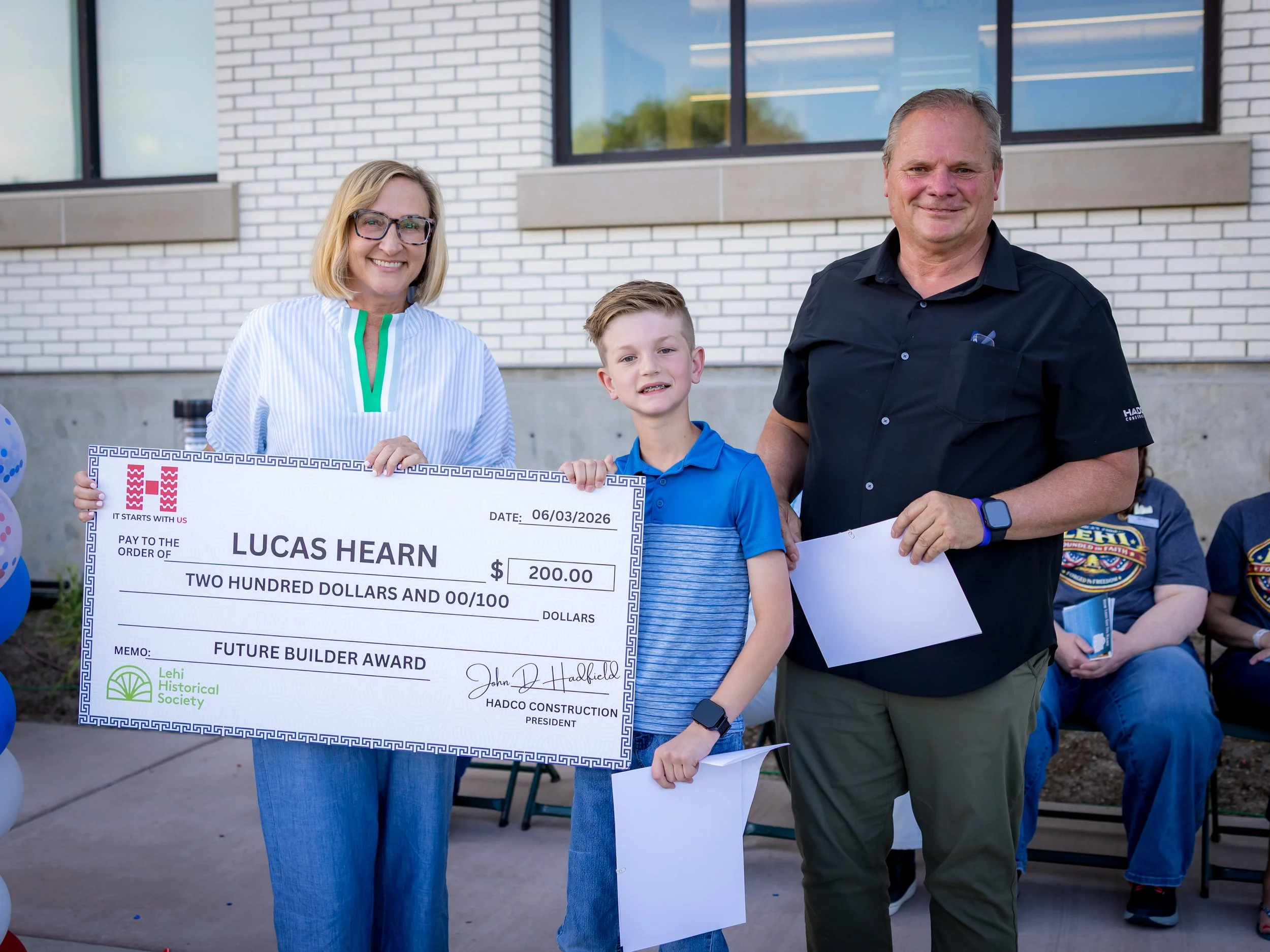
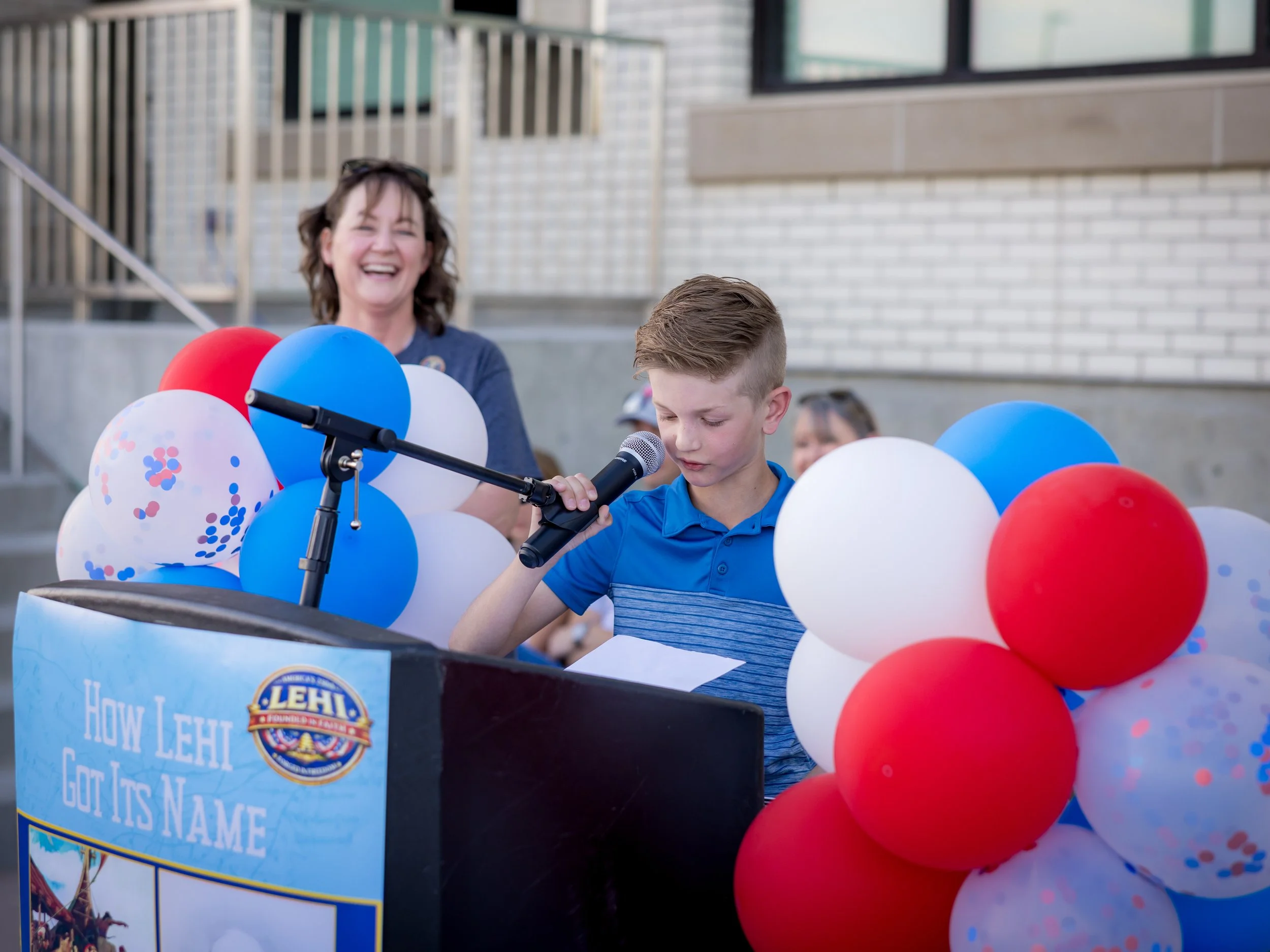
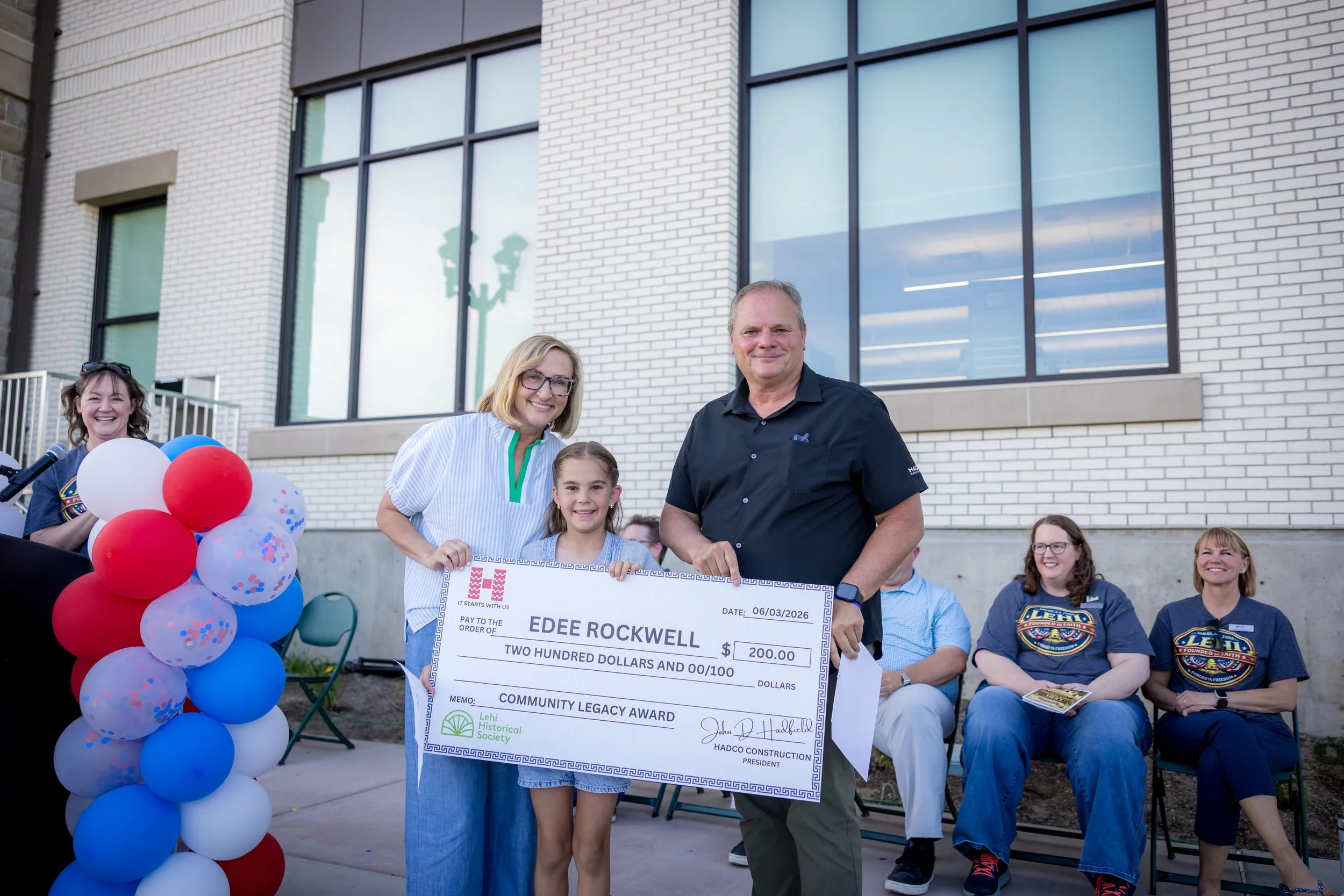
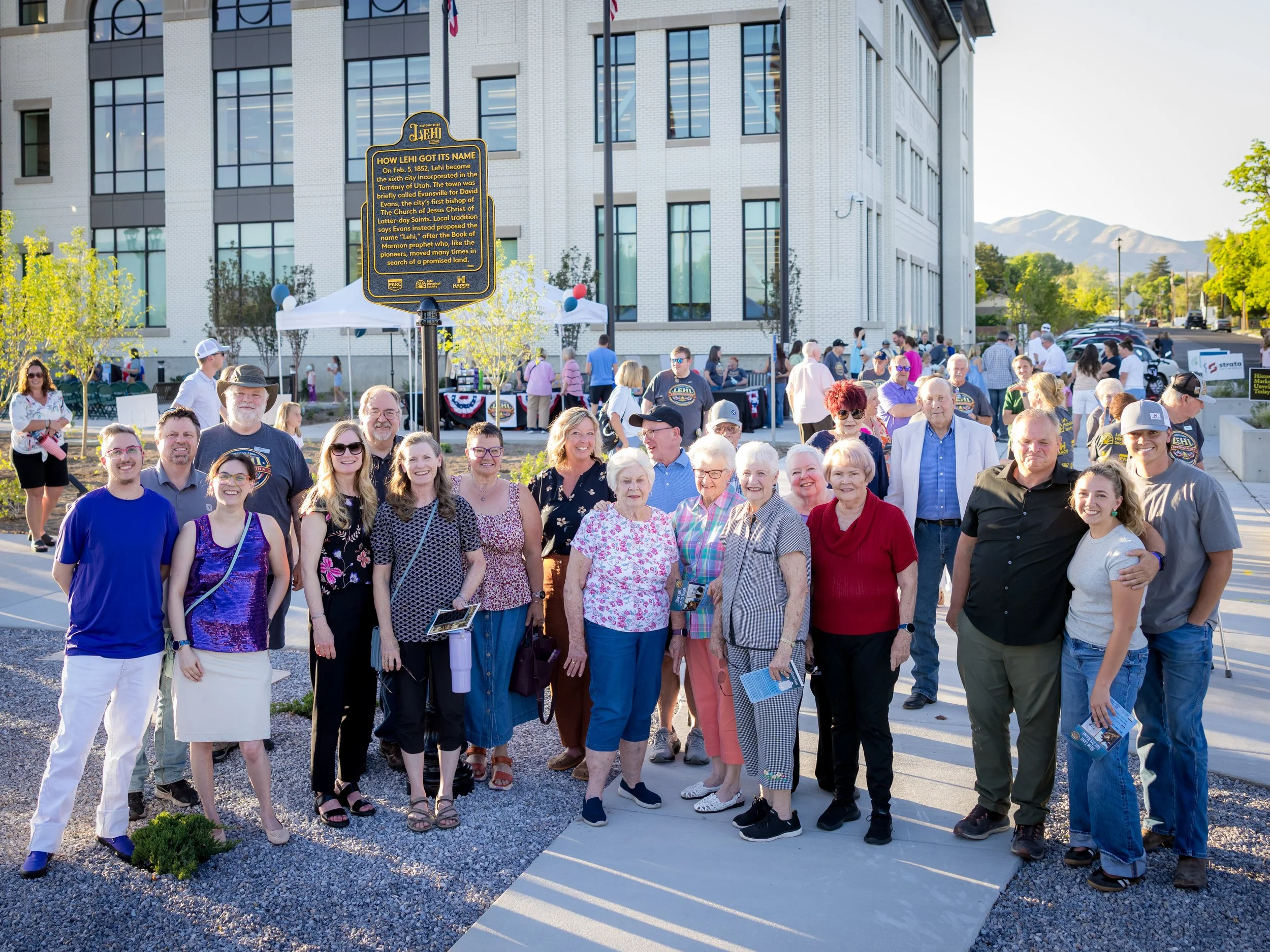
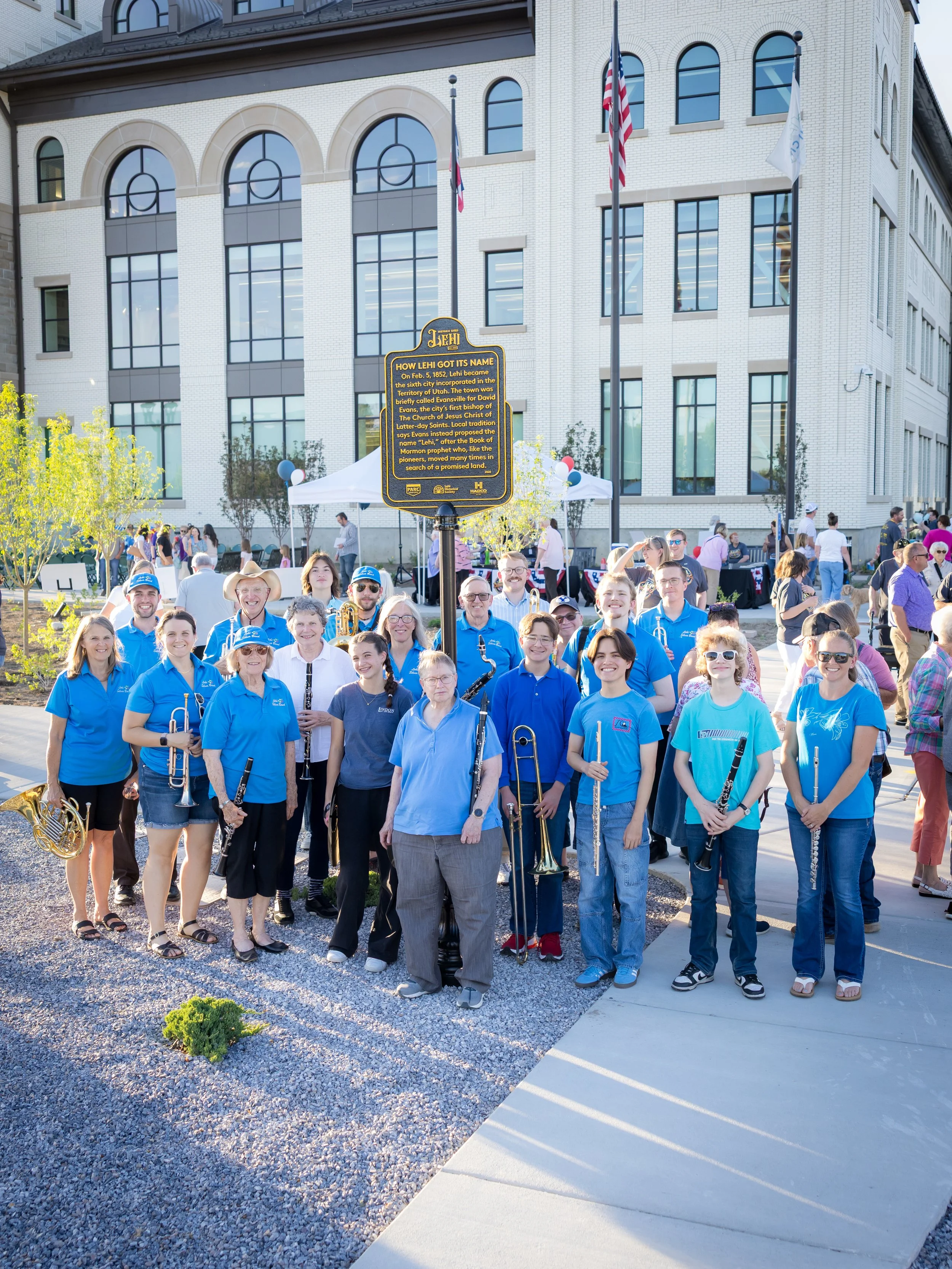
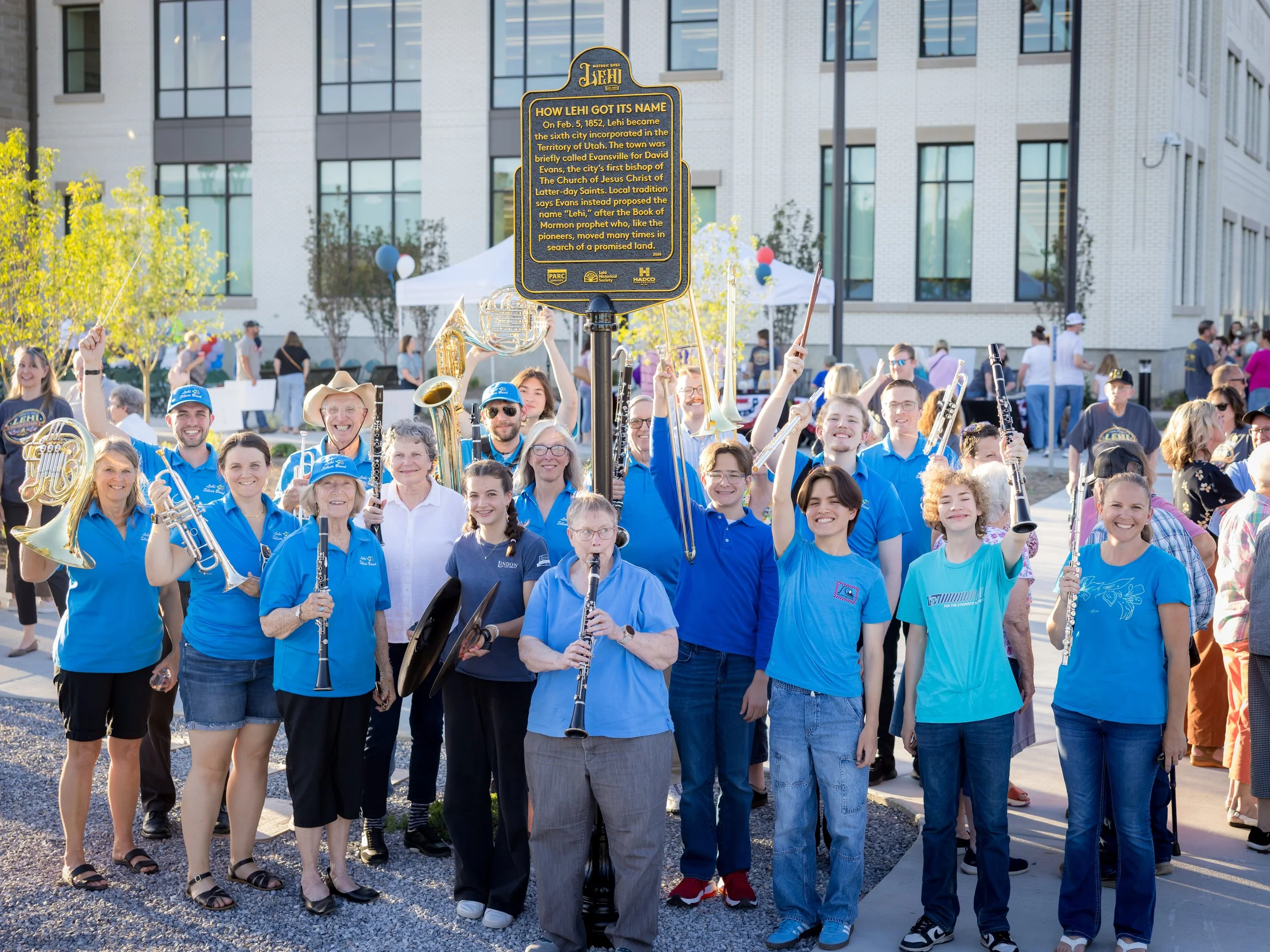
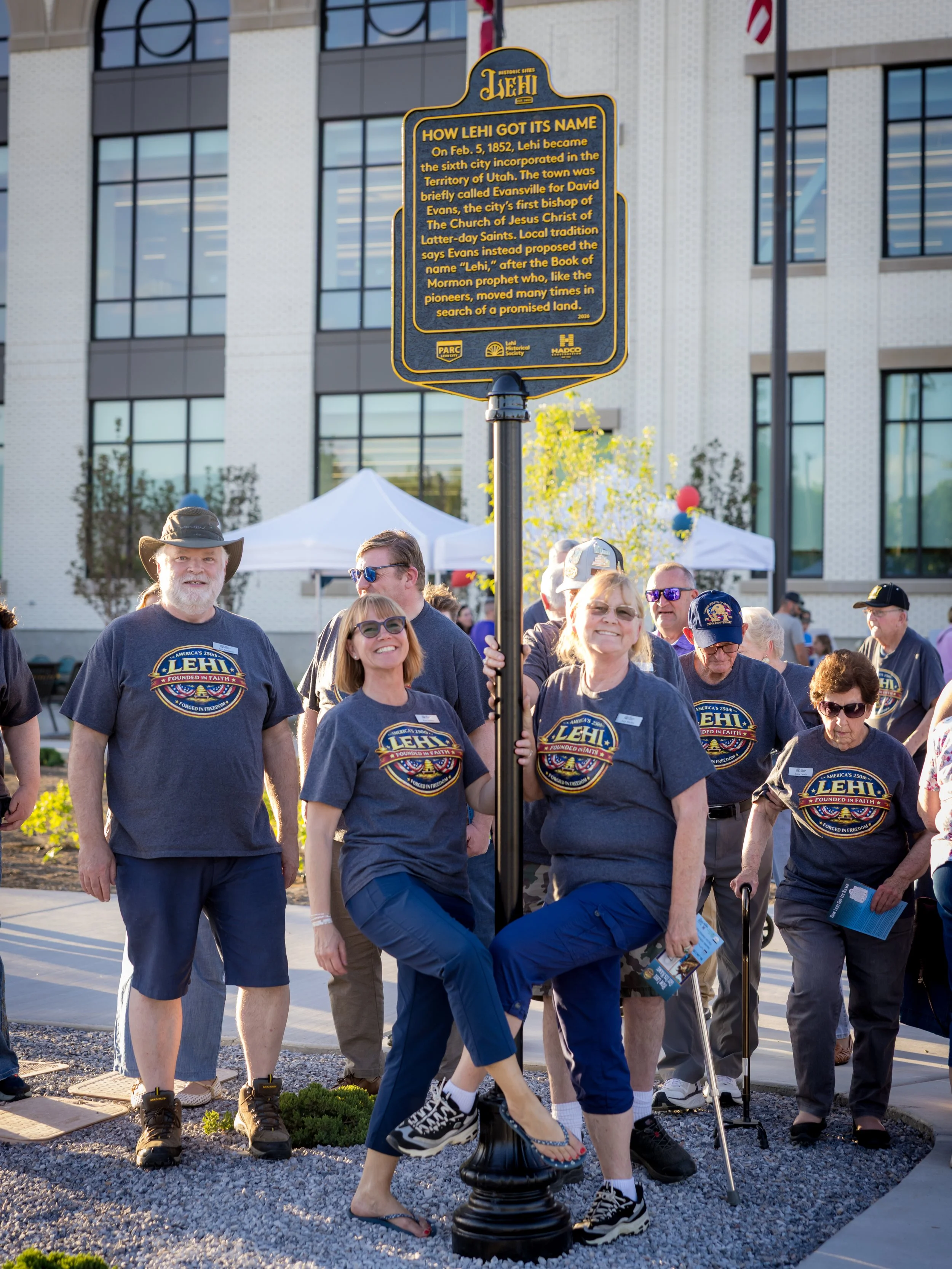
“That story is the city’s most cherished origin account and ties closely to the Lehi Historical Society’s 2026 theme, “Lehi: Founded in Faith. Forged in Freedom,” which aligns with nationwide commemorations of America’s 250th anniversary.
The new marker is the 20th installation in the Lehi Historical Society’s ambitious Lehi Historical Marker Program, which aims to place 36 permanent markers throughout the city by the end of 2027.
Launched in 2022, the program was inspired by the Pennsylvania Historical Marker Program and has quickly become one of the society’s most visible and beloved initiatives. The markers preserve stories of the people, places and events that shaped Lehi while inviting residents to connect more deeply with their city’s past.”
-Lehi Free Press, May 28,2026


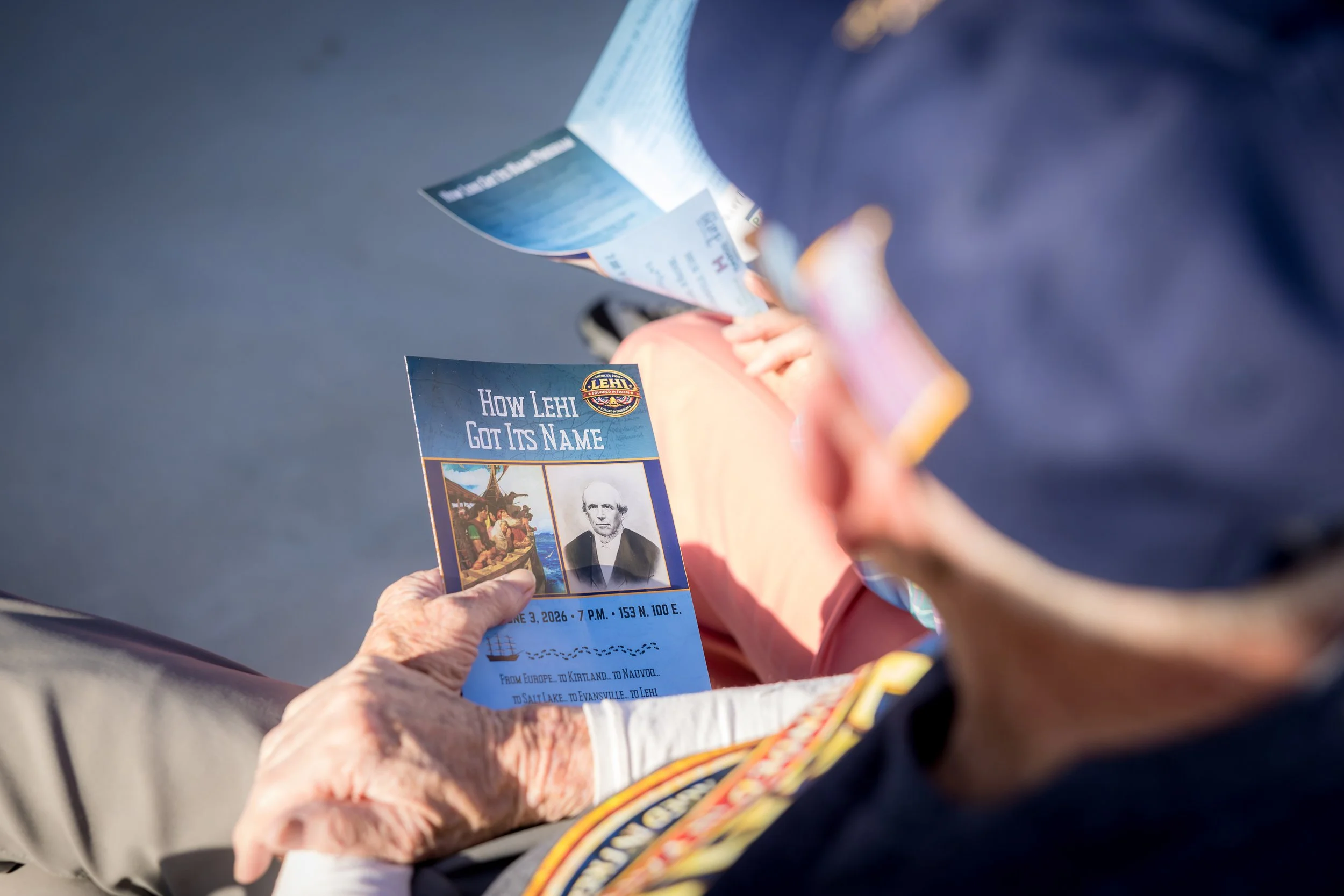
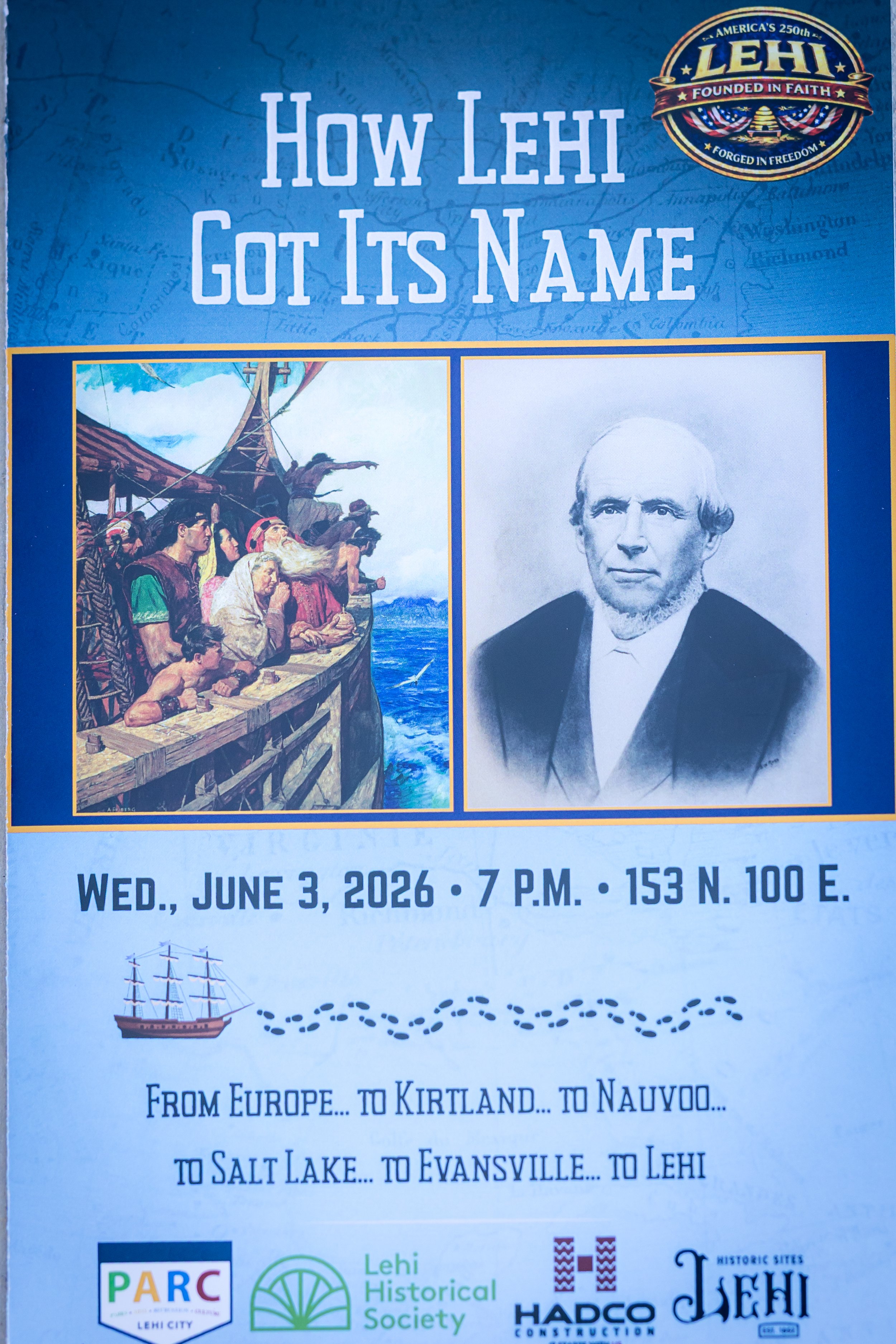



















Learn More
Investigate our online archive for more information on how Lehi got its name

Content Contributors

——, Lehi Historical Society
Kasia May, University of Utah
Support our Mission
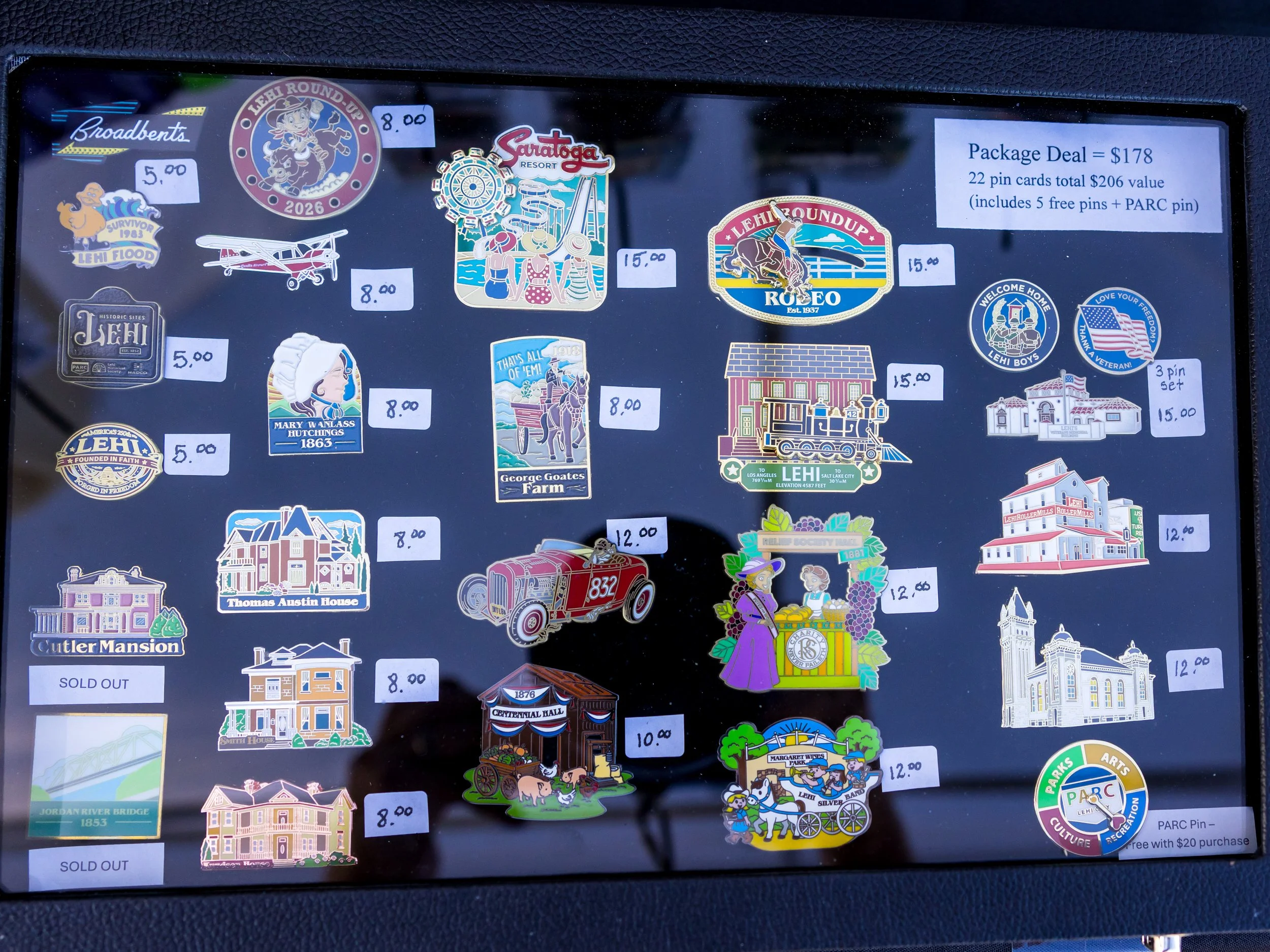
Purchase collector marker pins to show your Lehi spirit! Your purchase will support the Lehi Historical Marker Program and the Lehi Historical Society. There are currently 15 pins available in our gift shop
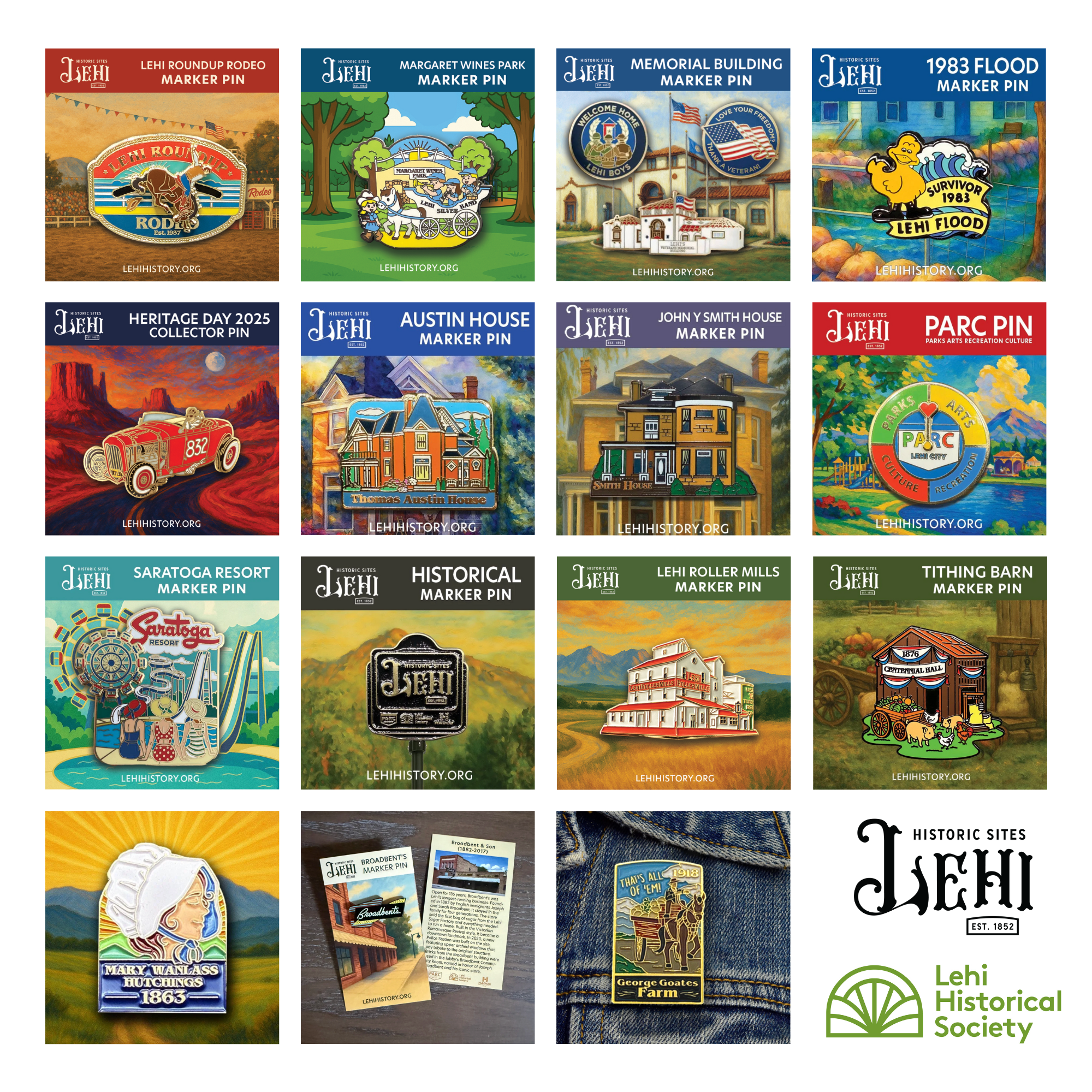
Celebrate Lehi’s history with our complete 15-pin collection. This special bundle includes one of each enamel pin from the Historical Marker Collection.
Pins included in the full set:
• Lehi Roundup Rodeo Marker Pin
• Margaret Wines Park Marker Pin
• Memorial Building Marker Pin
• 1983 Flood Marker Pin
• Heritage Day 2025 Collector Pin
• Austin House Marker Pin
• John Y Smith House Marker Pin
• PARC Pin
• Saratoga Resort Marker Pin
• Historical Marker Pin
• Lehi Roller Mills Marker Pin
• Tithing Barn Marker Pin
• Mary Wanlass Hutchings 1863 Pin
• Broadbent’s Marker Pin
• George Goates Farm Marker Pin
Each pin reflects a real story from Lehi’s past. Landmarks, founders, the rodeo, community legends, floods, and the places that shaped our city. This full set brings together every marker design in one place. It is perfect for collectors, teachers, longtime Lehi families, newcomers wanting to learn the stories behind our city, or anyone looking for a meaningful gift that supports local history.
Take home the complete collection and own 15 pieces of Lehi’s story.

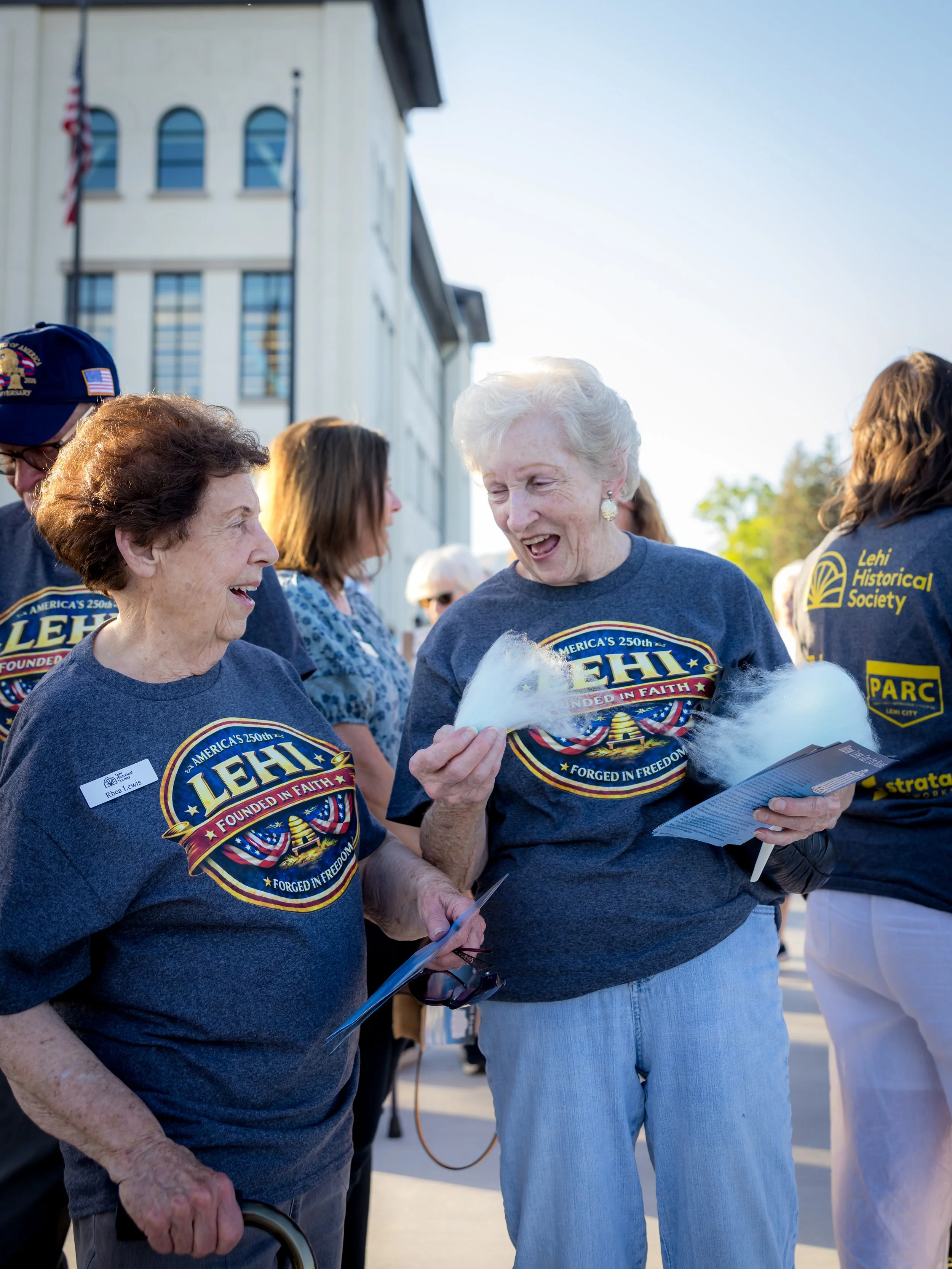
The Lehi Historical Society joins the nationwide celebration of America’s 250th anniversary with its 2026 theme, “Lehi: Founded in Faith. Forged in Freedom.” We invite the community to celebrate with us by buying our heather gray T-shirt with a classic silhouette and comfortable fit.
Throughout the year, the Lehi Historical Society will highlight how Lehi’s founders and early residents helped build both their community and the nation. Like America’s early patriots, Lehi’s pioneers relied on faith, sacrifice and determination to establish a thriving settlement in Utah Valley.
To accompany the theme is this commemorative logo. It features a bold gold “LEHI” on a deep blue background framed by patriotic red, white and blue bunting, with “America’s 250th” across the top. A red banner reads, “Founded in Faith,” reflecting the city’s pioneer roots, while, “Forged in Freedom,” honors the broader American story.
At the center is a beehive—Utah’s enduring symbol of industry—representing the hardworking spirit of Lehi’s early settlers. Gold stars and decorative flourishes tie Lehi’s story to the nation’s.
Everyone is encouraged to wear the T-shirt to our historical marker unveilings and Lehi Heritage Day this year.
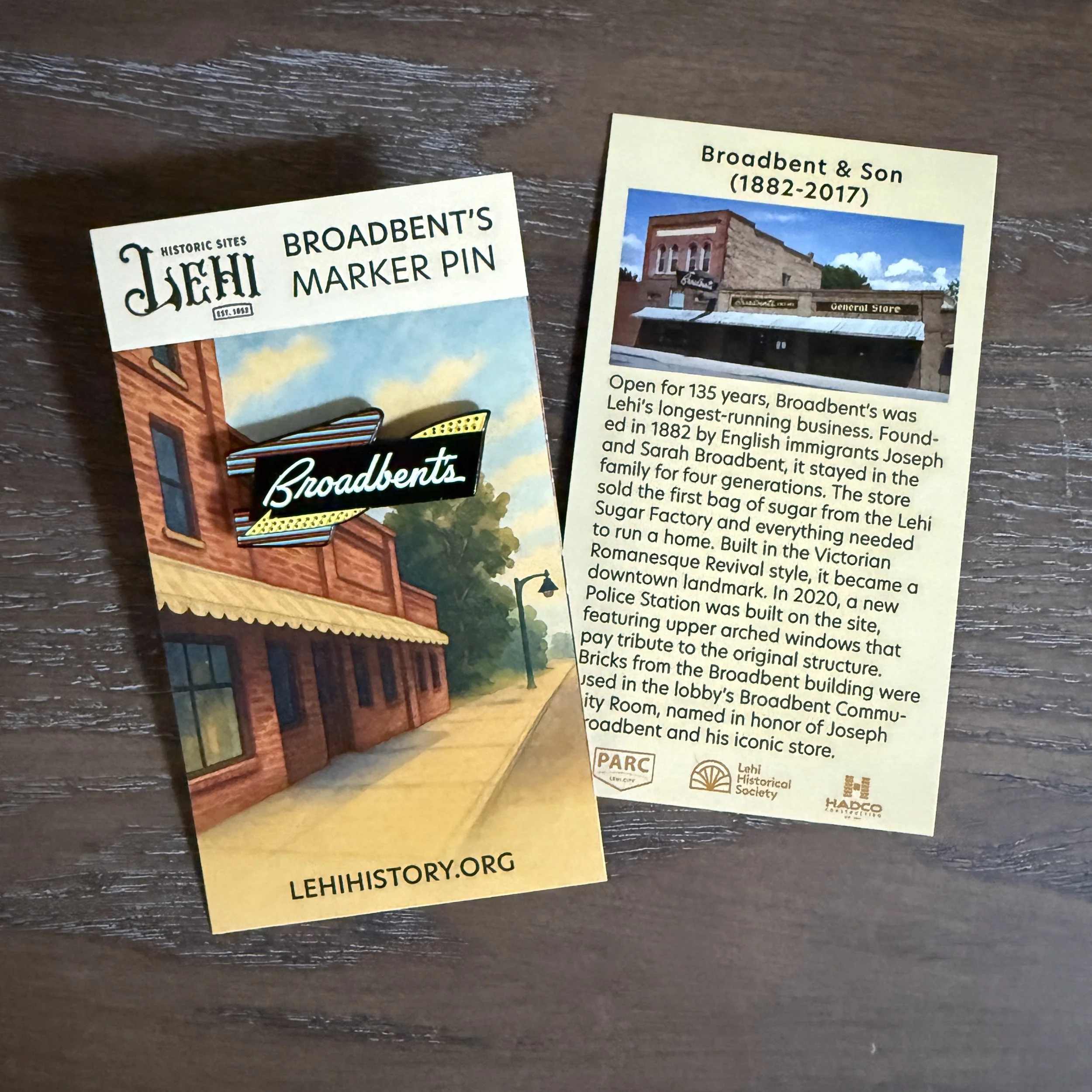
Celebrate a Lehi icon with this Historical Marker collector pin honoring Broadbent’s Store, the longest-running business in Lehi’s history and a cornerstone of the community for 135 years.
Soft enamel with black dyed metal plating
Features the vintage neon Broadbent’s sign installed in 1954
Measures 1.25 inches in length
Single-post backing with secure rubber cover
Perfect for collectors, history lovers, and proud Lehi locals
Founded in 1882 by English immigrants Joseph and Sarah Broadbent, the store was passed down through four generations and became known for offering everything from dry goods to fine fabrics. It sold the first bag of sugar produced by the Lehi Sugar Factory and served as a trusted hub for generations of families. The iconic neon sign, featured in this pin, hung proudly from 1954 until the store’s closing in 2017. Today, the arched windows of the Lehi Police Department pay tribute to the building that once stood in its place.
A nostalgic keepsake celebrating a legacy of service, family, and small-town pride.