David Evans
1804-1883
David Evans was born on 27 October 1804 in Cecil County, Maryland. Throughout his childhood, he learned the value of hard work on the family farm. He married Mary Beck in 1826 and settled on a new farm in Richland county Ohio. In 1833, they were baptized members of the Church of Jesus Christ of Latter-day Saints and moved to Kirkland, Ohio to be with the other Saints.
He arrived just in time to join Zions Camp where he and over 200 other Saints marched 900 miles to Missouri to help the Saints that were being persecuted there. Throughout the journey the company faced several trials and witnessed many miracles. Upon his return to Kirkland, he was ordained a member of the First Quorum of Seventies by Joseph Smith and Sidney Rigdon and had the privilege of attending the School of the Prophets.
In 1835, David’s family along with a company of other Saints answered a call to move to Missouri. They established themselves along Shoal Creek in Caldwell County with David serving as their leader. David built his home about two miles from a mill owned by Jacob Hawn. Their time in Missouri was a period of hardship and persecution. David’s and Mary’s eighteen month-old daughter died in 1836 and another daughter died in 1838. During that time the harassment by the local citizens towards the Saints continued to escalate.
The persecution came to a head on 30 October 1838 when despite a treaty made with David Evans, 240 armed men rode into the company of Saints. David went out to meet them, waving his hat and calling for peace but to no avail. The mob began firing their weapons at the fleeing Saints. David had to run for his life and miraculously was not injured though seventeen others were killed. The Saints that lived were forced from their homes so David and his family moved to Payson, Missouri. Mary died in 1841 leaving David alone with their five children.
Five months after Mary’s death, David married Barbara Ann Ewell in Nauvoo, Illinois where he was called to be the bishop of the Nauvoo Eleventh ward. They lived in relative peace for a few years until the persecution reached a fever pitch when Joseph and Hyrum Smith were murdered and the Saints were driven out of Nauvoo. When the time came to cross the plains, David was appointed captain of a wagon company. They reached Utah on 15 September 1850 and found a home in the Salt Lake Valley.
On 15 February 1851, David Evans arrived in the settlement of Dry Creek where he was called to serve as bishop. His challenge was to take the many small settlements in the area and build them into a working community. Though farm implements were scarce, the community planted their first crops of wheat, corn, potatoes, squash and a few vegetables. In honor of their new bishop, the citizens called their community Evansville.
They soon learned why Dry Creek received its name and realized that they had to find another source of late irrigation water to mature their crops. The nearest source of water was the stream in American Fork Canyon so David organized a group of men to dig a seven-mile ditch to Evansville. The soil was full of rocks and their tools were of poor quality. The 1913 History of Lehi said, “Under such hardships, the men, poorly fed and scantily clothed, would undoubtedly have abandoned the enterprise, but for the influence of the bishop. His good humor and witticisms never failed, and with rare tact and diplomacy, he kept the men from brooding over their troubles, and inspired them with new hope and courage.” Water reached their fields by late August and helped save the corn and potato crop.
David was elected as a member of the House of Representatives of the newly creative Territory of Utah and served many years in that body. He served as Mayor for three terms from 1854 to 1860. During that time he had the name of Evansville changed to Lehi and had it incorporated. Using a pocket compass, tape line and square, he also laid out Lehi’s fort wall with city blocks that became the foundation of the future city. David was also Colonel in the Utah Militia and served as Major in the Lehi military district.
Like many members of the church of Jesus Christ of Latter-day Saints living at that time, David practiced polygamy. According to the 1913 Lehi History, “he married Climena Gibson in 1854, Rebecca Coleman in 1856, and Christina Holm in 1861; and was the father of 41 children and a good provider for all his family.” His four wives lived on the same city block and helped each other. His children grew up together and treated each other as brothers and sisters.
In September 1879, David Evans, at the age of 75, resigned as bishop after serving 28 years. In June 1883, David wasn’t feeling well and had a numb feeling in his right arm and leg. This persisted for several days until he suffered a paralytic stroke which paralyzed his whole side and affected his speech. He passed away four days later. Funeral services were held in the Lehi Tabernacle. A special train was dispatched from Salt Lake City bringing many of his friends and acquaintances including President Wilford Woodruff. The procession to the cemetery numbered 115 vehicles which was the largest cortege ever formed in Lehi.
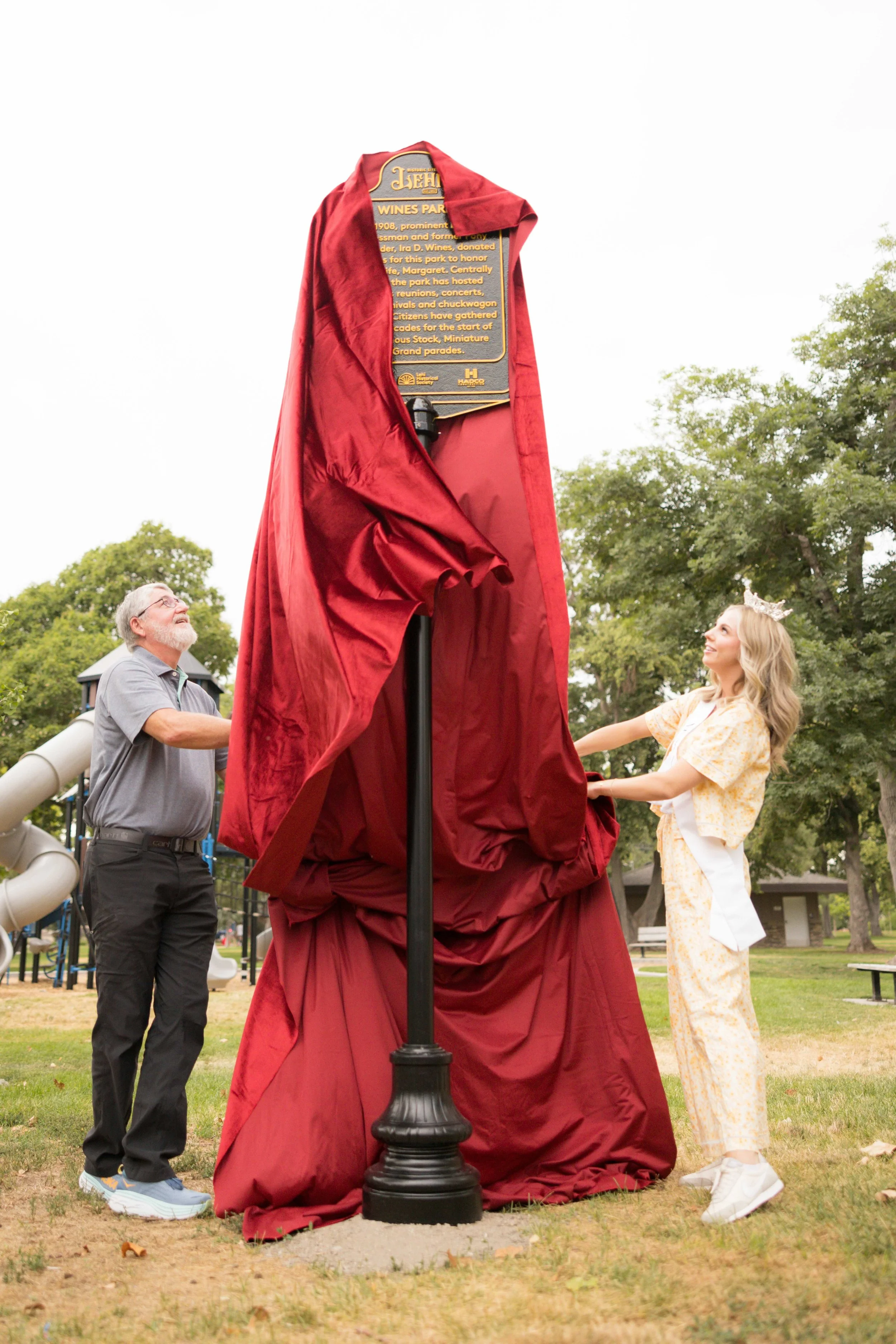
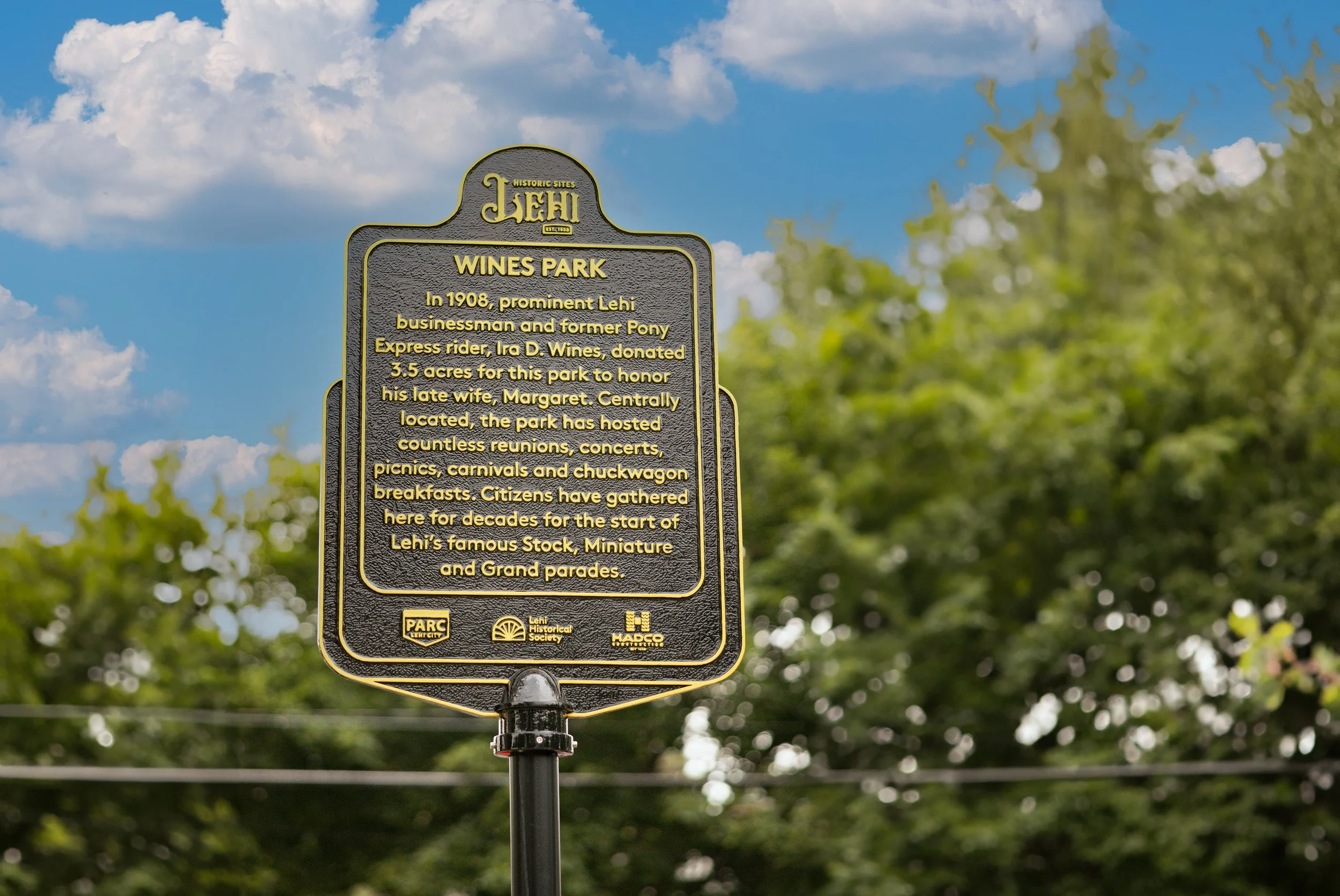
Margaret Wines Park Historical Marker Unveiling
July 18, 2024
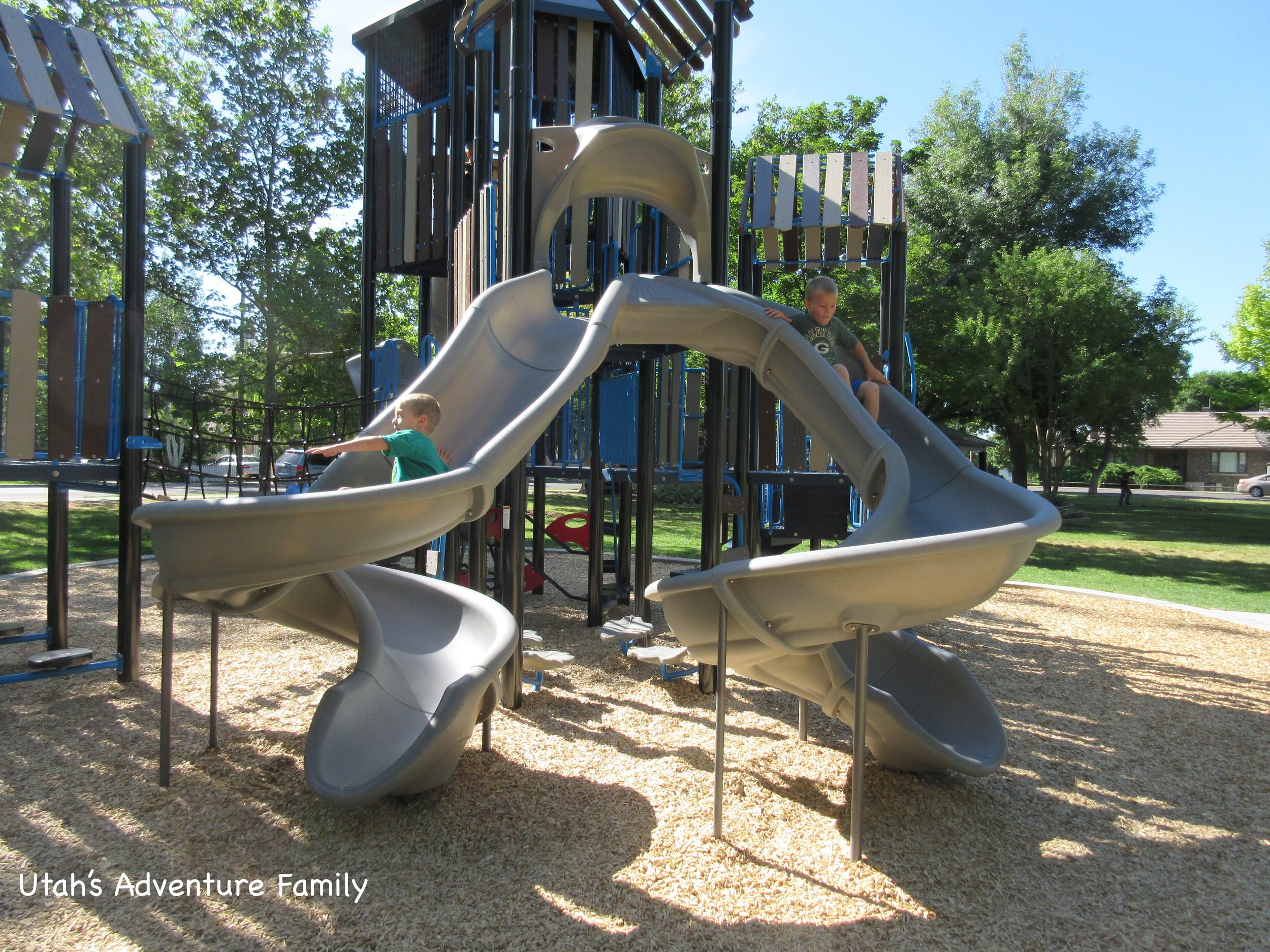
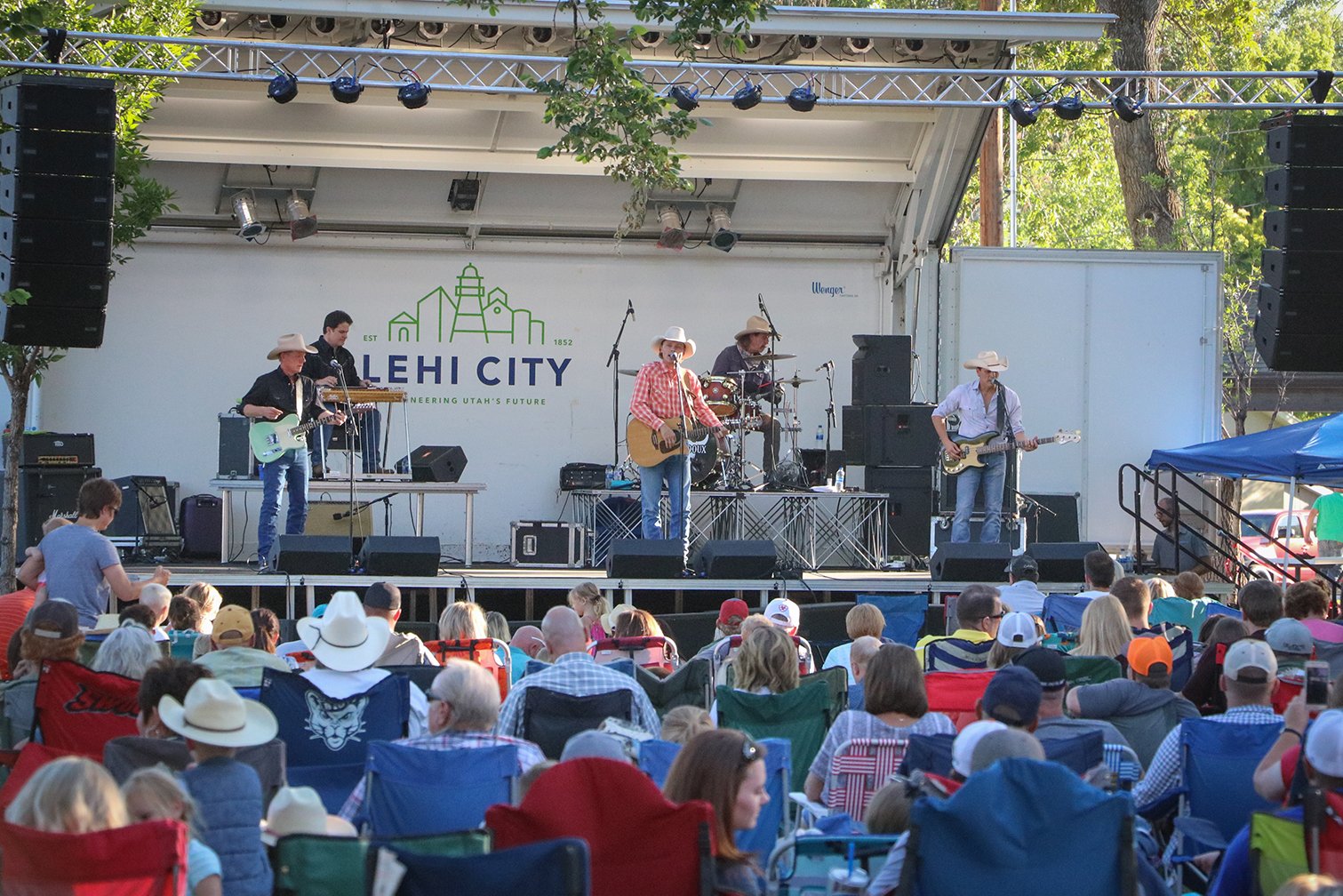
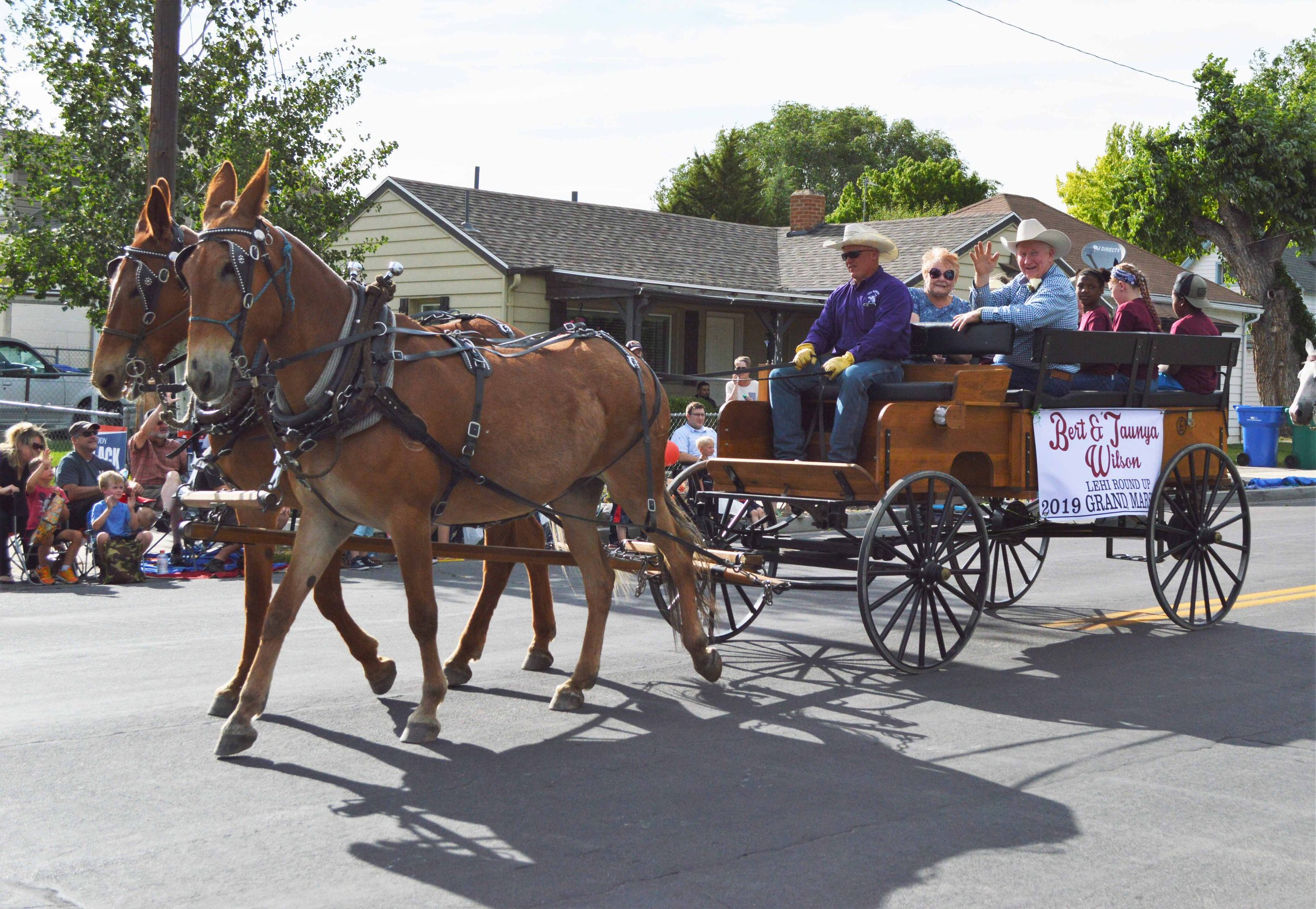
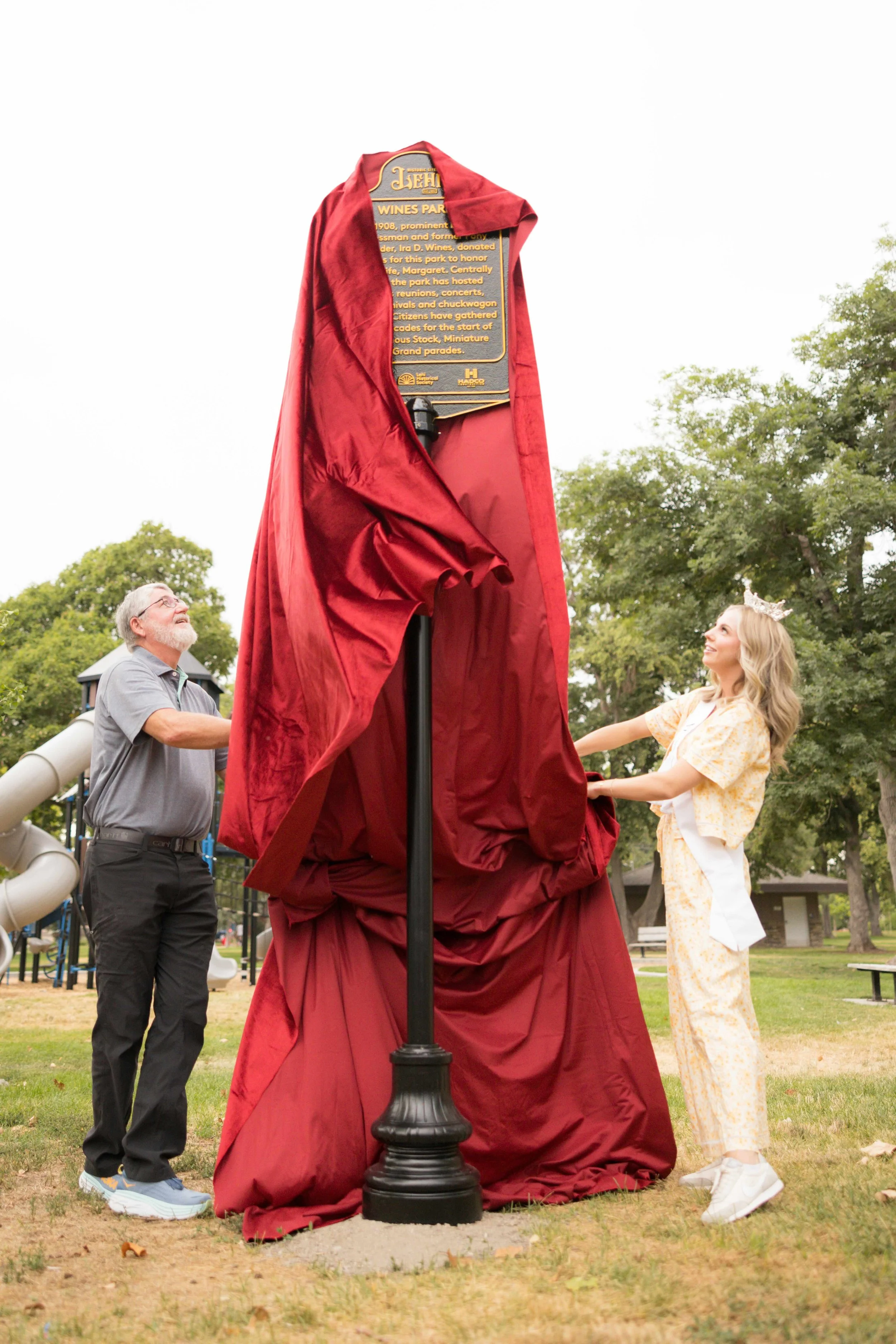
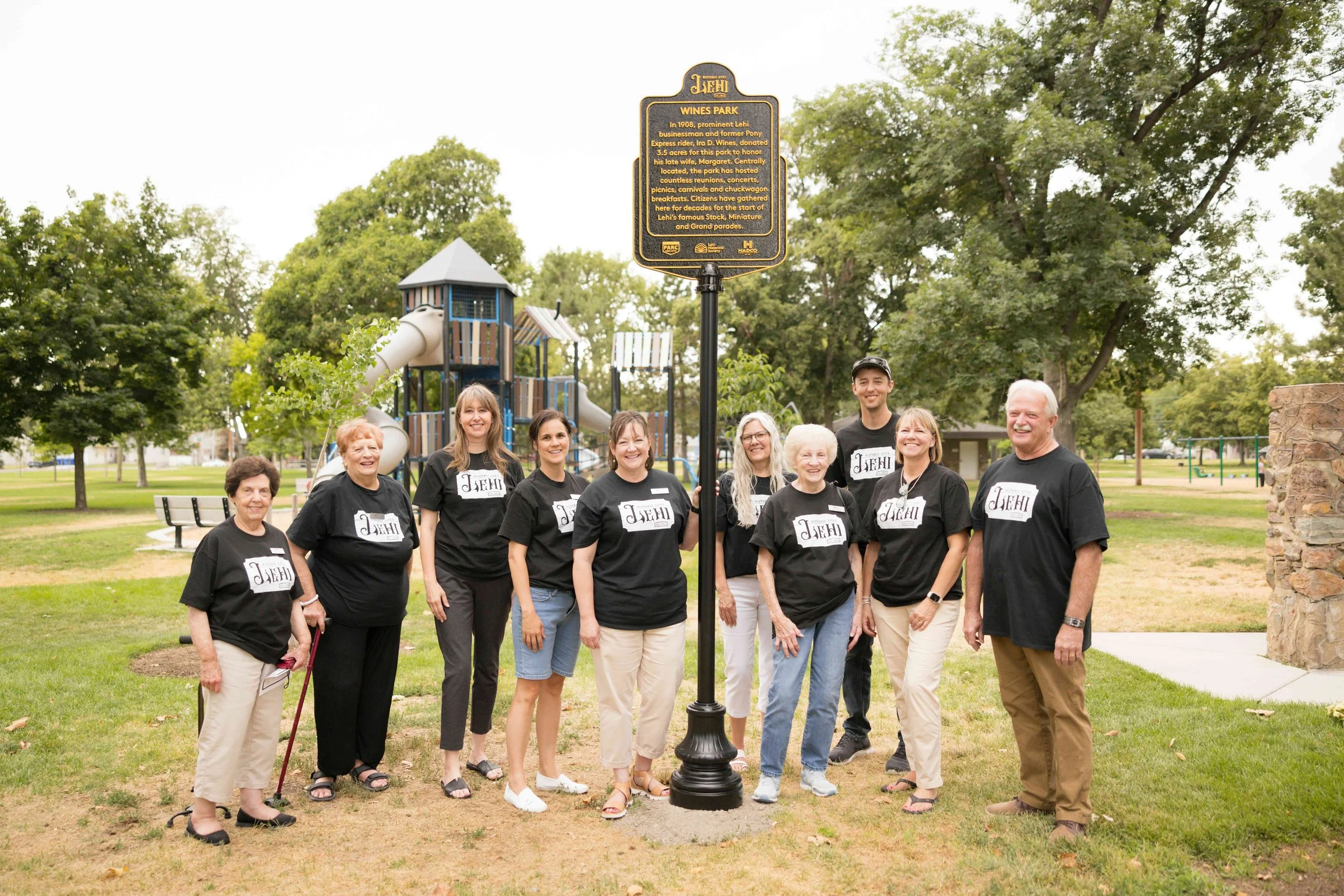
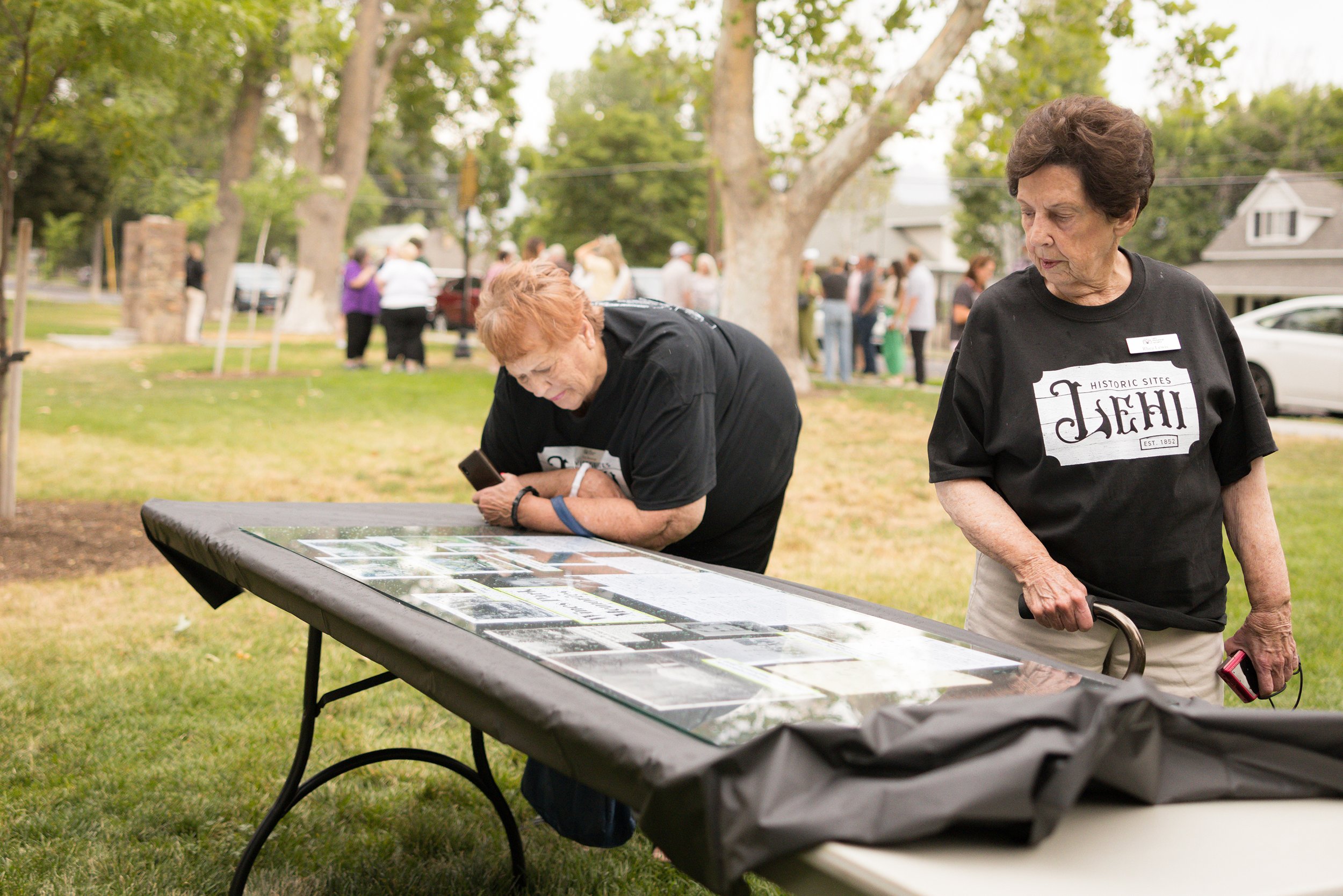
Fifty people gathered to honor Margaret Wines Park, Lehi’s oldest existing park and center of many Lehi celebrations. The park was created in 1908, when Ira D. Wines gifted the land to the city if it would maintain it as a park in honor of his late wife, Margaret. The park is Lehi’s oldest existing park and the center of many of Lehi’s celebrations.
City Councilwoman Michelle Stallings paid tribute to the many local groups and clubs that have funded trees, playground equipment, rose bushes, fireplaces, tables, concrete platforms and drinking fountains. “Even though this park began as a gift by one man,” she said, “it became a gift by many over the years.”
The marker is the second of the Lehi Historical Marker Program.
-
![]()
Unveiling of the Wines Park marker
-
![]()
Historical Society
-
![]()
Wines Park Historical unveiling event
-
![]()
Wines Park Historical Marker
100 East 600 North Lehi, Utah 84043
MARKER LOCATION