
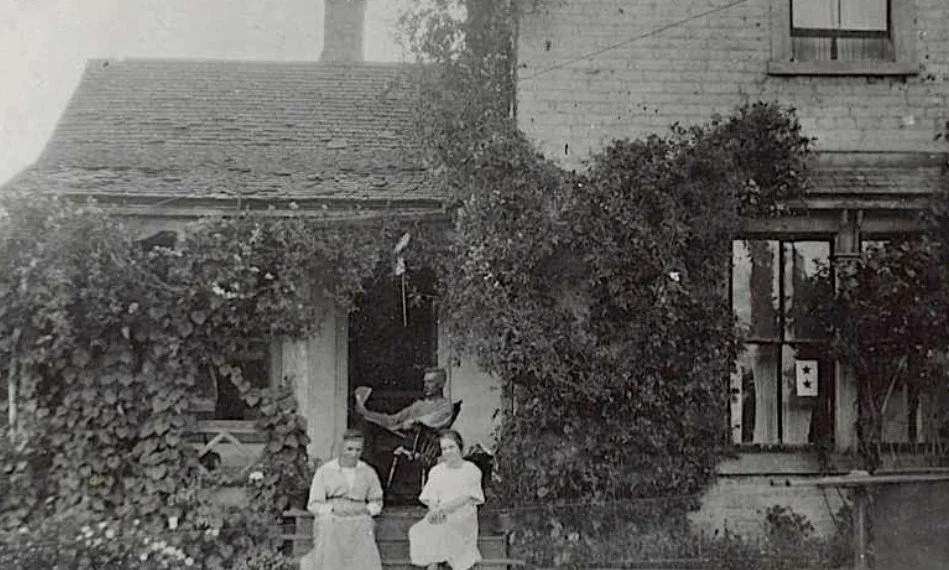
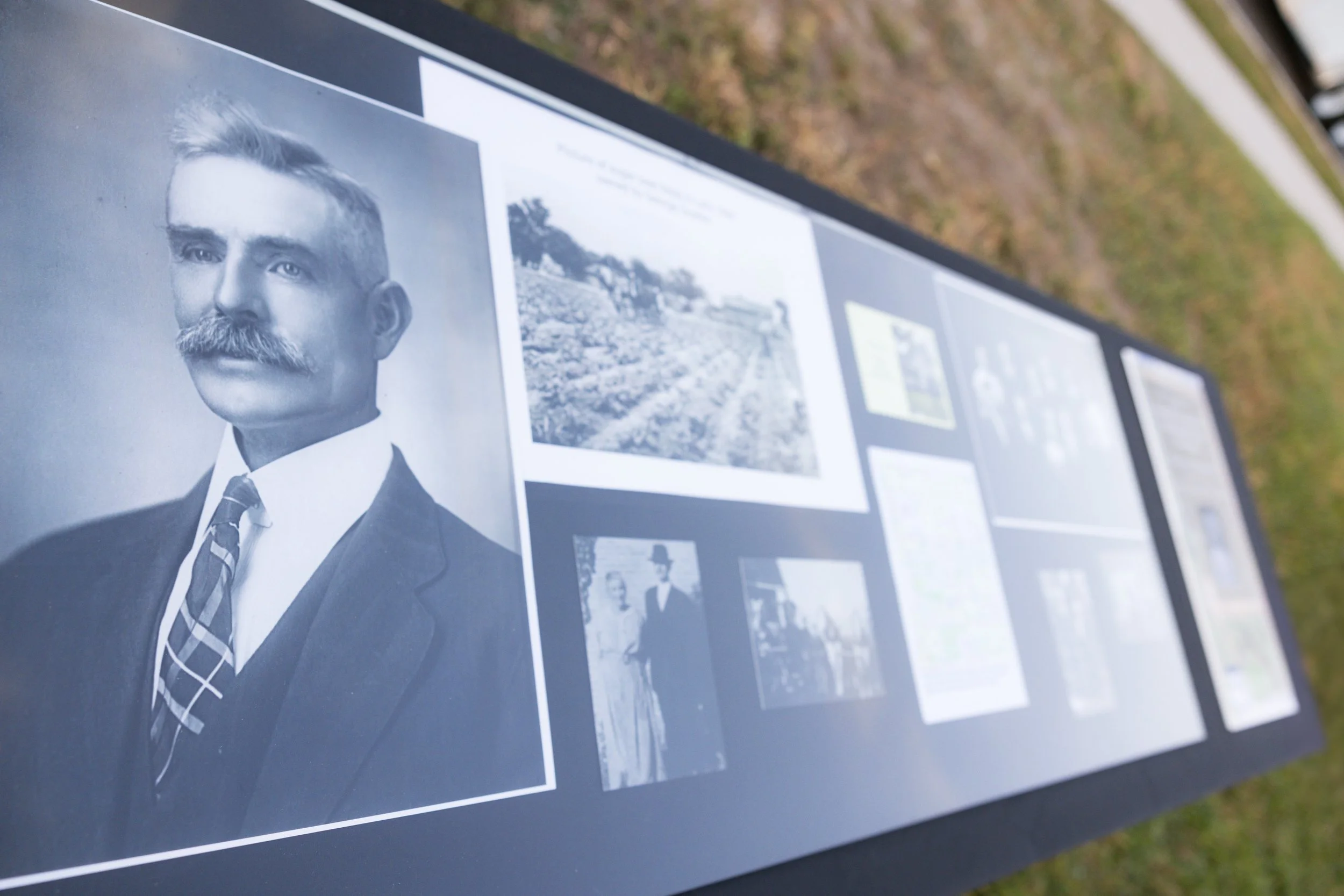
George Goates Farm
1864-1939
1900 W. Snow Springs Dr. Lehi, Utah
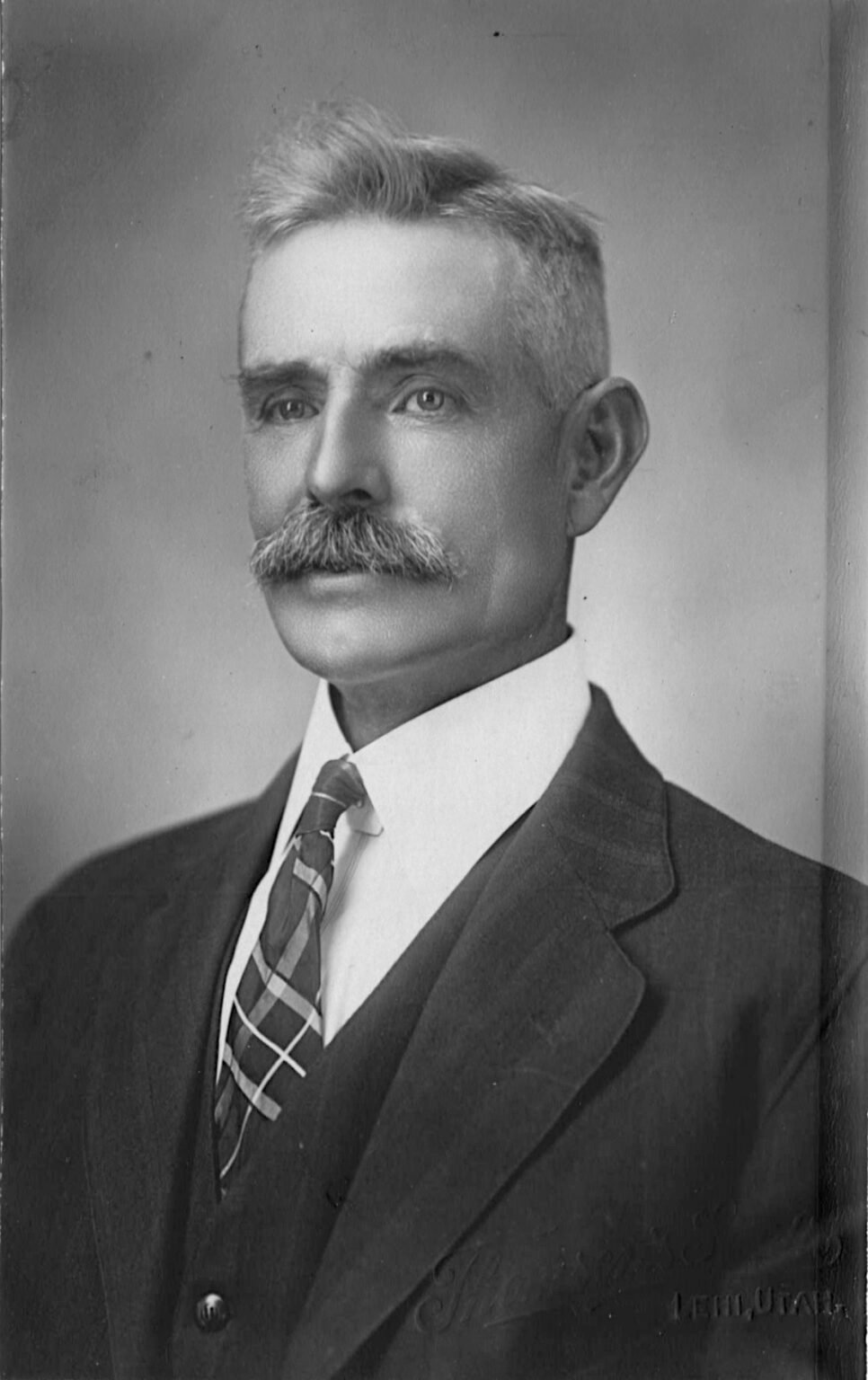
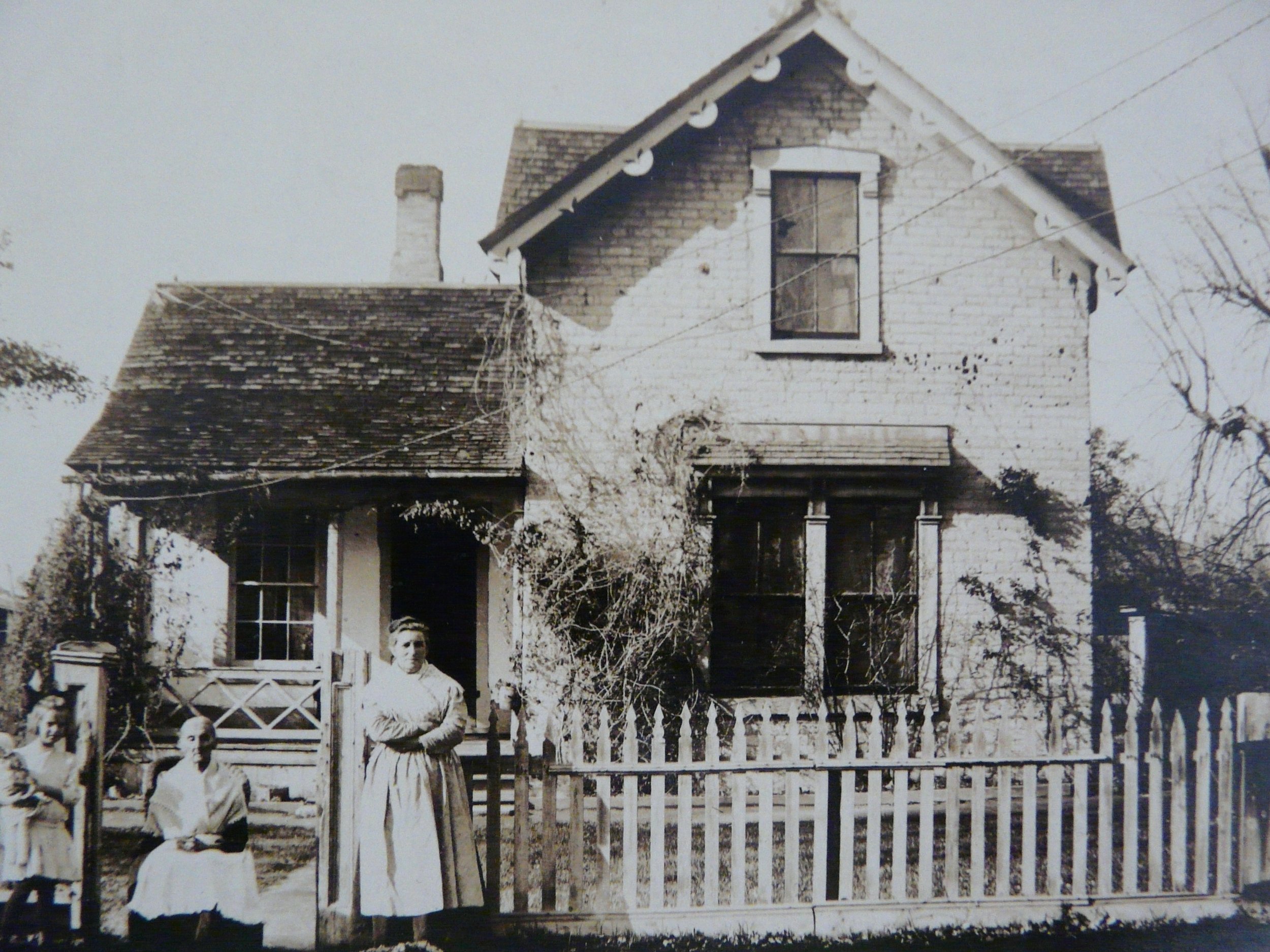
The story of George Goates has been told multiple times in General Conference of The Church of Jesus Christ of Latter-day Saints. Elder D. Todd Christofferson told the story in his October 1998 talk, “The Priesthood Quorum.” He shared the story again in April 2018 in “The Elders Quorum.” In April 1973, Elder Vaughn J. Featherstone, second counselor in the Presiding Bishopric, shared the story in his address, “Now Abideth Faith, Hope and Charity.”
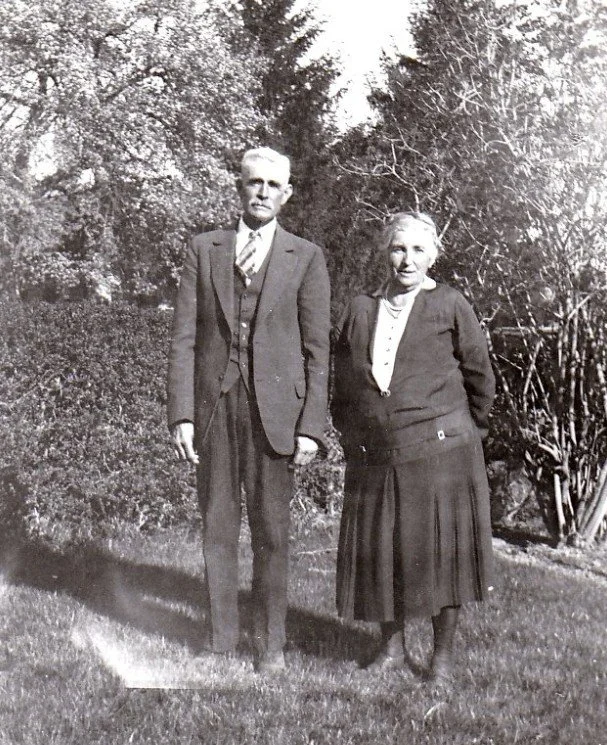
That’s All of ’Em, Uncle George
“Winter came early [in 1918] and froze much of the sugar beet crop in the ground. My dad and brother, Francis, were desperately trying to get out of the frosty ground one load of beets each day…. It was slow and tedious work.
… our eldest brother, George Albert, [called], bearing the tragic news that Kenneth, 9-year-old son of our brother Charles … had been stricken with the dread “flu” and after only a
few hours of violent sickness, had died on his father's lap and would Dad please come to Ogden and bring the boy home and lay him away in the family plot in the Lehi Cemetery.
When [Father] arrived … he found “Charl'', sprawled across the cold form of his dear one, the ugly brown discharge of the black plague oozing from his ears and nose and virtually burning up with fever. “Take my boy home,” muttered the stricken young father, “and lay him away in the family plot and come back for me tomorrow.”
Father brought Kenneth home, made a coffin … and then Dad went with Franz and two kind neighbors to dig the grave.
… when the telephone rang again … another terrifying message: Charl had died….
They sent [Charl] home in a railroad baggage car. … The next day my sturdy, inconquerable old dad was called on still another of his grim missions—this time to bring home Vesta. … Before Father arrived home … the dread word had come again. Elaine had gone to join her daddy…. Father made another heart-breaking journey to bring home and lay away a fourth member of his family, all within the week.
… After breakfast Dad said to Franz: “Well son, we had better get down to the field and see if we can get another load of beets out of the ground before they get frozen in any tighter. Hitch up and let's be on our way.”
Francis drove the four-horse outfit down the driveway, and Dad climbed aboard. As they drove along the Saratoga Road, they passed wagon after wagonload of beets being hauled to the [Lehi Sugar] factory and driven by neighborhood farmers.
As they passed by, each driver would wave a greeting: “Hi ya, Uncle George,” “Sure sorry, George,” “Tough break, George,” “You've got a lot of friends, George.”
On the last wagon … Jasper Rolfe … waved a cheery greeting and called out: “That's all of 'em, Uncle George!” My Dad turned to Francis and said, “I wish it was all of ours.”
When they arrived at the farm gate, … there wasn't a sugar beet on the whole field.
Then it dawned upon [Father] what Jasper Rolph meant when he called out: “That's all of 'em, Uncle George!” Then Dad got down off the wagon … this amazing man who never faltered, nor flinched, nor wavered throughout this agonizing ordeal—sat down on a pile of beet tops and sobbed like a little child … and said: “Thanks, Father, for the elders of our ward!”
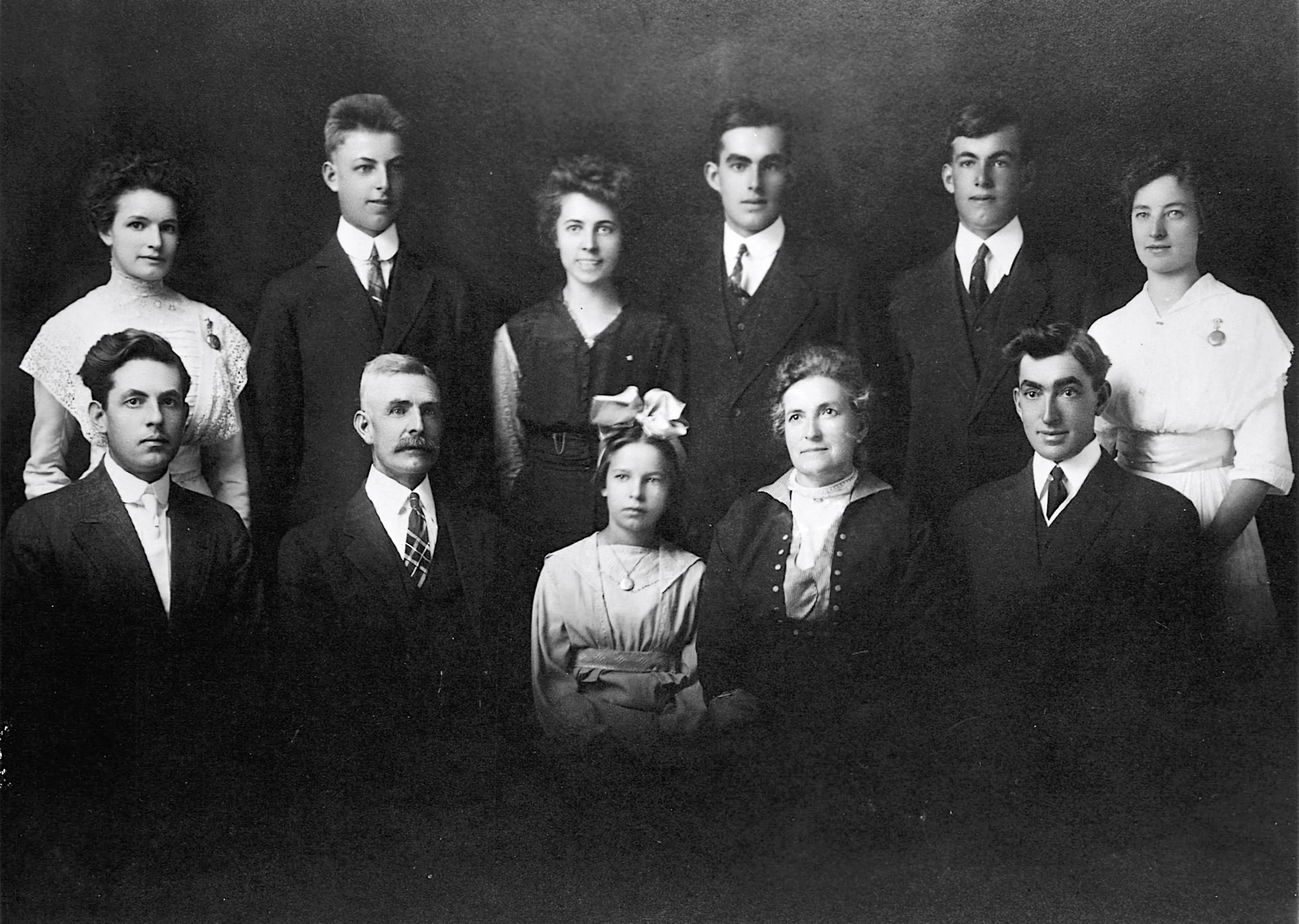
Memory of the Beet Harvest
by Francis Goates
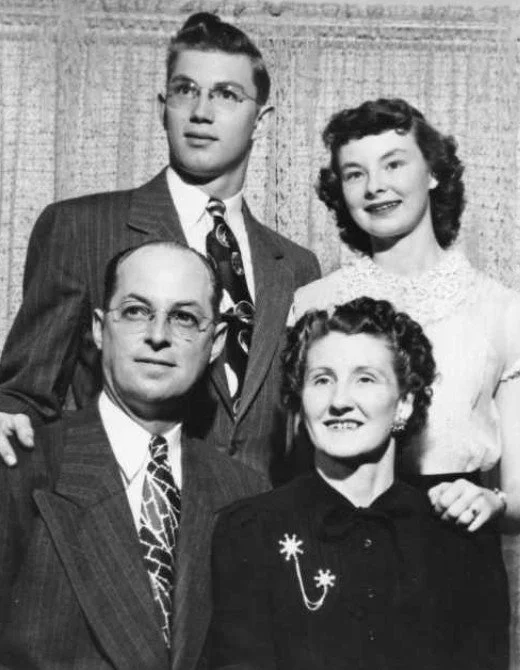
While I was on the farm, the family had a very serious tragedy happen. In October of 1918 the influenza epidemic was rampant. My brother Charles Hyrum Goates and his whole family contracted the flu. He was living in Ogden and working as farm supervisor at the Ogden Industrial School with our brother “Bert” (George Albert Goates), who was the superintendent of the school. On 18 October 1918, Charles’ oldest son, Kenneth Evans Goates dies; followed by Elaine Goates, 6 years old who died on 20 October; Charles himself, then 35 years old, died 21 October and his daughter, Vesta Jewel Goates, age 8, died on 22 October. Juliet, Charles’ wife was sick in bed herself with Raeldon (Ray) Kyle Goates, 3 years old and Pauline Goates, 7 months old. Bert and his family helped as much as they could. Father and I took the Chevy touring car and drove to Ogden on 19 October 1918 to bring home the body of Kenneth.
He died in his father’s lap, and Charles wanted him to be buried in the family plot at the Lehi Cemetery. We took him home and built a coffin for him and had a private funeral service for him. We had just come back from the cemetery when we received a telephone call from Bert saying that Charles had died and two of the little daughters were gravely ill. They shipped the bodies of Charles and Elaine, who had subsequently died, home to Lehi by railroad. The Larkin Mortuary in Ogden, who were cousins, had kindly furnished the caskets.
Father and I brought the bodies from the station. We had previously gone up to the cemetery to prepare the ground. The next day we were called again to come up and bring Vesta home. We prepared the grave site again and had services for the little ones. Everyone was so frightened of the flu that we had to dig the graves ourselves. Our kind neighbor, Roy Lott, helped us in this task.
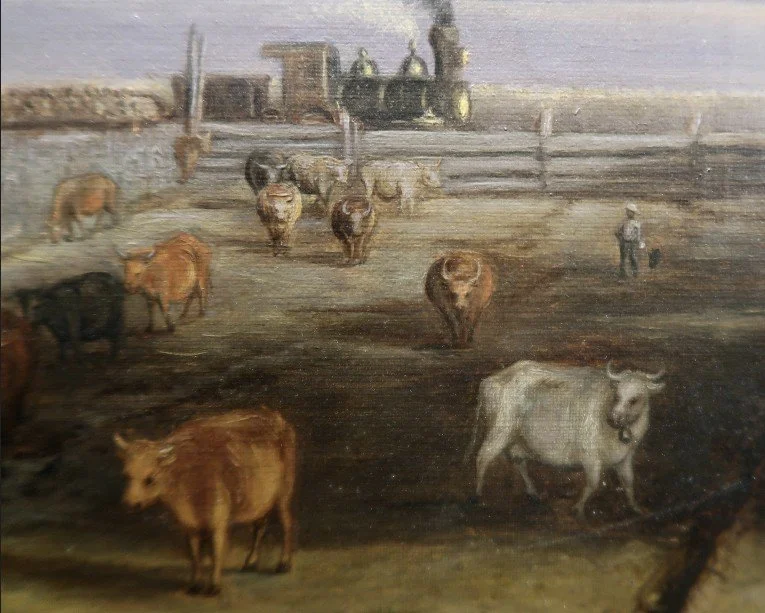
There were no more telephone calls the next day, so father and I went to the field to begin digging our beets out of the ground before they froze. I drove the four-horse wagon. As we passed the intersection of 5th West and Main Street, we had to wait for about 19 or 20 wagons loaded with sugar beets, being driven by our neighbors. All of them waved at us and they passed. The last wagon was driven by Jasper Rolfe, who called out, “That’s all of them, Uncle George.” Father turned to me and said he wished they were (all of ) ours.
When we got to our farm gate, we could see that the field had all been dug. Then we remembered what Jasper Rolfe had said as the wagons rolled by at Fox’s corner. Father got down off the wagon and sat down on a pile of beet tops and wept as I had never seen him cry before. I knew that a prayer of gratitude and thanksgiving was released from his heart to those who loved him enough to share his grief and sorrows and being their “brother’s keeper.”
We drove quietly home. We went into the house and Father sat in his favorite rocking chair still sobbing. Mother comforted him as he told her that the neighbors had harvested the 10 acres of beets. He exclaimed, “Thank God for such good neighbors and friends.”
Francis Rayment Goates 1898-1974
Marker Location
1900 W. Snow Springs Dr. Lehi, Utah
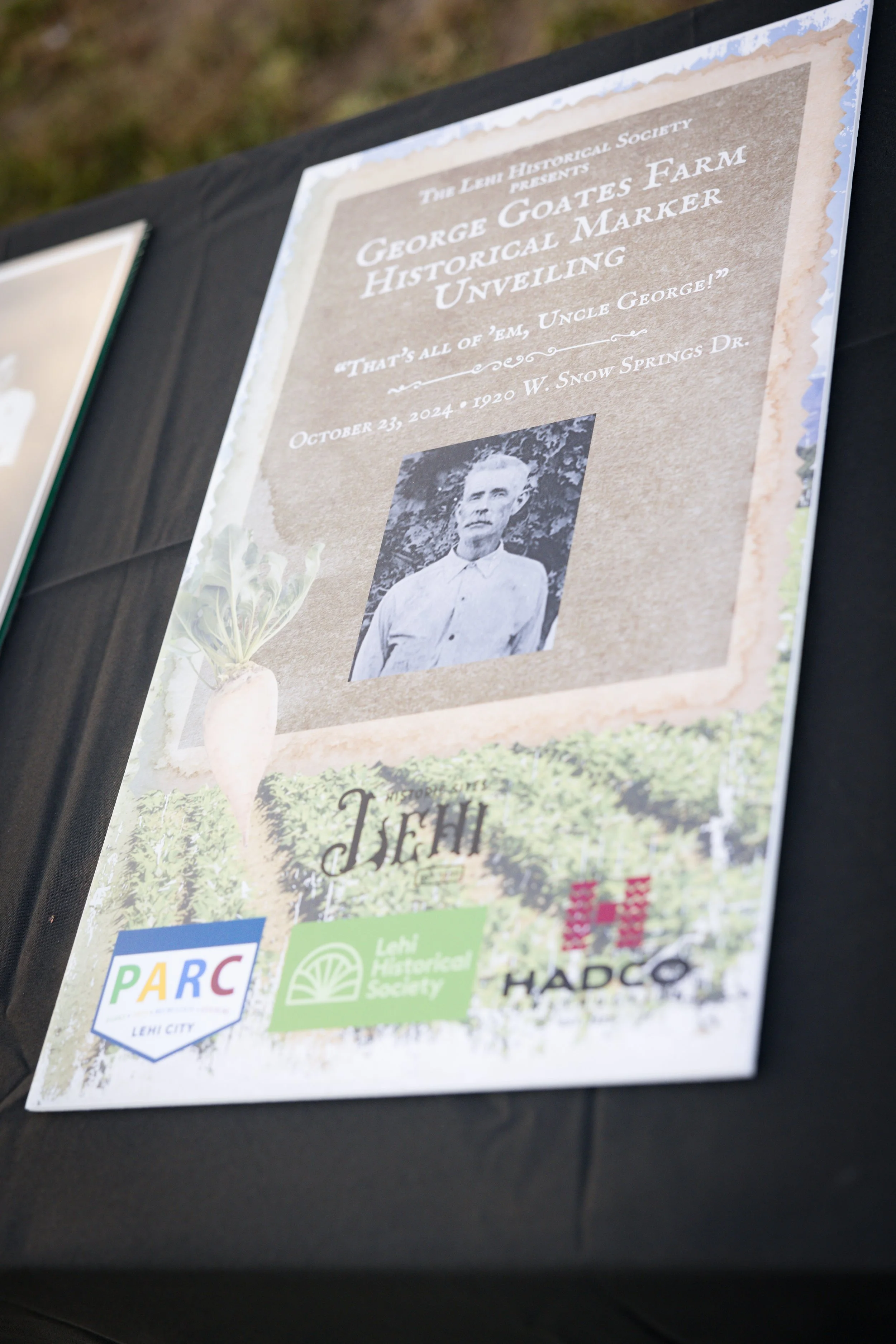
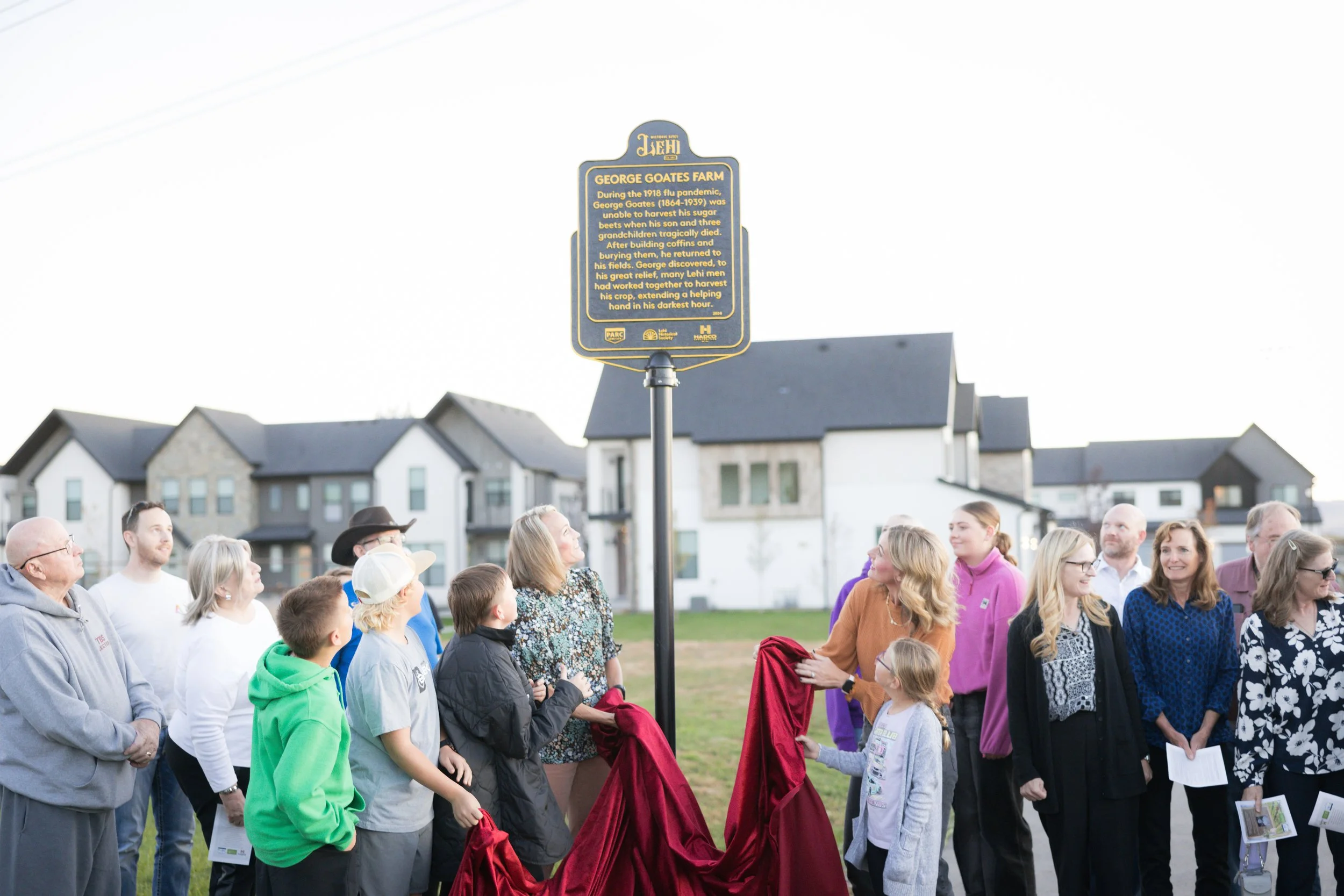
Marker Unveiling
October 23, 2024
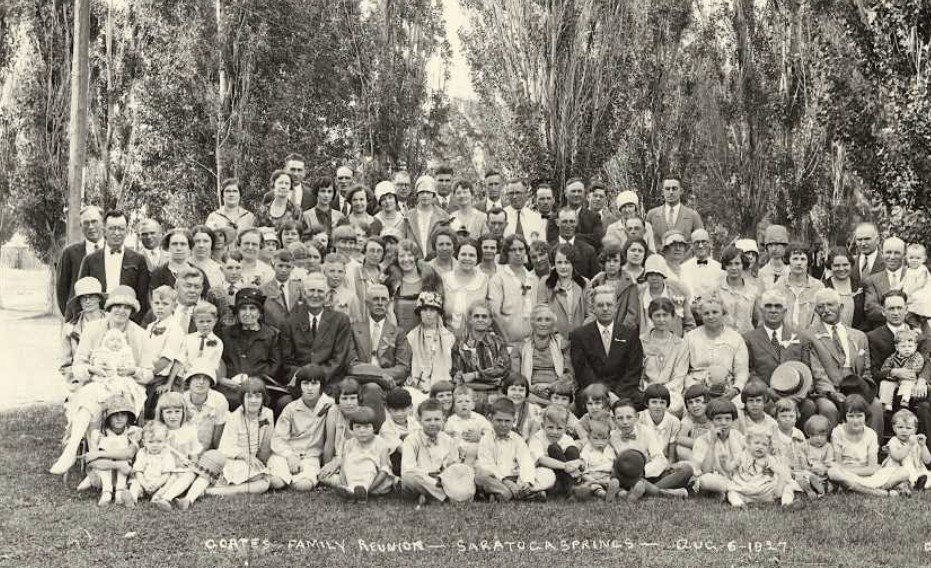
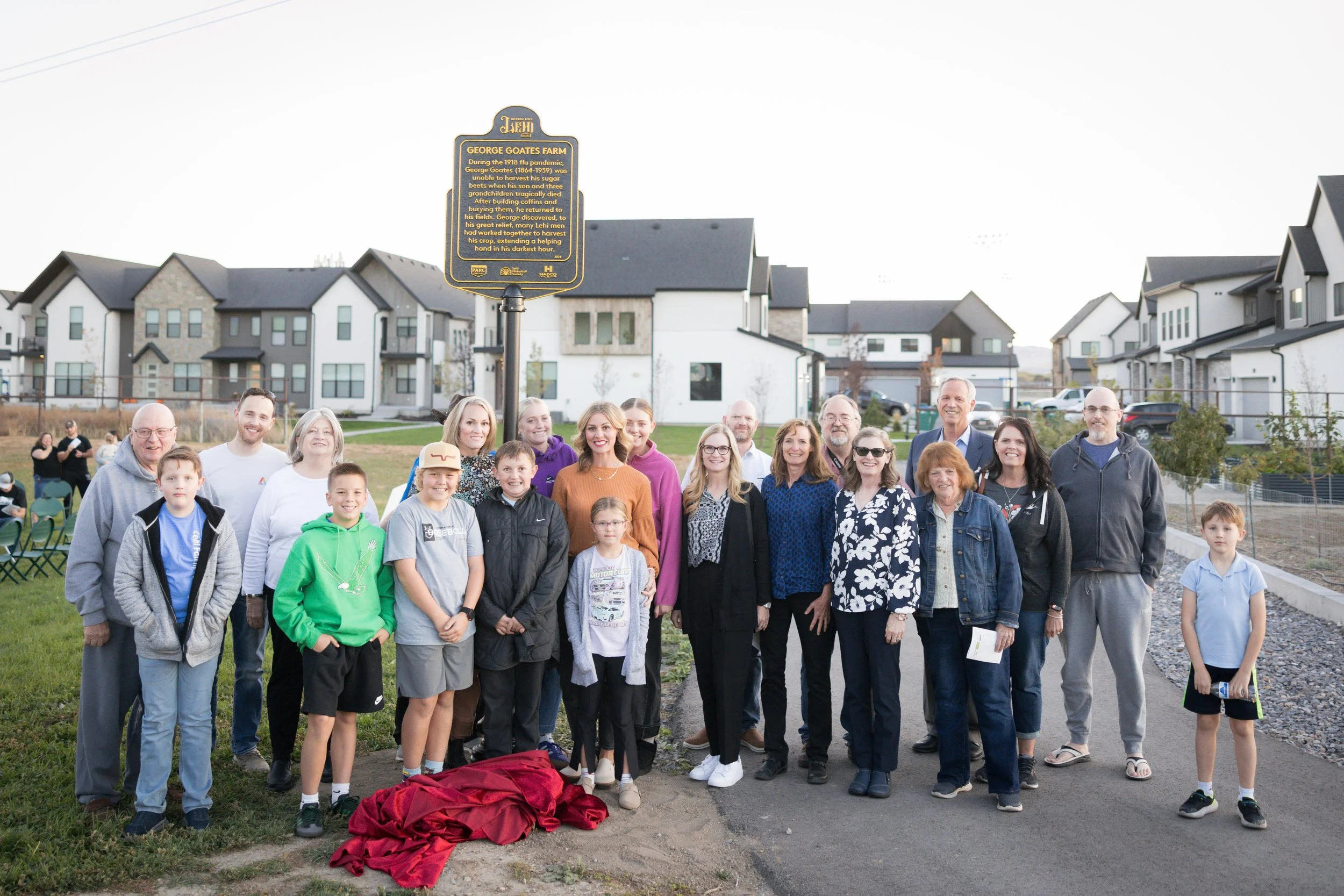
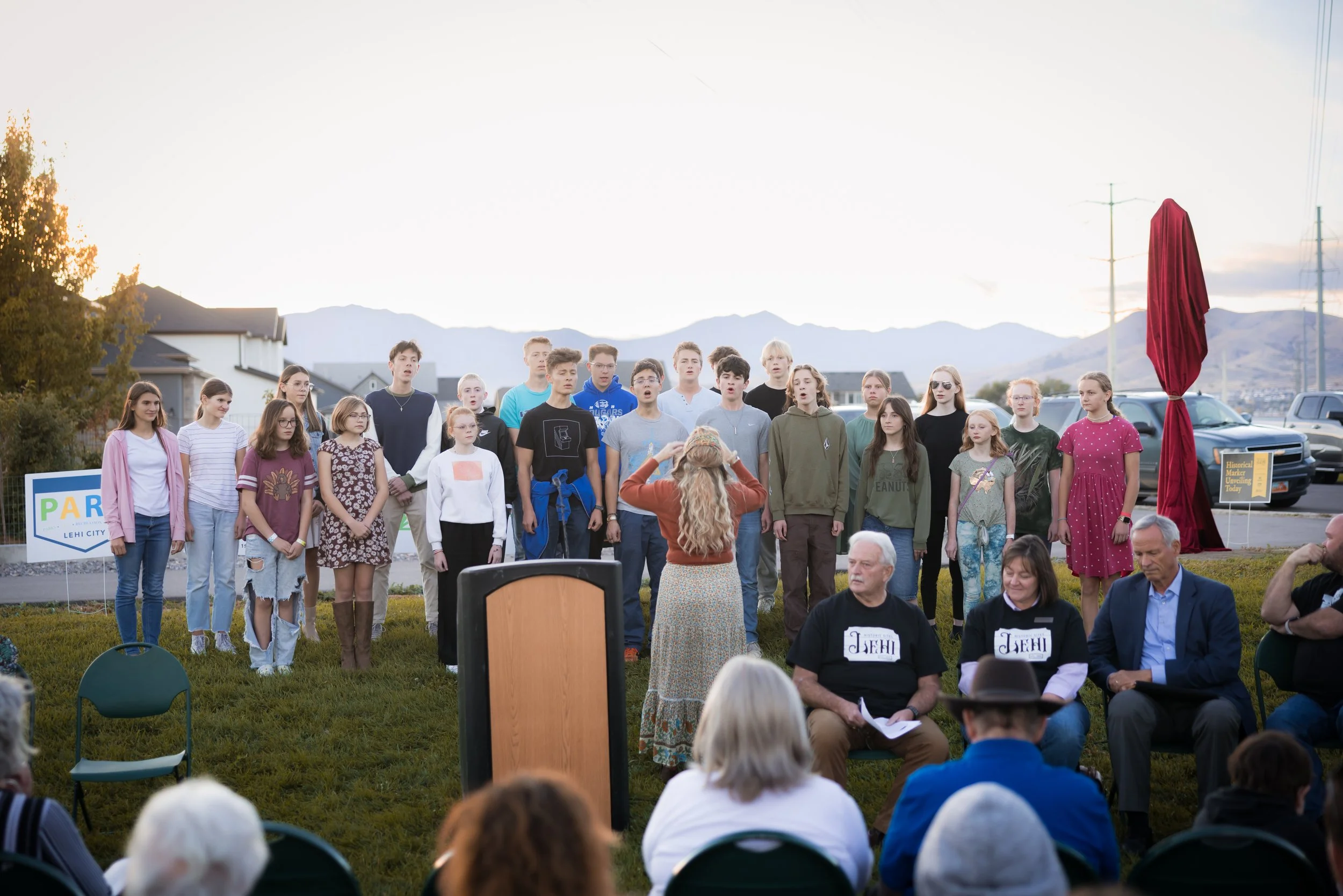
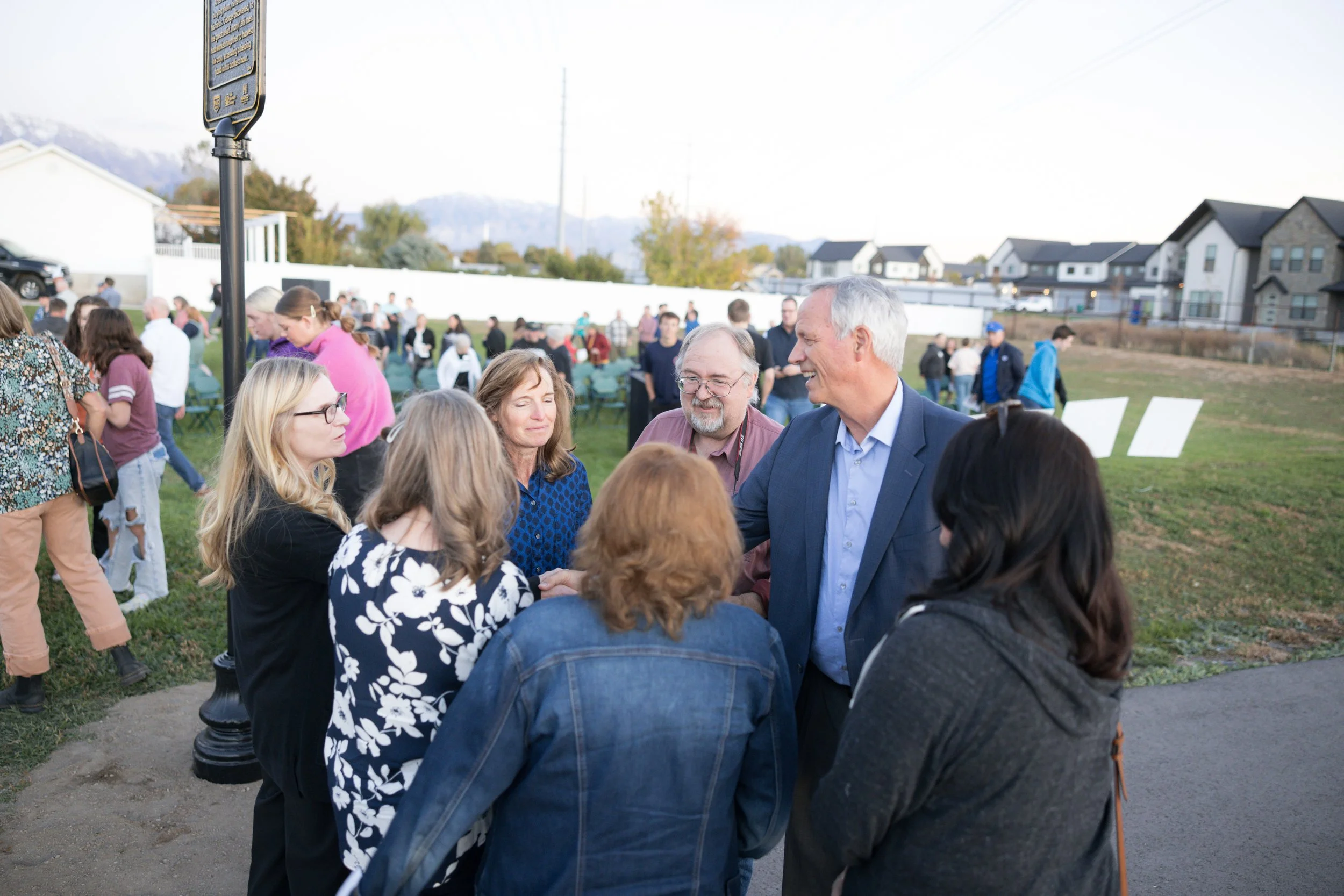
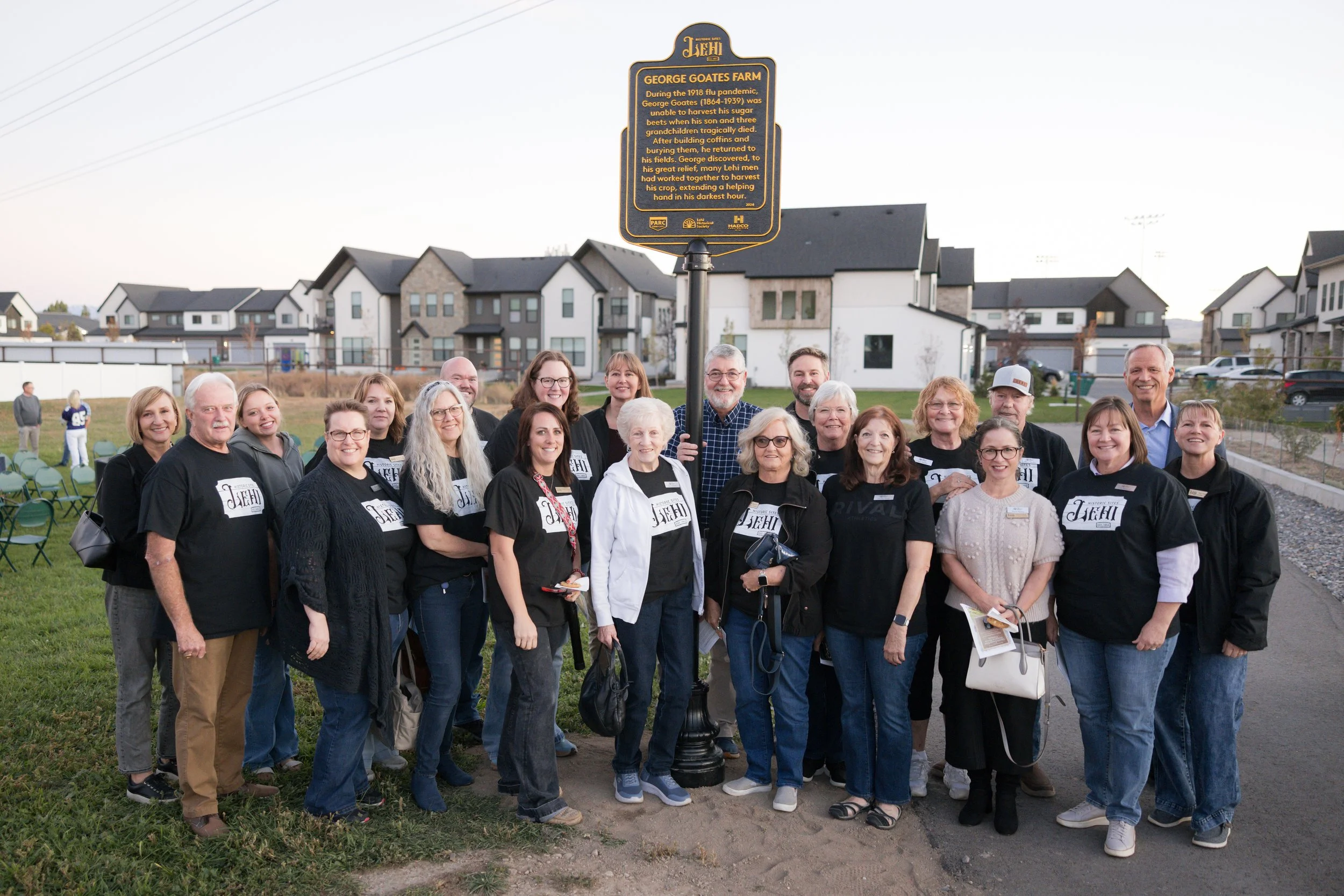
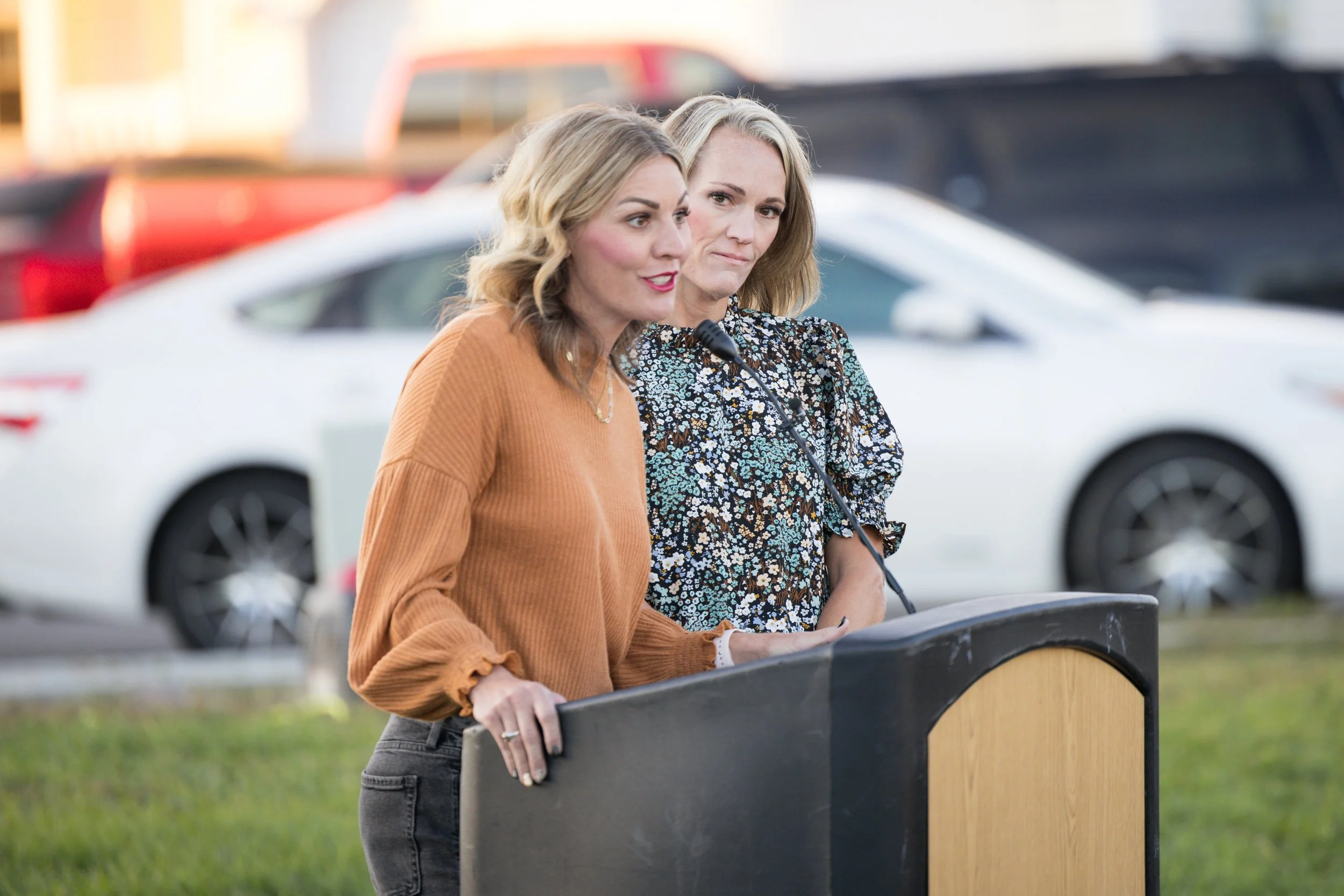
The historical marker was unveiled to an audience that included civic and religious leaders, community members and descendants of the Goates family. The site, located at 1900 Snow Springs Dr., was honored as an example of Lehi’s heritage of community and service.
Samantha Wycherly Brigman and Nicole Wycherly Skidmore, great-granddaughters of George Goates, spoke. Brigman noted that the purpose of the marker was “to recognize the amazing love and service that was rendered to our family 106 years ago.”
The marker is the fifth of the Lehi Historical Marker Program

Learn More
Investigate our online archive for more information on the George Goates Farm

Content Contributors
——, Lehi Historical Society
Kasia May, University of Utah
Support our Mission
Purchase collector marker pins to show your Lehi spirit! Your purchase will support the Lehi Historical Marker Program and the Lehi Historical Society. There are currently 15 pins available in our gift shop
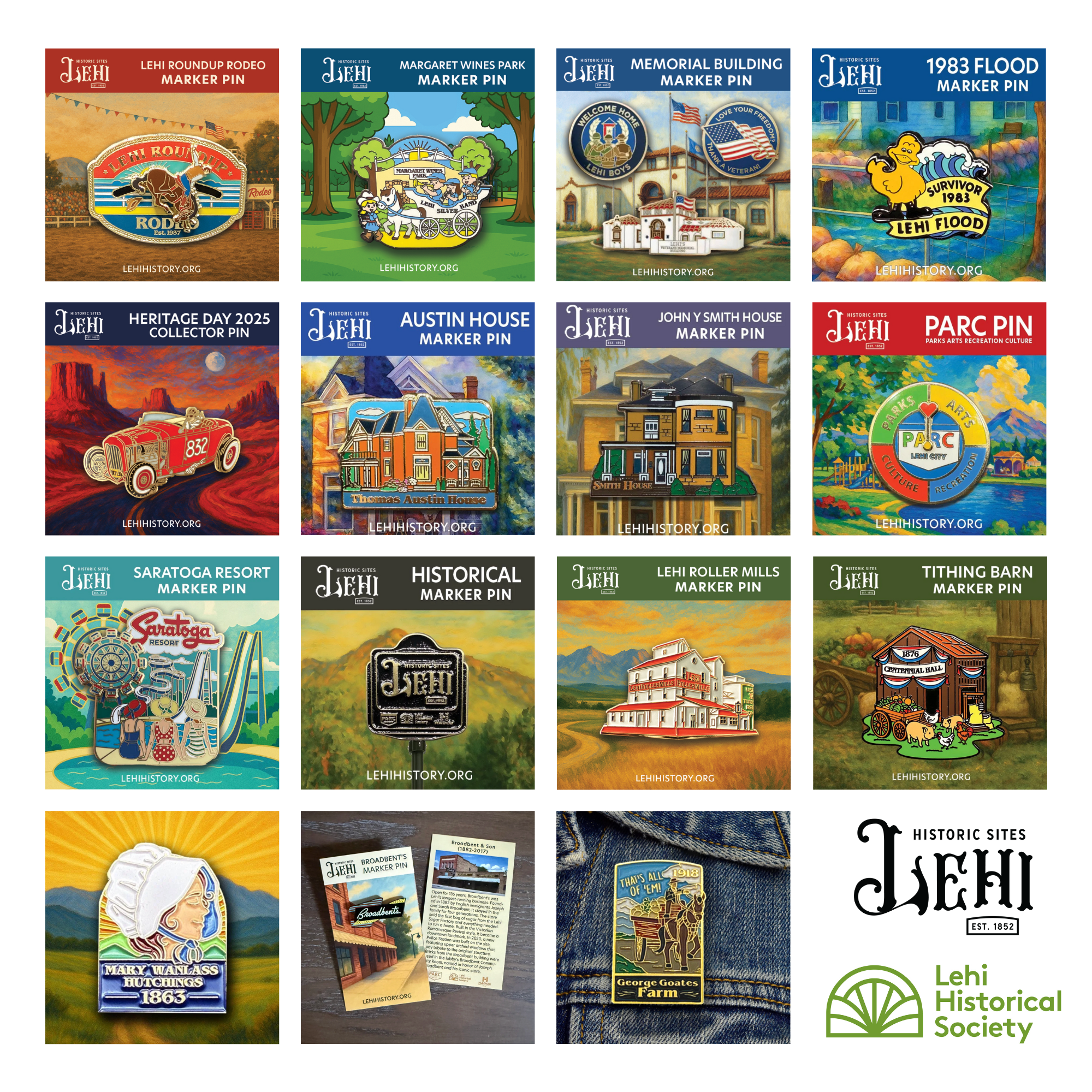
Celebrate Lehi’s history with our complete 15-pin collection. This special bundle includes one of each enamel pin from the Historical Marker Collection.
Pins included in the full set:
• Lehi Roundup Rodeo Marker Pin
• Margaret Wines Park Marker Pin
• Memorial Building Marker Pin
• 1983 Flood Marker Pin
• Heritage Day 2025 Collector Pin
• Austin House Marker Pin
• John Y Smith House Marker Pin
• PARC Pin
• Saratoga Resort Marker Pin
• Historical Marker Pin
• Lehi Roller Mills Marker Pin
• Tithing Barn Marker Pin
• Mary Wanlass Hutchings 1863 Pin
• Broadbent’s Marker Pin
• George Goates Farm Marker Pin
Each pin reflects a real story from Lehi’s past. Landmarks, founders, the rodeo, community legends, floods, and the places that shaped our city. This full set brings together every marker design in one place. It is perfect for collectors, teachers, longtime Lehi families, newcomers wanting to learn the stories behind our city, or anyone looking for a meaningful gift that supports local history.
Take home the complete collection and own 15 pieces of Lehi’s story.

Celebrate one of Lehi’s most cherished legacies with this Historical Marker collector pin honoring a remarkable act of community service during one family’s darkest times.
Premium soft enamel with gold-toned metal
Depicts the final wagonload of sugar beets pulled by Jasper Rolfe
Measures 1.75 in tall
Double-post backing with secure rubber covers for added stability
“Lehi Historical Society” engraved on the back
Perfect for collectors, history lovers, and proud Lehi locals
In 1918, as George Goates mourned the loss of his son and three grandchildren to the influenza epidemic, neighbors quietly stepped in to harvest his entire beet crop. The moment captured in this pin shows the last wagon leaving the field, driven by Jasper Rolfe, who called out, “That’s all of ’em, Uncle George!” It was a tender act of love and neighborly care, one that brought George to tears and has become a defining story of Lehi’s enduring spirit.
A meaningful keepsake honoring compassion, resilience, and the power of community.
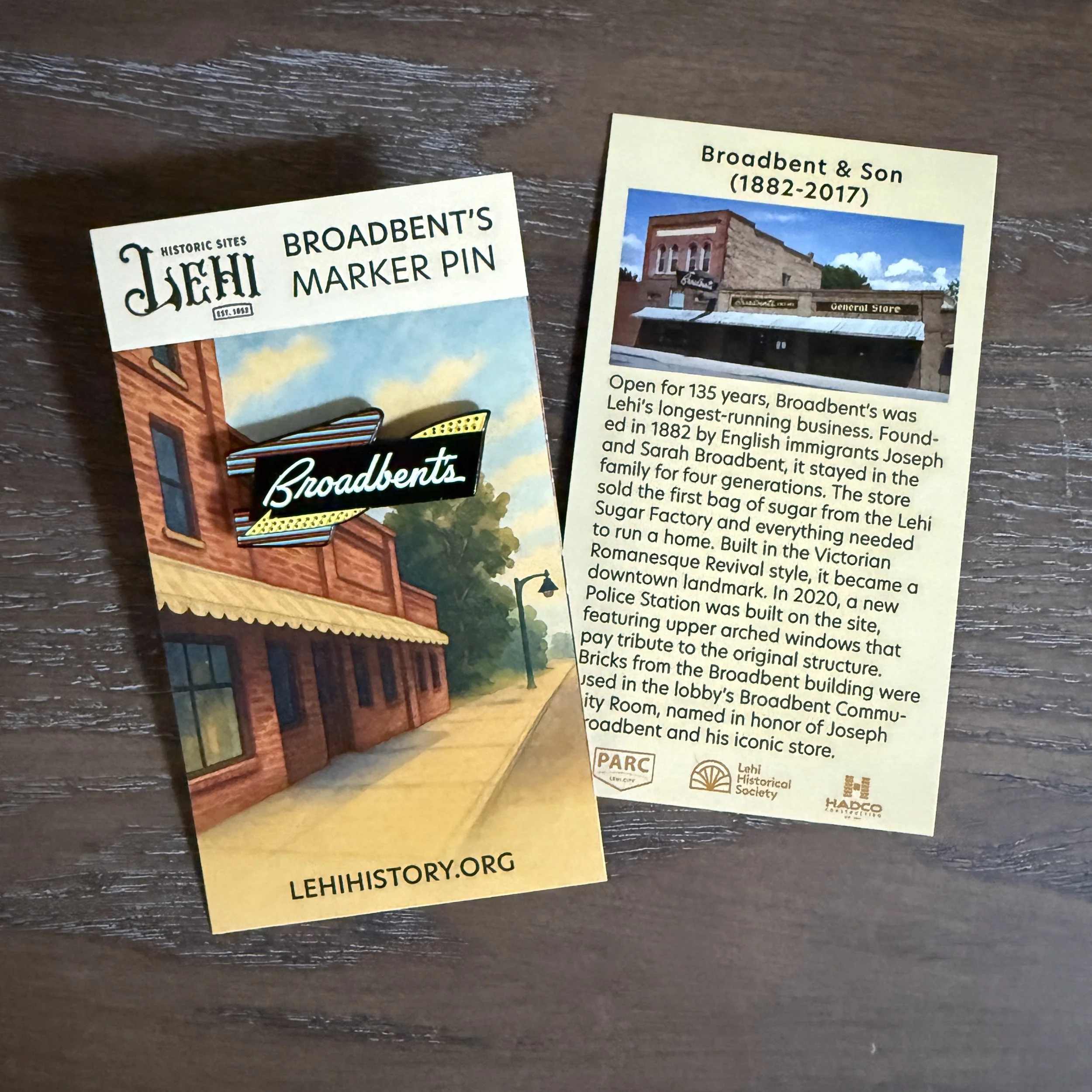
Celebrate a Lehi icon with this Historical Marker collector pin honoring Broadbent’s Store, the longest-running business in Lehi’s history and a cornerstone of the community for 135 years.
Soft enamel with black dyed metal plating
Features the vintage neon Broadbent’s sign installed in 1954
Measures 1.25 inches in length
Single-post backing with secure rubber cover
Perfect for collectors, history lovers, and proud Lehi locals
Founded in 1882 by English immigrants Joseph and Sarah Broadbent, the store was passed down through four generations and became known for offering everything from dry goods to fine fabrics. It sold the first bag of sugar produced by the Lehi Sugar Factory and served as a trusted hub for generations of families. The iconic neon sign, featured in this pin, hung proudly from 1954 until the store’s closing in 2017. Today, the arched windows of the Lehi Police Department pay tribute to the building that once stood in its place.
A nostalgic keepsake celebrating a legacy of service, family, and small-town pride.