
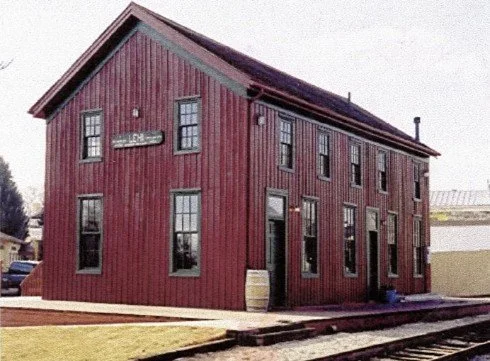
Utah Southern Railroad
Est. 1872
225 E. State St. Lehi, UT
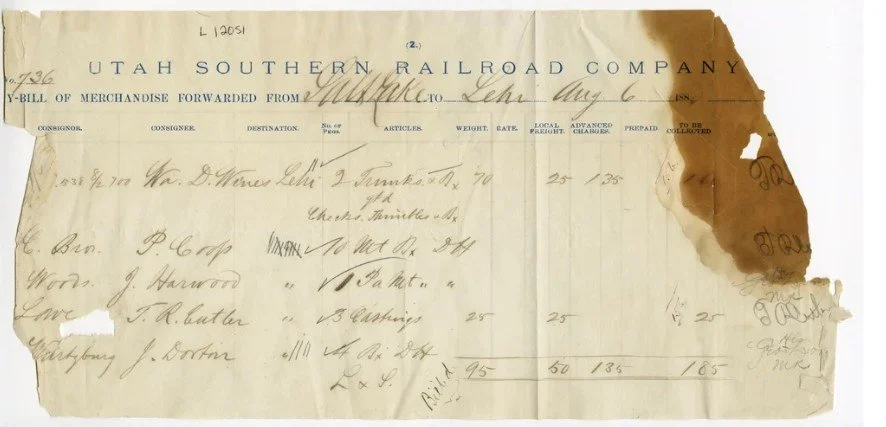
The first symbolic spike of the LDS Church-owned Utah Southern Railroad was driven by Brigham Young on May 1, 1871. Track-laying began a month later. The 13 miles to Sandy were opened to traffic in September. By February of 1872 the line had reached Traverse Mountain, northwest of Lehi.
The Iron Road to Opportunity
The first train chugged into Lehi amid the cheers of hundreds of townspeople accompanied by a lively band. Most of the enthusiastic crowd saw, for the first time, a steam locomotive with its huge blunderbuss smokestack and shrieking whistle.
The effect of the Utah Southern on Lehi was dramatic. Teamsters and bullwhackers transported goods to and from points south as well as timber and ore from the rich mines in American Fork Canyon and the Tintic District.
State Street and Second East exploded with growth. Dozens of business establishments sprang up to service the railroad and its clientele. The railroad changed ownership multiple times over the ensuing decades.
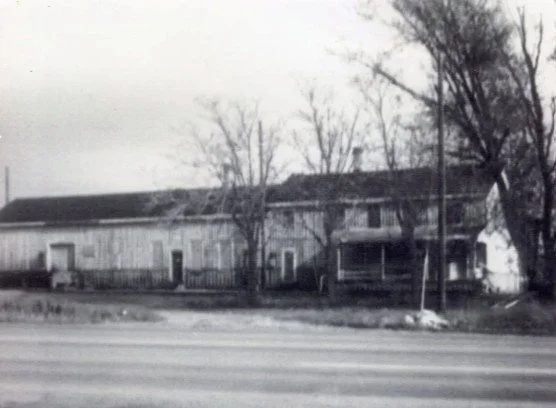
The Jerry Harris family purchased the Utah Southern Railroad Depot and moved the original portion of the building to the Harris property north of the tracks at 813 North and 150 East. It remains the oldest still-standing railroad depot in Utah. In 1996, the structure was purchased by the Lehi Historical Preservation Commission, which was successful in listing the building on the National Register of Historical Places. In the late 1990s, the building was returned to its original location at 225 E. State St.
Marker Location
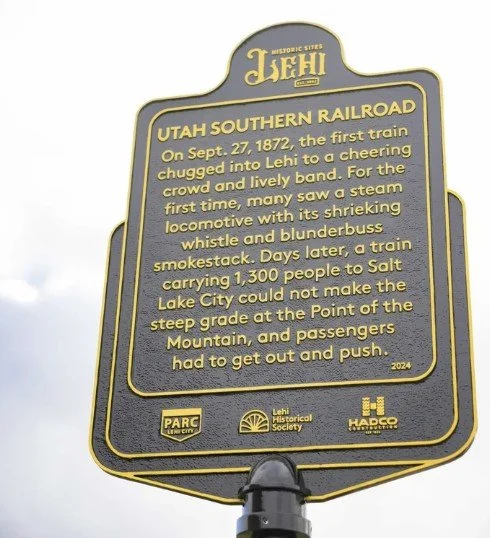
225 E. State St. Lehi, UT
Marker Unveiling
November 16, 2024
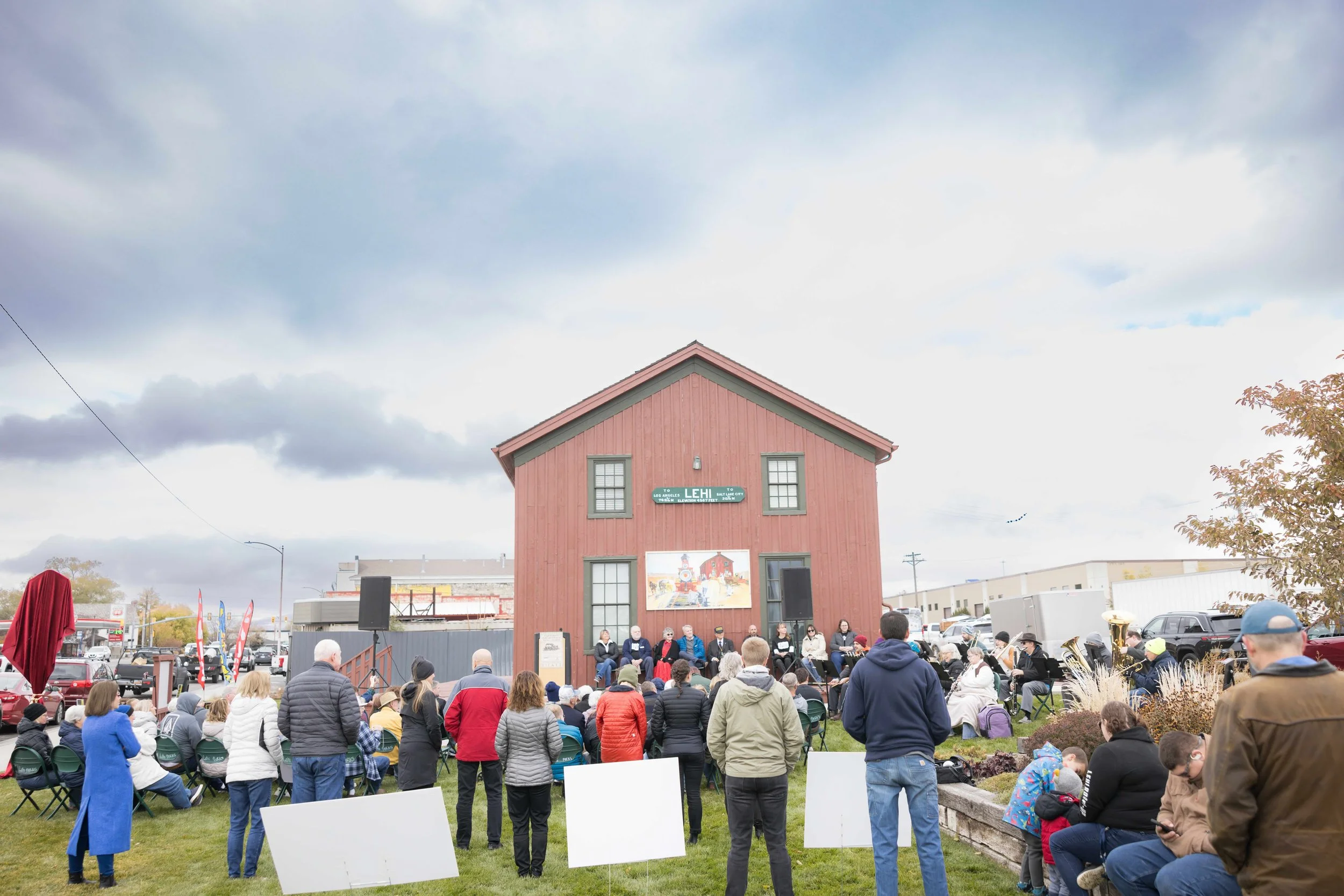
More than 100 people braved the cold and cloudy weather to attend the unveiling of the Utah Southern Railroad historical marker at the Utah Southern Railroad Depot.
“The Utah Southern Railroad had a dramatic effect on Lehi,” said Lee Anderson, a member of the Lehi Historical Society. “For nearly a year, Lehi was the end of the line. All passengers and freight coming to and from Utah Valley and southern Utah funneled through Lehi.”
Donald J. West and Darlene Van Werkhoven, grandchildren of Lehi’s Utah Southern Railroad Depot Stationmaster Rufus Jesse Stice, shared stories and touched on the history of the depot and its restoration.
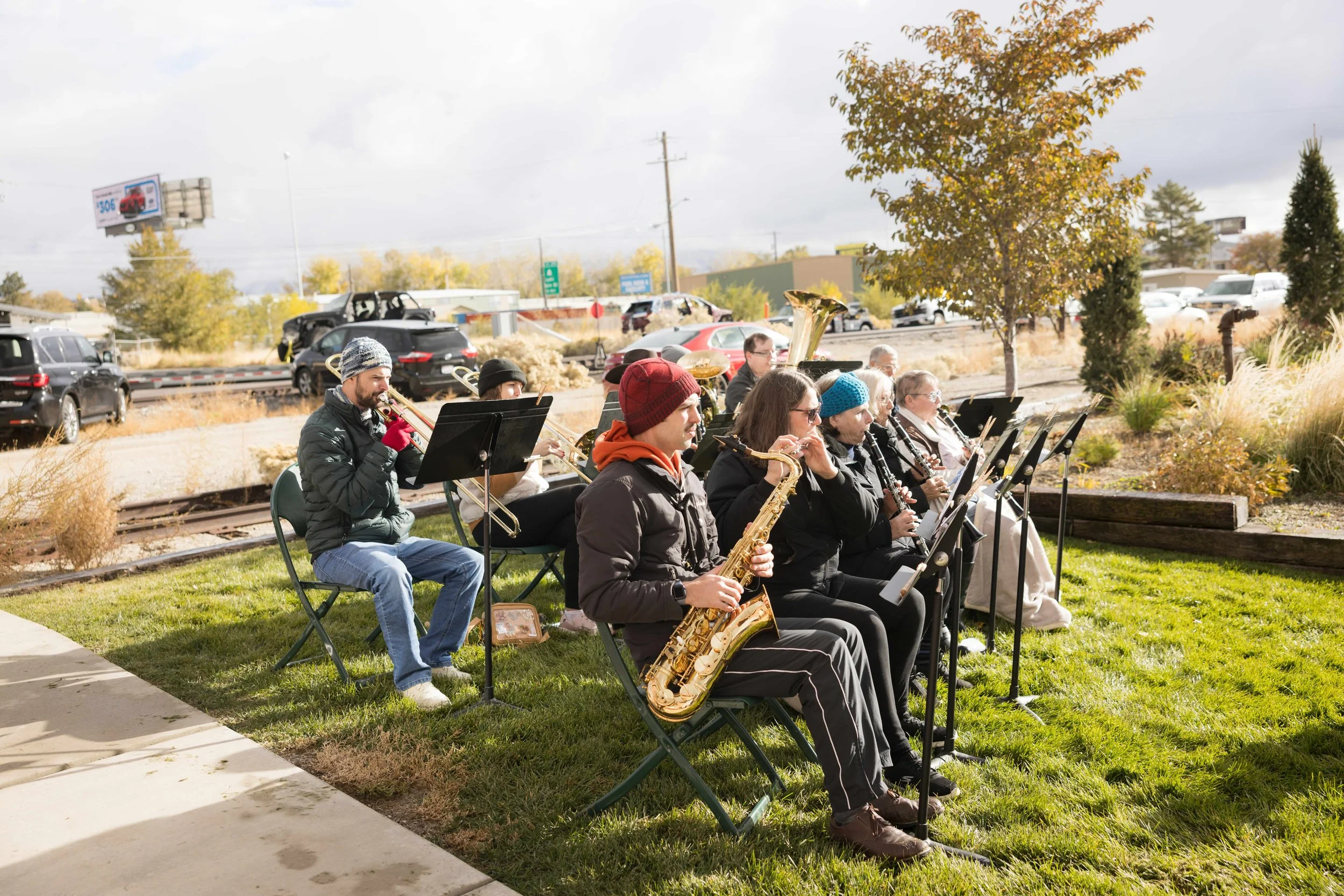
Reminiscent of the band that played when the first train pulled into Lehi more than 150 years ago, the Lehi Silver Band treated the audience to two lively musical numbers.
The marker is the sixth of the Lehi Historical Maker Program.
-
![]()
The Lehi Silver Band plays at the unveiling.
-
![]()
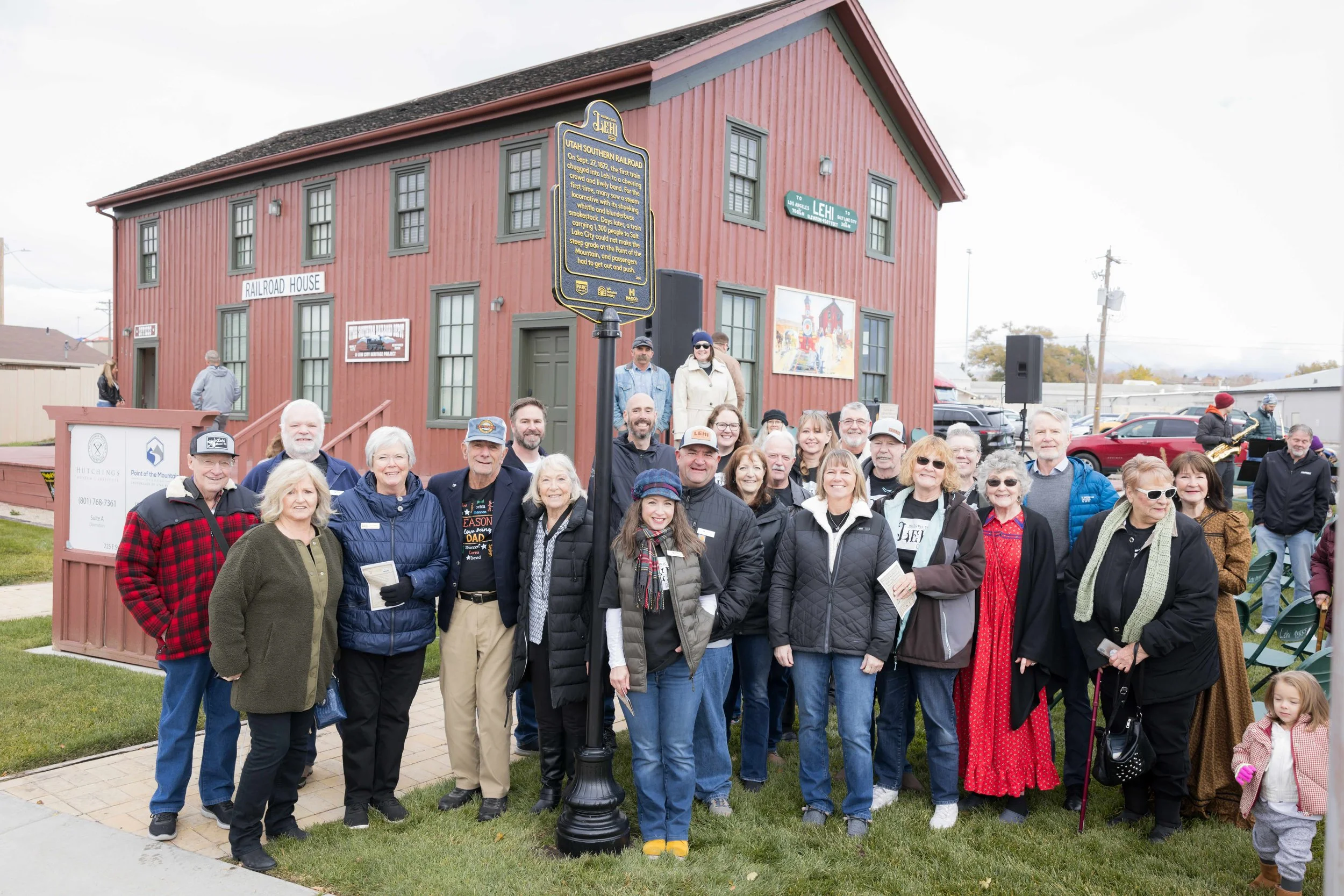
Community and families gather at the newly installed historical marker.
-
![]()
The community gathers for the Utah Southern Railroad Historical Marker Unveiling.
-
![]()
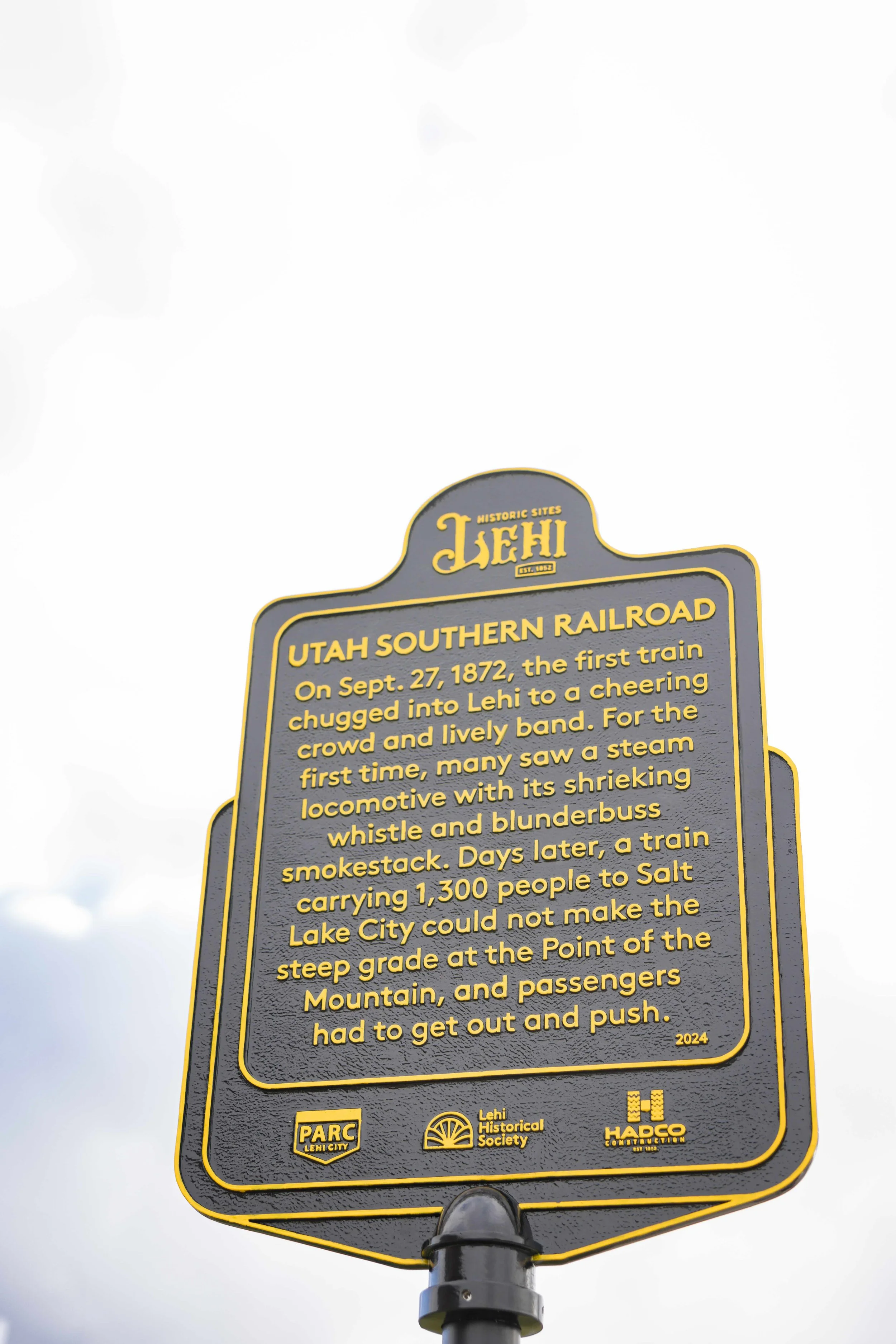
The Utah Southern Railroad Historical Marker was unveiled on Nov. 16, 2024.
-
![]()
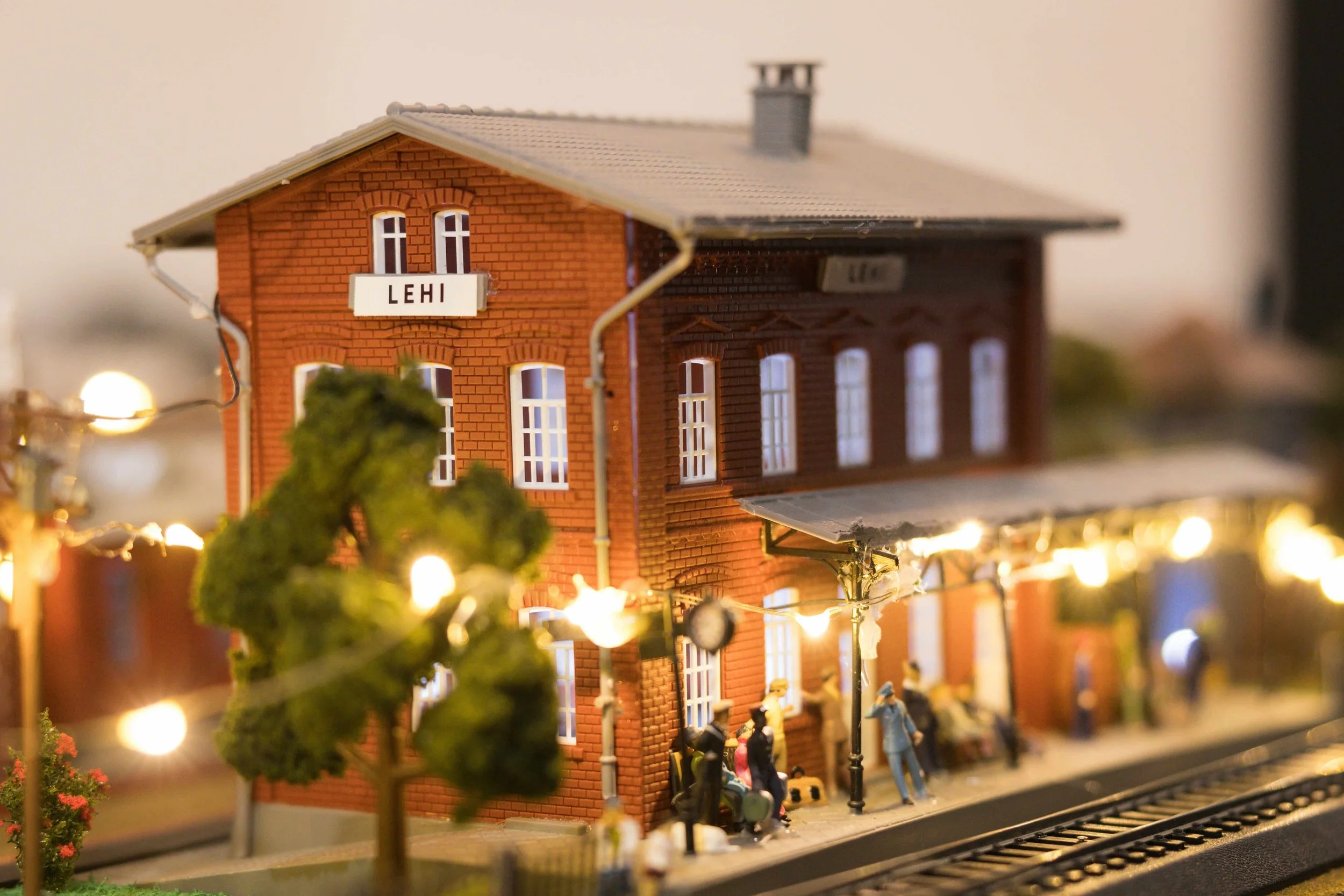
Donald J. West, a grandson of Lehi’s Southern Utah Railroad Depot Stationmaster Rufus Jesse Stice, displayed a diorama of Lehi's historic depot and rail system.
Learn More
Investigate our online archive for more information on the Utah Southern Railroad.

Content Contributors
——, Lehi Historical Society
Kasia May, University of Utah
Support our Mission
Purchase collector marker pins to show your Lehi spirit! Your purchase will support the Lehi Historical Marker Program and the Lehi Historical Society. There are currently 15 pins available in our gift shop
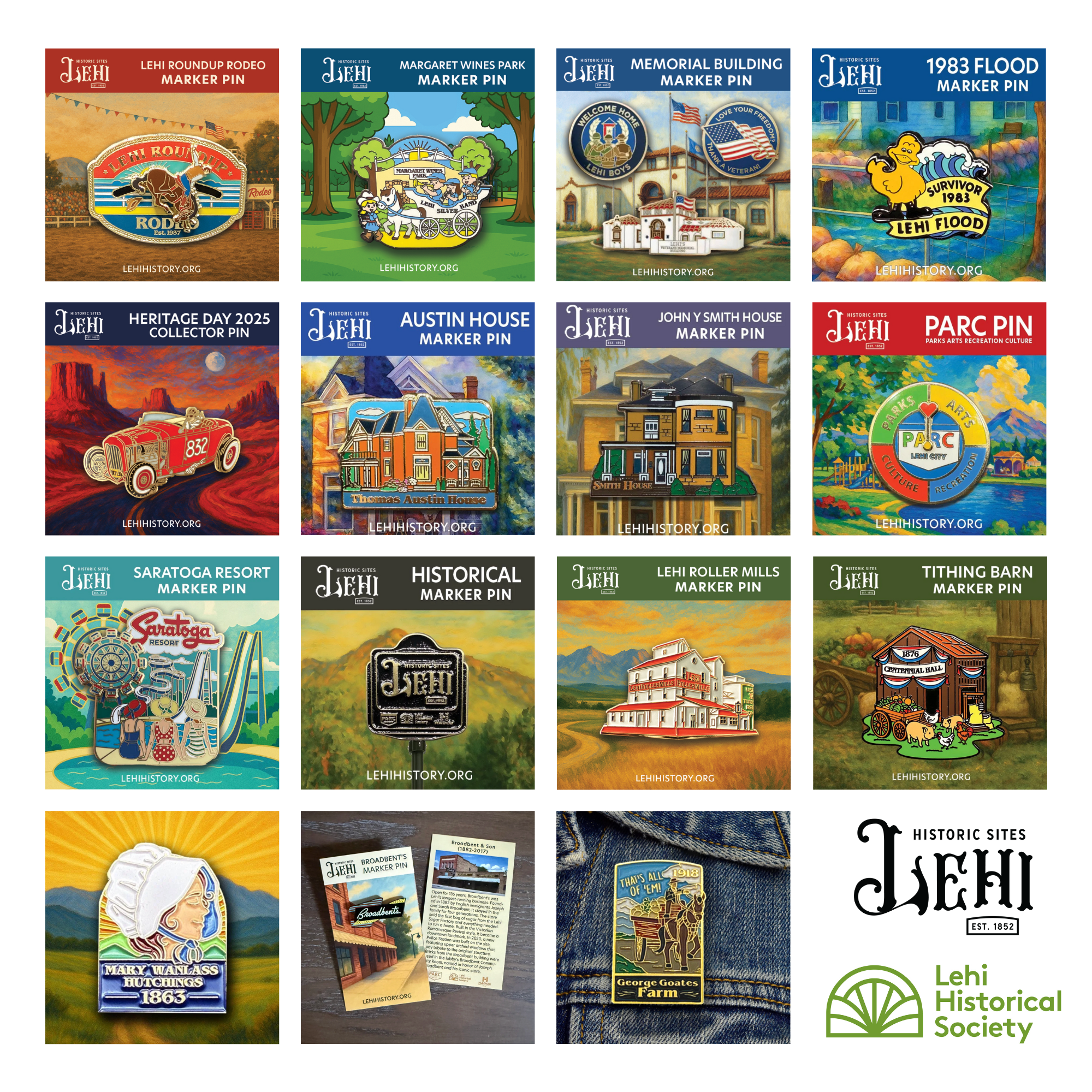
Celebrate Lehi’s history with our complete 15-pin collection. This special bundle includes one of each enamel pin from the Historical Marker Collection.
Pins included in the full set:
• Lehi Roundup Rodeo Marker Pin
• Margaret Wines Park Marker Pin
• Memorial Building Marker Pin
• 1983 Flood Marker Pin
• Heritage Day 2025 Collector Pin
• Austin House Marker Pin
• John Y Smith House Marker Pin
• PARC Pin
• Saratoga Resort Marker Pin
• Historical Marker Pin
• Lehi Roller Mills Marker Pin
• Tithing Barn Marker Pin
• Mary Wanlass Hutchings 1863 Pin
• Broadbent’s Marker Pin
• George Goates Farm Marker Pin
Each pin reflects a real story from Lehi’s past. Landmarks, founders, the rodeo, community legends, floods, and the places that shaped our city. This full set brings together every marker design in one place. It is perfect for collectors, teachers, longtime Lehi families, newcomers wanting to learn the stories behind our city, or anyone looking for a meaningful gift that supports local history.
Take home the complete collection and own 15 pieces of Lehi’s story.
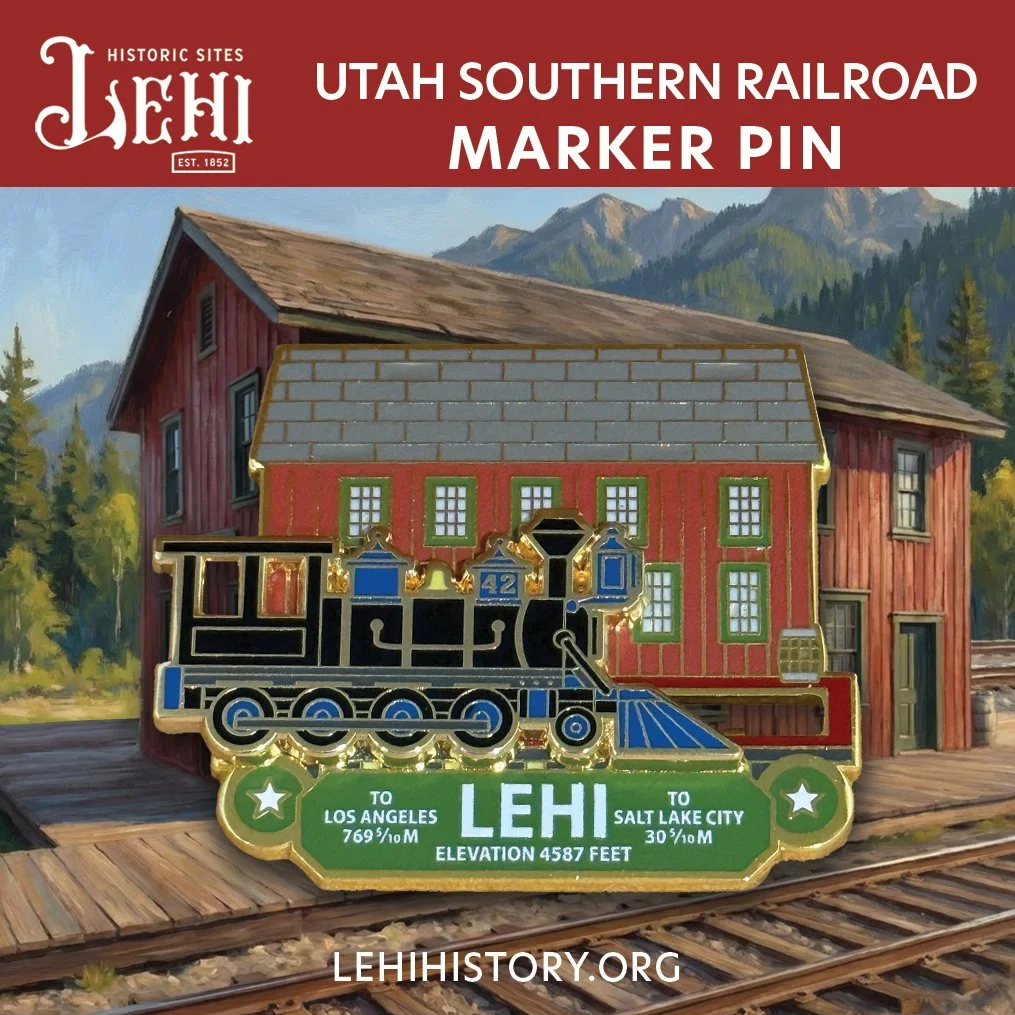
Celebrate one of Lehi’s most important moments in transportation history with this commemorative Utah Southern Railroad Train Depot pin.
On September 27, 1872, the first train arrived in Lehi on the Utah Southern Railroad, connecting the community to the growing rail network of the American West. For nearly a year, Lehi served as the end of the line, and travelers and freight moving to and from Utah Valley passed through the city. The arrival of the railroad transformed Lehi’s economy, bringing trade, travel, and new businesses along State Street.
This collectible pin features the historic Lehi Train Depot with a detailed locomotive inspired by engine No. 42, which was displayed at the Lehi Train Museum. The locomotive features a sliding engine, allowing the train to move along the track in front of the Depot.
Pin details
Size: 1.75”
Material: Zinc alloy
Finish: Polished gold
Feature: Sliding locomotive
Attachment: Double post backing for stability
Created to commemorate the Utah Southern Railroad’s arrival in Lehi and the historic depot that still stands today, this pin is part of the Lehi Historic Sites series celebrating the places and stories that shaped the city.
Perfect for collectors, railroad enthusiasts, and anyone who loves Lehi history.
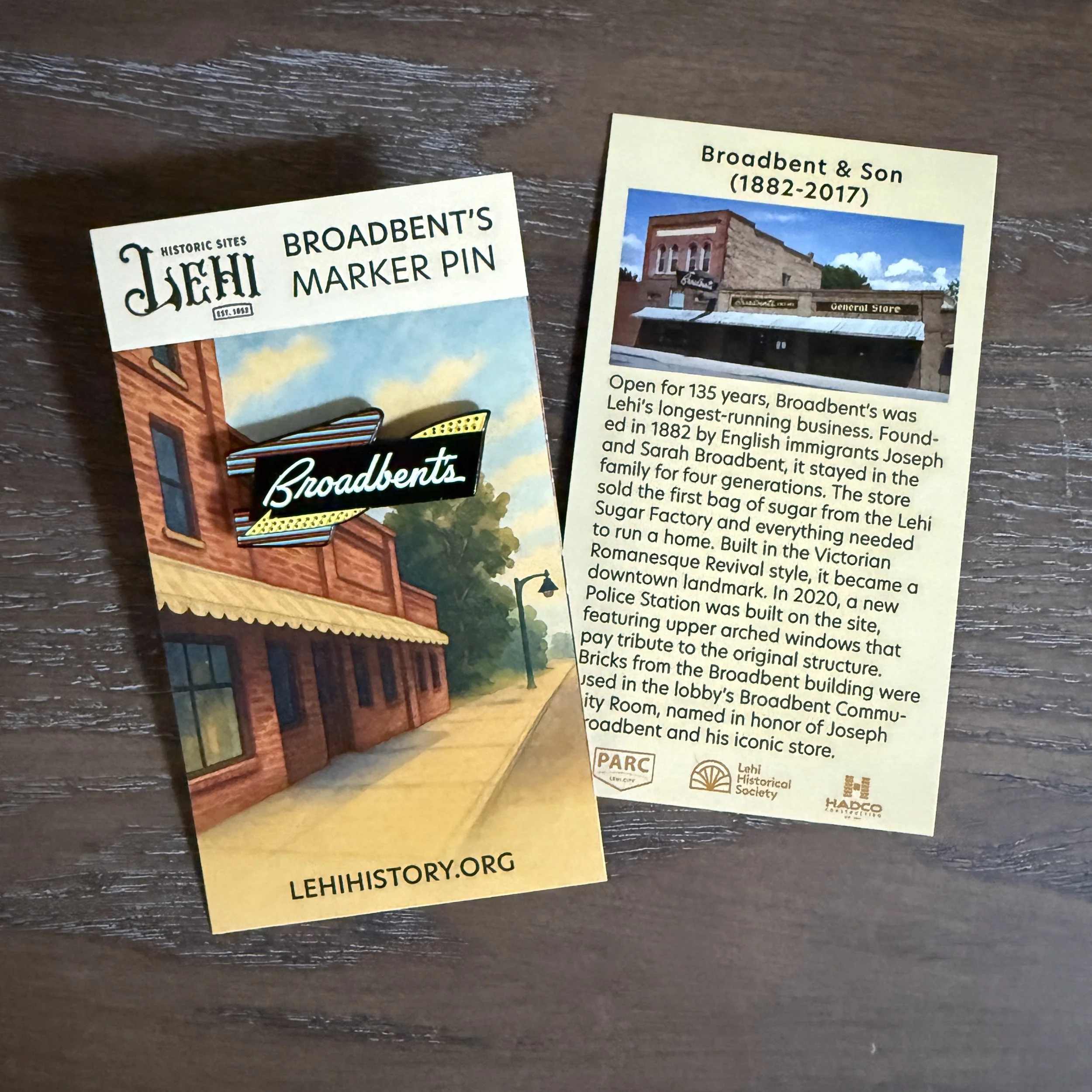
Celebrate a Lehi icon with this Historical Marker collector pin honoring Broadbent’s Store, the longest-running business in Lehi’s history and a cornerstone of the community for 135 years.
Soft enamel with black dyed metal plating
Features the vintage neon Broadbent’s sign installed in 1954
Measures 1.25 inches in length
Single-post backing with secure rubber cover
Perfect for collectors, history lovers, and proud Lehi locals
Founded in 1882 by English immigrants Joseph and Sarah Broadbent, the store was passed down through four generations and became known for offering everything from dry goods to fine fabrics. It sold the first bag of sugar produced by the Lehi Sugar Factory and served as a trusted hub for generations of families. The iconic neon sign, featured in this pin, hung proudly from 1954 until the store’s closing in 2017. Today, the arched windows of the Lehi Police Department pay tribute to the building that once stood in its place.
A nostalgic keepsake celebrating a legacy of service, family, and small-town pride.