
Christian Knudsen House
Est. 1909
123 South Center St. Lehi, UT
Built in 1909 by Christian and Sarah Knudsen, this house is more than just a charming Victorian home. The Knudsen House played a big role in the expansion and development of the city of Lehi, UT.
A Place to Call Home
Constructed in 1909, the Christian and Sarah Knudsen House is a significant example of early twentieth-century residential architecture in Lehi and a reflection of the agricultural prosperity that shaped the region. Christian Gulbrandsen Knudsen, a native of Norway born in 1856, immigrated to the United States when he was 15 during a period of substantial Scandinavian migration. Knudsen came to America in search of economic opportunity and religious freedom, eventually establishing himself as a successful farmer and stockman in Utah County.
Knudsen’s agricultural work contributed to the economic development of Lehi during a time when farming and livestock production formed the foundation of the local economy. Through sustained labor and community connections, he achieved a level of financial success that enabled the construction of this residence. The house stands as a material expression of that achievement and of the broader patterns of economic mobility available to settlers in the American West during this period.
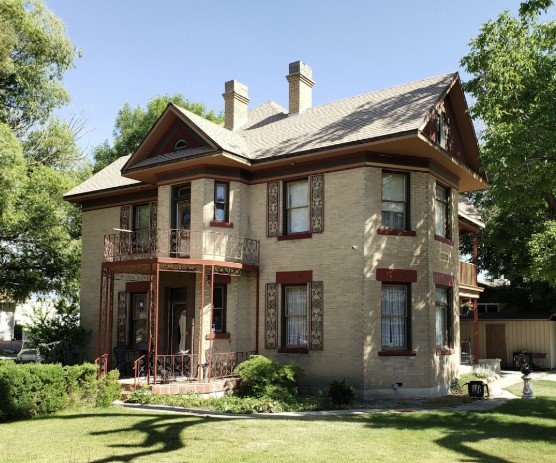
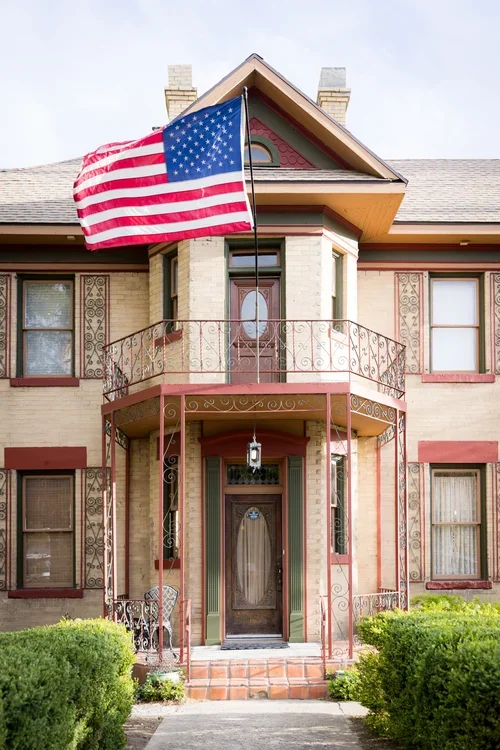
Architecturally, the Knudsen House embodies a combination of Late Victorian and Classical Revival design elements. The structure is constructed of brick over a masonry foundation and features a multi-gabled roofline, decorative wood detailing, and a prominent wraparound porch supported by classical-style columns. These characteristics reflect architectural trends common in Utah at the time, particularly among prosperous agricultural families seeking to display both permanence and refinement in their homes.
Constructed in 1909, the Christian and Sarah Knudsen House is a significant example of early twentieth-century residential architecture in Lehi and a reflection of the agricultural prosperity that shaped the region. Christian Gulbrandsen Knudsen, a native of Norway born in 1856, immigrated to the United States when he was 15 during a period of substantial Scandinavian migration. Knudsen came to America in search of economic opportunity and religious freedom, eventually establishing himself as a successful farmer and stockman in Utah County.
Watch the Knudsen Home Grow with Lehi
-
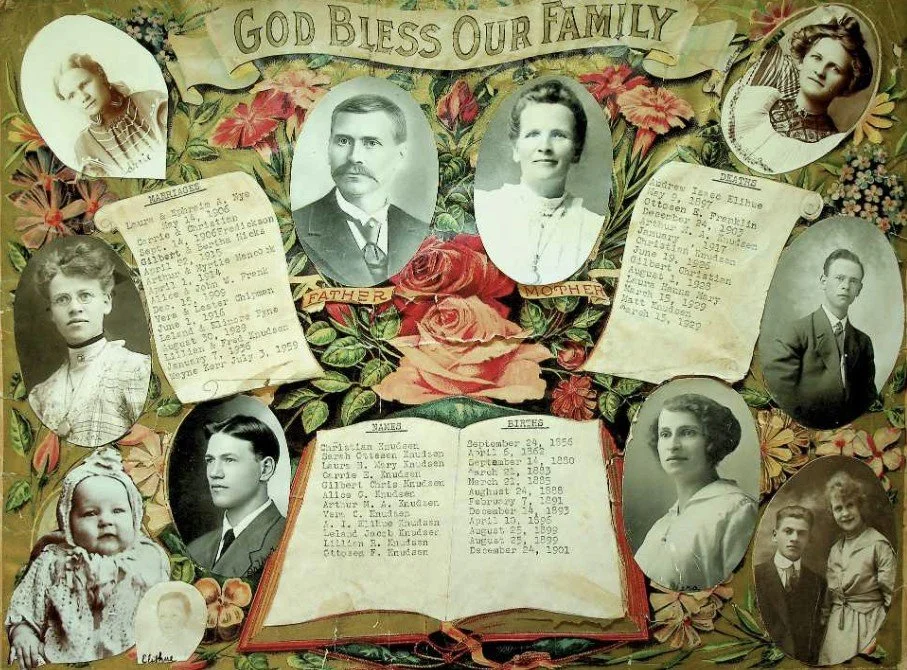
![Knudsen Family Portrait Tree Retrieved from https://www.familysearch.org]()
1879: Building the Family
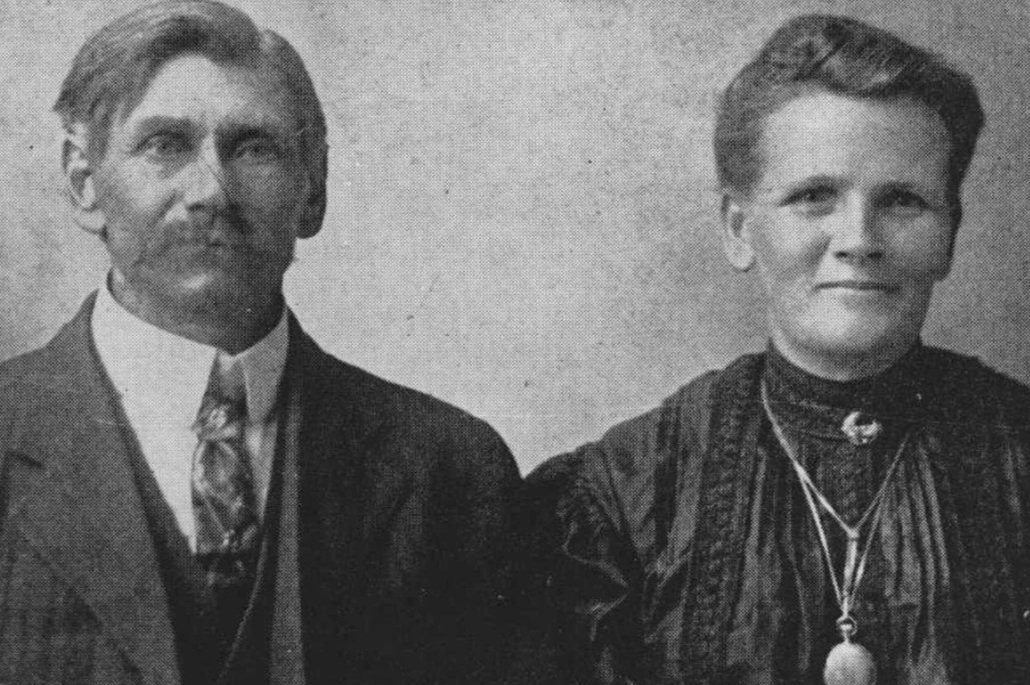
Christian Gulbrandsen Knudsen was born in 1856 in Ringsaker, Norway. He immigrated to Lehi, Utah, in 1872 as part of a wave of Scandinavian converts to The Church of Jesus Christ of Latter-day Saints. Sarah Larous Ottesen was born on April 6th 1862, in Spanish Fork, Utah. They were married at the St. George Temple on November 14th, 1879.
They had ten children: Laura Hannah, Carrie Elizabeth, Christian Gilbert, Alice Catherine, Arthur Mathias, Vera Christine, Andrew Isaac, Leland Jacob, Rachel Lilian, and Elijah Franklin.
-
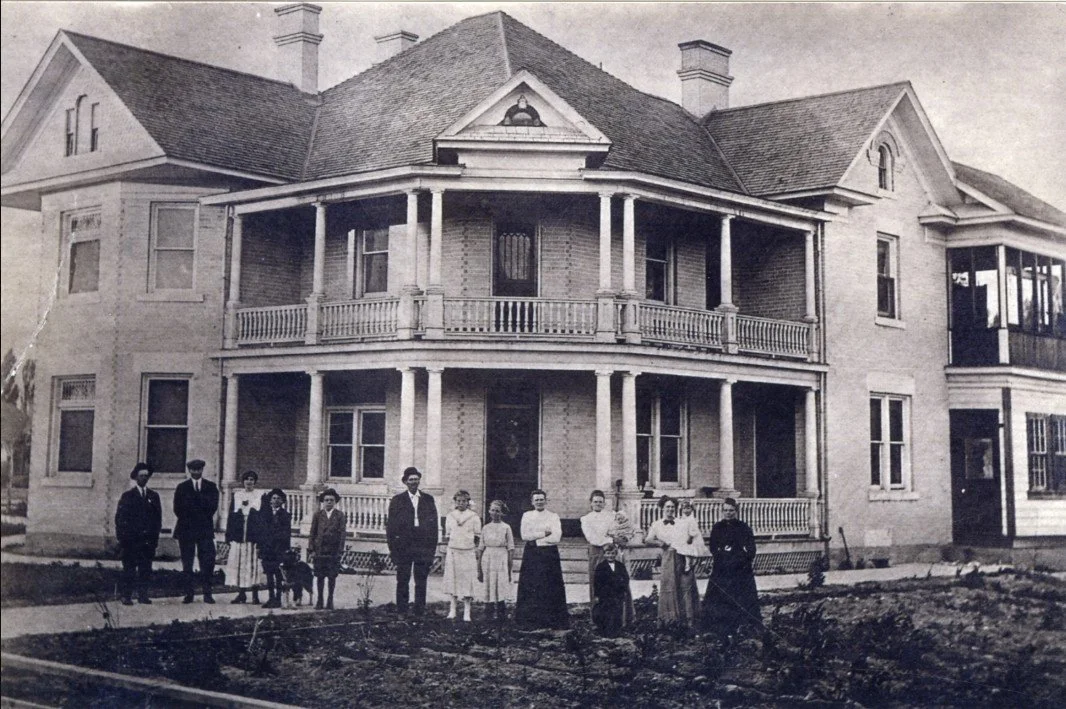
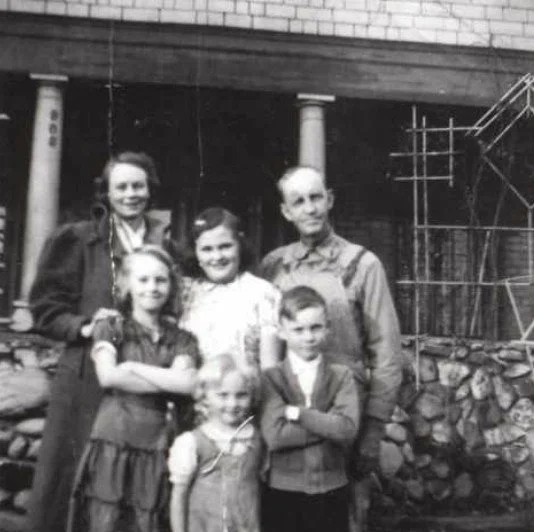
![Knudsen Family poses in front of their house at 123 S Center St, Lehi]()
1909: Building the House
In 1909, Knudsen constructed a substantial brick residence at 123 South Center Street in Lehi, symbolizing both his economic success and social standing. The home incorporated elements of Late Victorian and Classical Revival architecture, reflecting broader design trends in Utah during the early twentieth century. The house featured a wraparound porch, decorative woodwork, and a multi-gabled roofline. These elements demonstrated craftsmanship and attention to detail while also serving as a visual marker of prosperity. For immigrant families like the Knudsens, such homes represented not only comfort but also the achievement of stability and success in a new land.
-
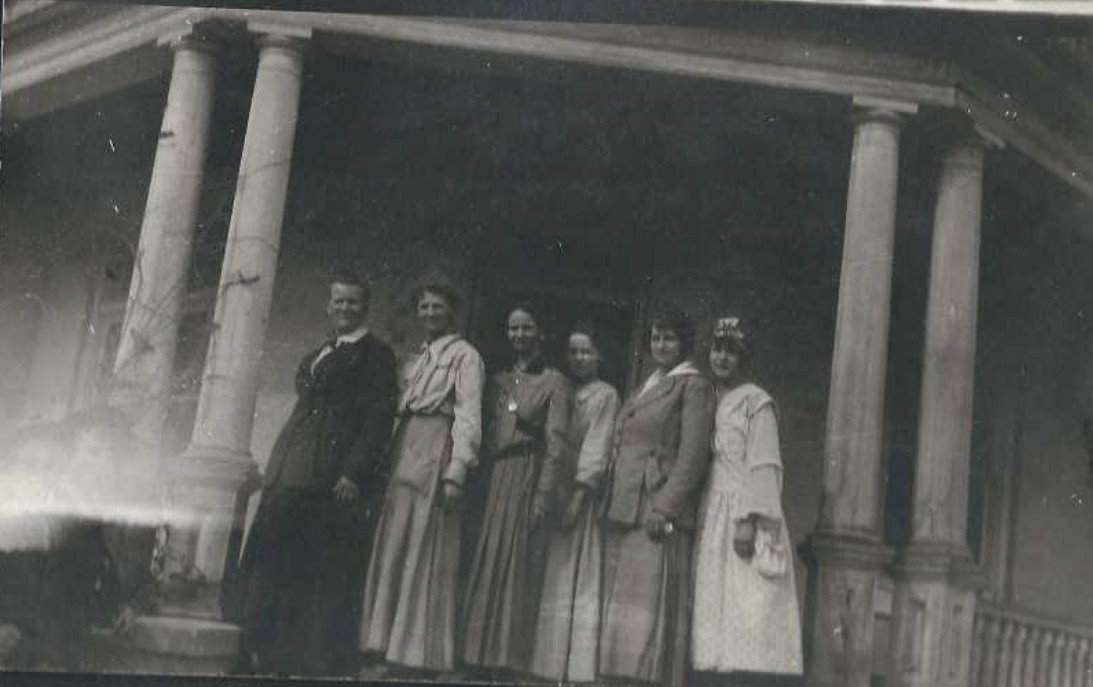
![From left to right: Sarah, Laura, Carrie, Alice, Vera, Rachel. Retrieved from https://www.familysearch.org]()
1910s: A Home and Community Hub
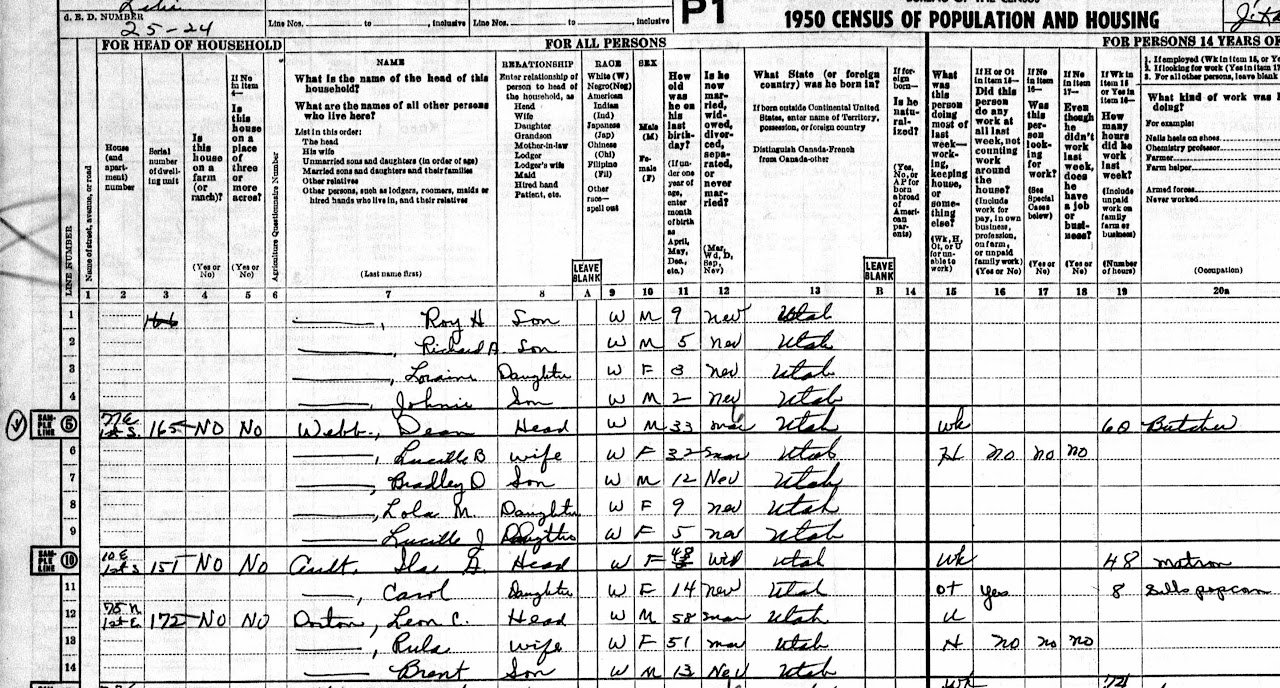
The Knudsen house functioned as more than a private residence. Christian and Sarah Knudsen used their home as a “halfway house” for travelers moving through Utah. Such hospitality allowed newcomers to find temporary shelter, establish connections, and transition into life in Utah. The house therefore played a key role in supporting migration and settlement, reinforcing the interconnected nature of early communities in Lehi. Census records from 1930, 1940, and 1950 demonstrate the continued use of the house as a family residence, even as generations changed. The home remained a stable center of family life for decades
-
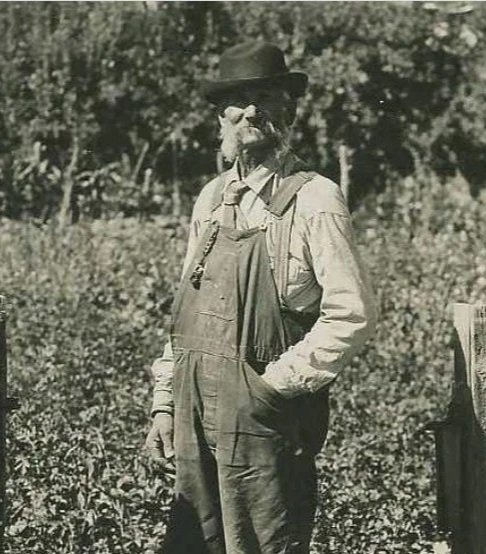
![Christian Knudsen in front of his garden. Retrieved from Family Search]()
1926: Tragedy and Tradition
The death of Christian Knudsen in 1926 marked a turning point in the history of the house. His passing left both a personal and structural void, as the home transitioned away from its original builder. Ownership of the property gradually shifted within the family, with his daughter Vera Knudsen associated with the house during the 1930s. This period represents a transition from the founding generation to the next, as the house remained tied to family memory while adapting to new realities. By the 1930s, the house began to face the physical challenges associated with aging structures. A fire in 1934 caused damage to the home, reflecting the difficulties of maintaining large residences. Despite this setback, the house continued to be occupied and maintained. Its survival through these challenges demonstrates both its durability and its continued importance within the community.
-
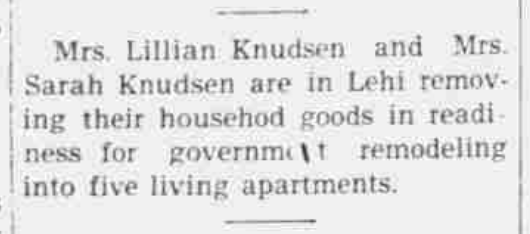
![March 25th, 1943 The Lehi Free Press Newspaper Clipping]()
1943: WWII and the War Effort
In 1943, amid a nationwide housing shortage for war workers, the federal government instituted the Homes Use Program. The Homes Use Program was a World War II initiative by the National Housing Agency designed to optimize the use of existing housing for defense employees by converting extra rooms and larger homes into apartments. Its goal was to address housing shortages in areas crucial for war production without requiring new construction.
-
![1950 Census shows some tenants of the Knudsen House, Ila and Carol Ault.]()
1946: Japanese Relocation Rumors
The wartime use of the Knudsen house is linked to the broader history of Japanese American relocation and labor. During World War II, Japanese Americans were relocated to camps but later permitted to work in agriculture due to labor shortages. In Utah County, these workers became essential to maintaining agricultural production, particularly in crops such as sugar beets. While direct documentation is limited, local accounts suggest that converted homes like the Knudsen house may have provided temporary housing for Japanese families leaving Topaz after its closure in 1945, as they began to return or seek new homes.
-
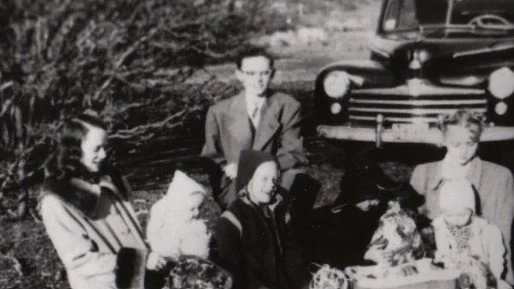
![Jessie E. Carter and children having a picnic circa 1940. Retrieved from https://www.familysearch.org]()
1964: Single Family Home
After World War II, the Knudsen house continued to function as a multi-family residence for years. The ownership of the house was then transferred to the Schow family, who eventually converted it from apartments to a single-family residence and sold it to Vern and Jessie Carter of the Carter Airport. They moved in on March 20th 1964. This shift reflected a return to the home’s earlier function while preserving its continued role as a lived-in domestic space. Jessie E. Carter’s association with the house demonstrates continuity in occupancy during a period when many historic homes were being altered or demolished. Her ownership helped ensure the survival of the structure into the late twentieth century, bridging its early history with later preservation efforts.
-
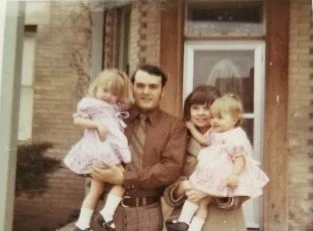
![From left to right: Lisa, Richard, Mary, Amanda. Retrieved from https://www.familysearch.org]()
1970s: Contribution to Lehi's History
Besides the Carter Airport, the new owners were also associated with Richard S. Van Wagoner. Their daughter, Mary, married and resided in the house with Richard–who later became one of the most important figures for the historiography of the Church of Jesus of Latter Day Saints and for the city of Lehi. Years after living in the house, Van Wagoner writes LEHI: Portraits of Utah Town.
-
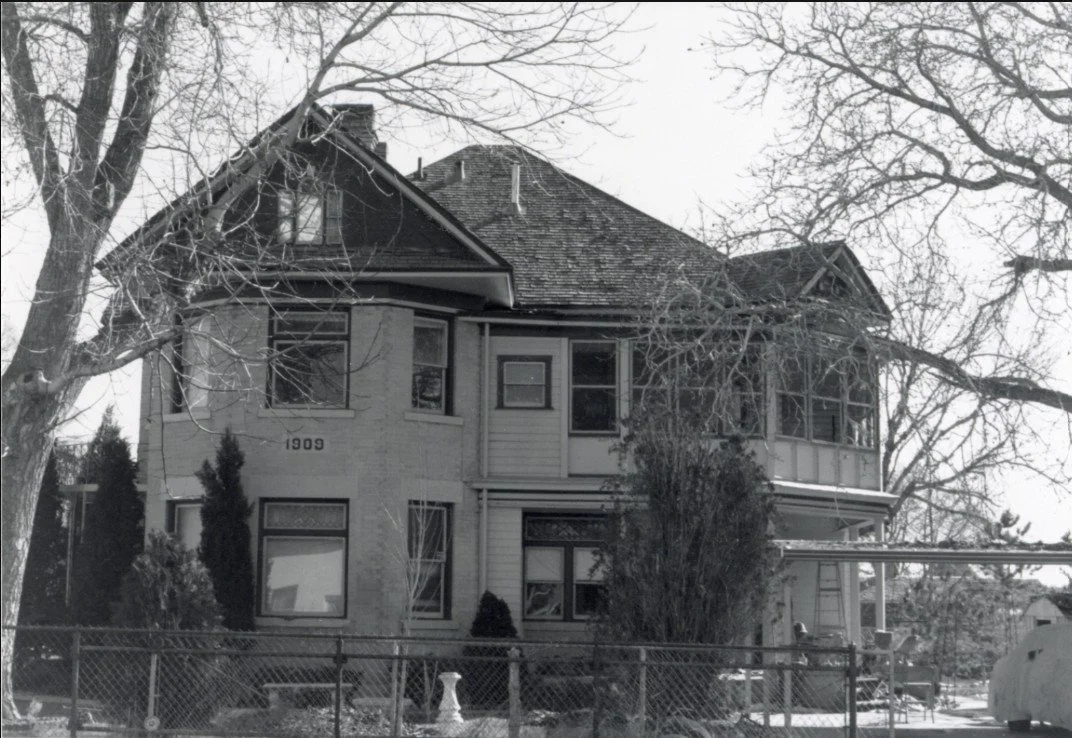
![he house today. "Historic Knudsen House to be Honored with Marker". Lehi Free Press.]()
1985: Restoration and Legacy
In 1985, new owners Michael and Sandra Schandrel began an ongoing restoration of the house. The Knudsen House was formally recognized in 1998 when it was listed on the National Register of Historic Places. This designation highlights its importance as both an architectural landmark and a historical resource. Today, the home stands as a testament to more than a century of change. From its origins as the home of a Norwegian immigrant and community leader to its role in wartime adaptation and eventual preservation, it reflects the evolving history of Lehi. Through the lives of Christian Knudsen, his descendants, and later owners such as Jessie E. Carter, the house remains a powerful symbol of continuity, resilience, and community identity which had homed some of Lehi’s most significant people who helped build the city that stands today.
Caretakers Over Time
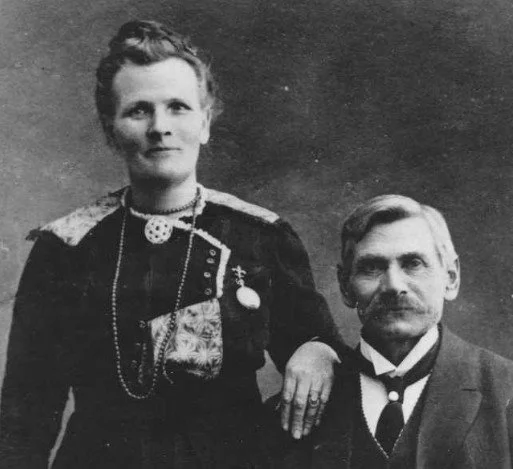
Christian and Sarah O. Knudsen
1909 - 1926|
1963 - 1985|
|
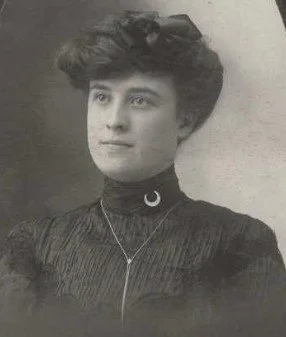
Vera Christine Knudsen
1943 - 1962|
Christian Gilbert Knudsen
1926 - 1929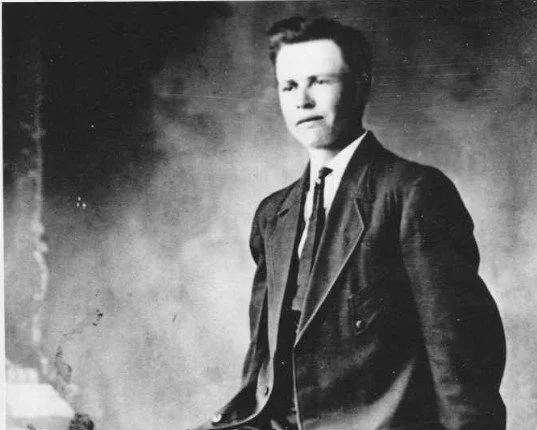
|
Robert and Sandee Trepanier
Mike and Sandee Schanderl
1962 - 1963
Vern and Jessie Carter
? - 2005|
|
Alvin and June Schow
1985 - ?Ron and Charlotte Otteson
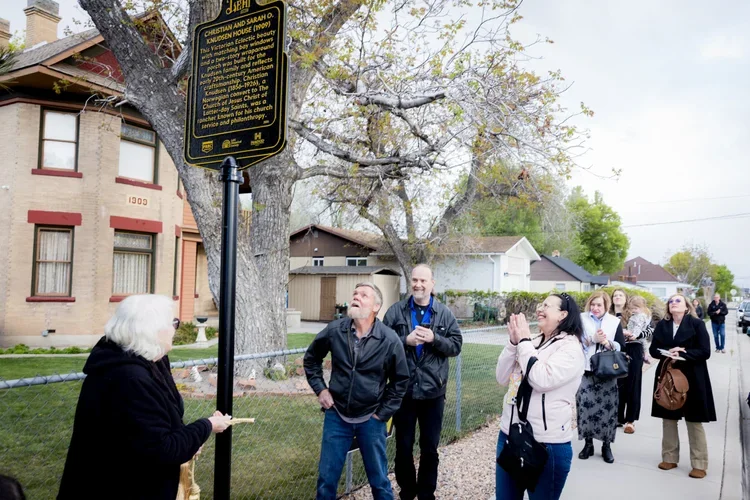
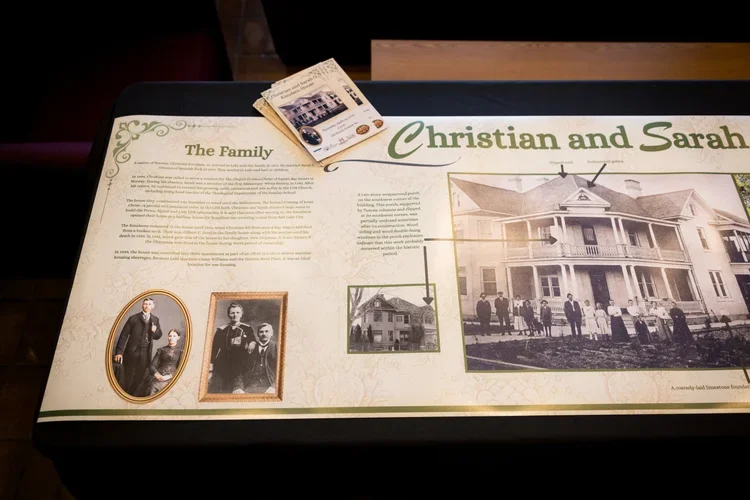
2005 - PrESENT In 2005, Ron and Charlotte Otteson purchased the home and continue with restoration work to this day. The home was nominated for the National Register of Historic Places in 1998 and on April 16th, 2026 a historic marker was place to commemorate the home and ongoing renovation efforts.
Architectural Styles
The application to list the Knudsen home on the National Register of Historic Places lists the architectural style as both Late Victorian and Classical Revival. Often times architectural styles are flexible and historic homes can be difficult to neatly label. Because of this, National Register forms will frequently list more than one style for a home or business as the nominator tries to best capture the home’s essence.
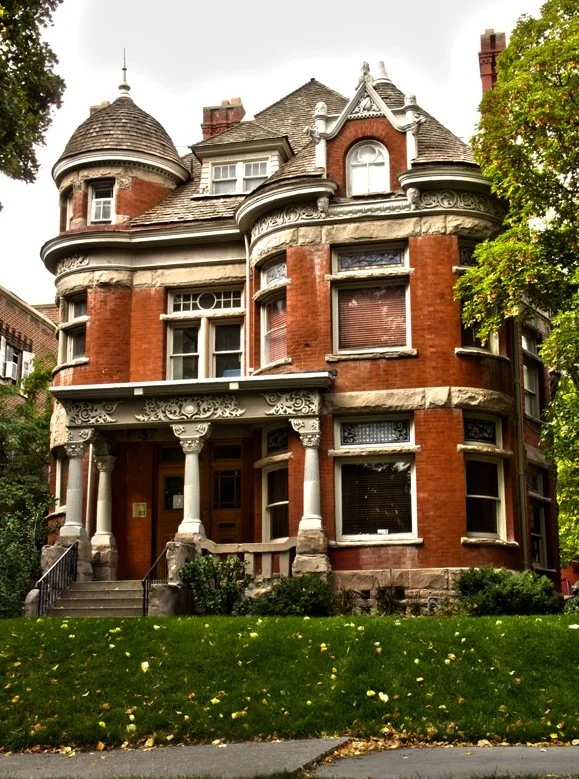
Late Victorian
approx. 1850-1910Homes were characterized by asymmetrical shapes, high-pitched roofs, and detailed, machine-carved woodwork. Popular sub-styles include Queen Anne, Shingle, and Romanesque Revival to name a few. Most buildings from this time borrow design inspiration from many of these sub-styles to create a unique look. The above photo is the Henry Dinwoodey House. Located in Salt Lake City this home was designed by Richard Kletting, architect of the Utah State Capitol.
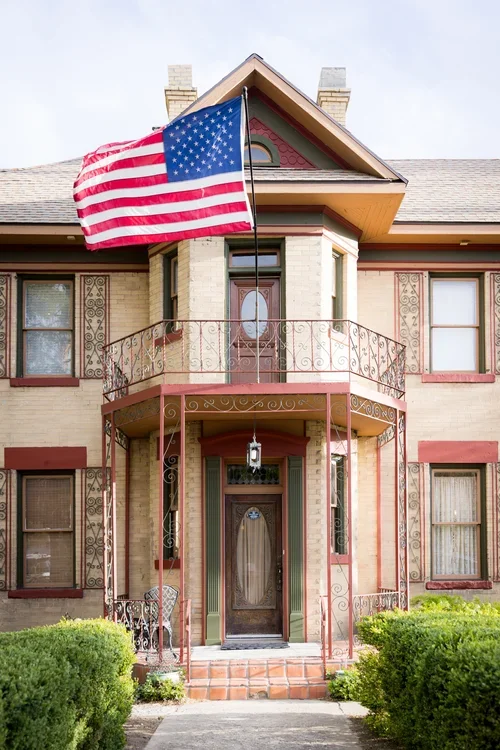
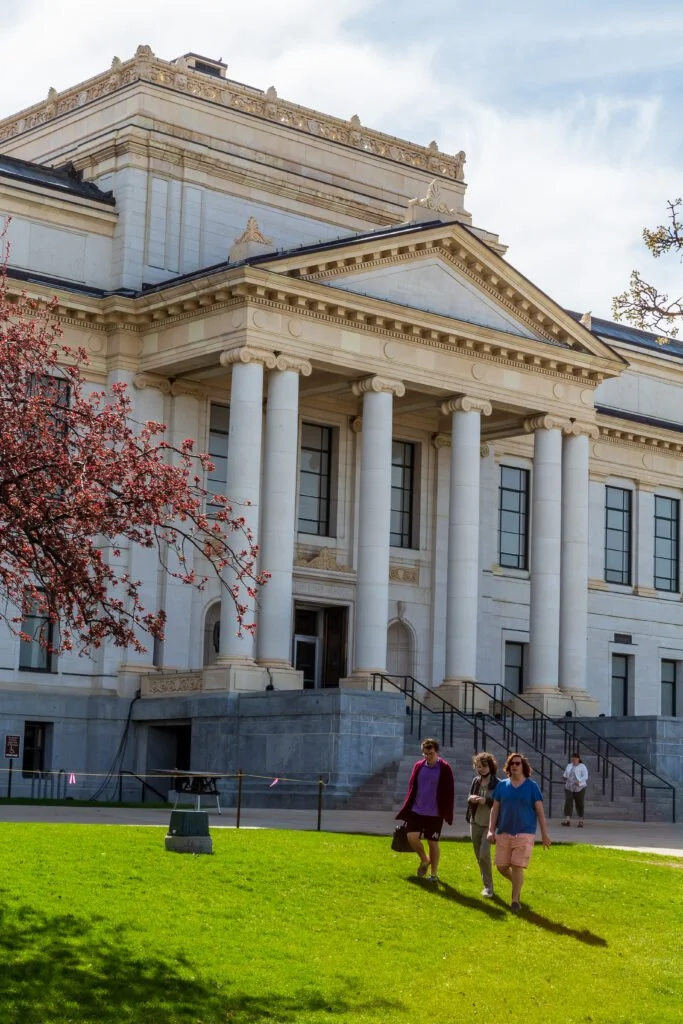
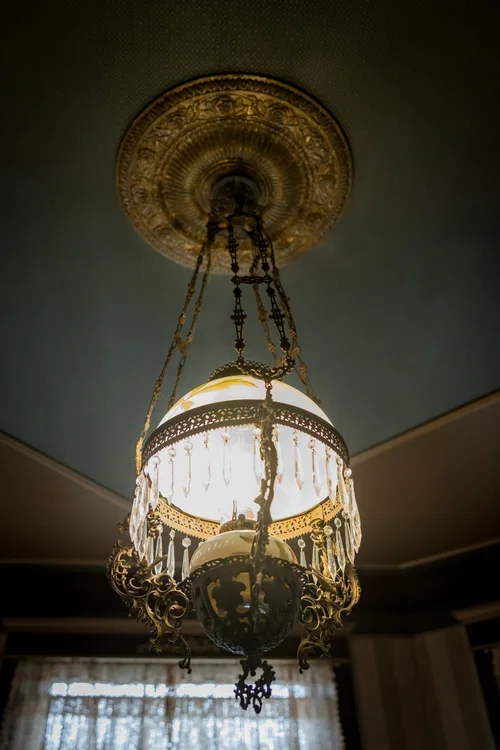
Approx. 1890–1940Classical Revival
The building style represents a shift toward monumental, symmetrical, and sophisticated designs, often featuring grand columns, porticos, and stone construction. Many structures were built from Utah stone, particularly white granite and limestone, to convey stability and permanence. Many structures were built from Utah stone, particularly white granite and limestone, to convey stability and permanence. The example above is the Park Building on the University of Utah’s Salt Lake City Campus.
Marker Location
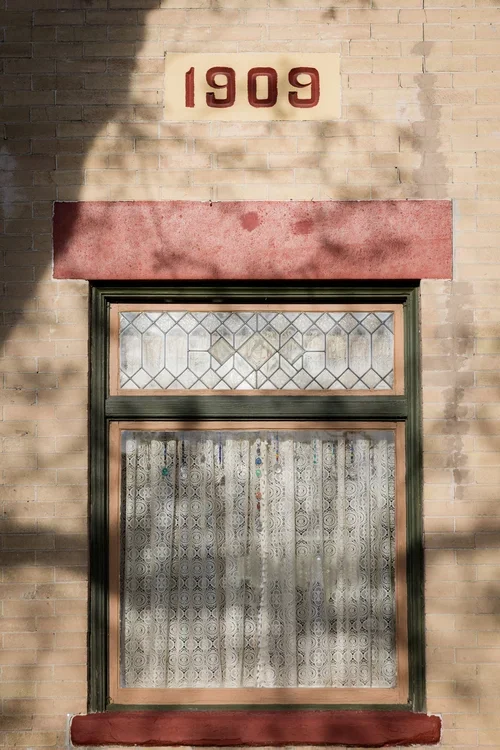
123 South Center St. Lehi, UT
Marker Unveiling
April 16, 2026
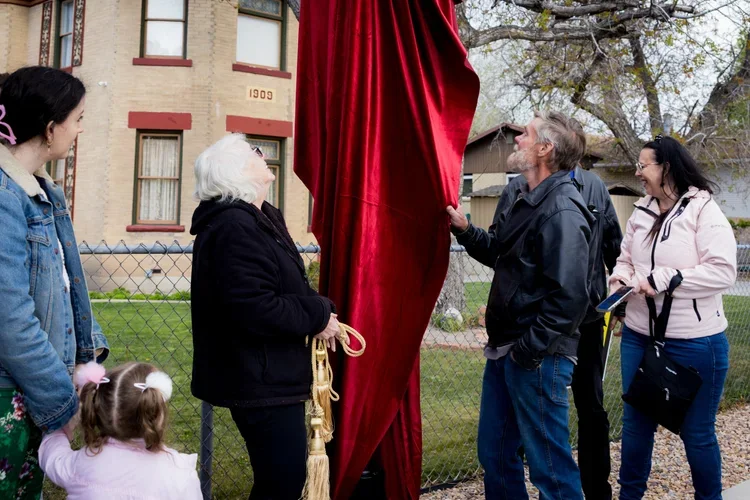
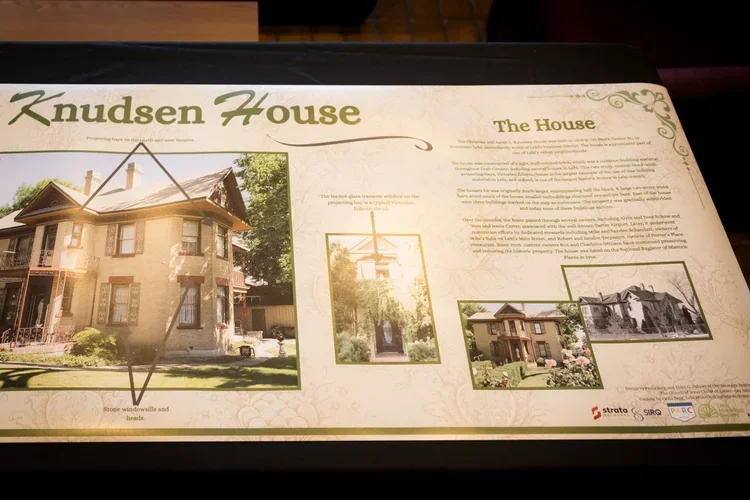
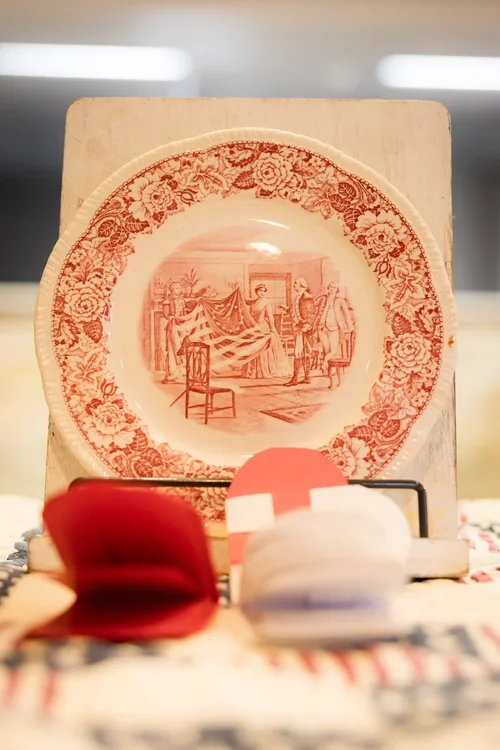
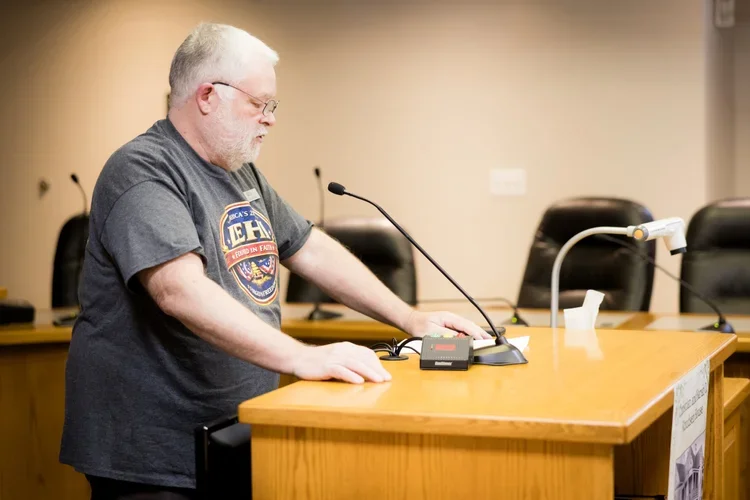
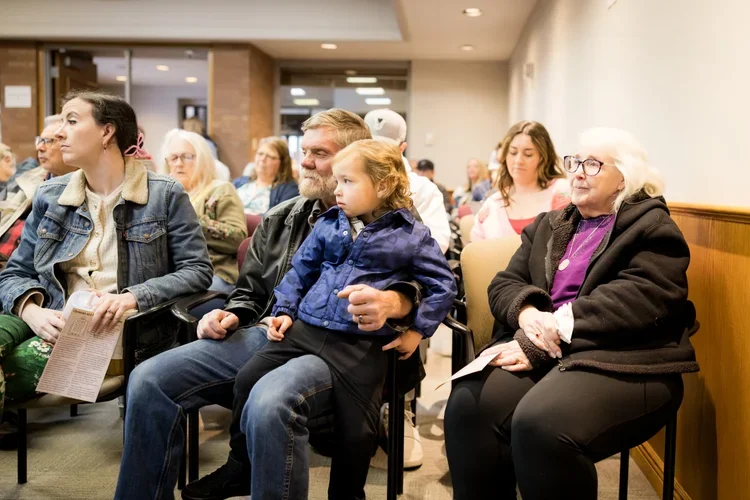
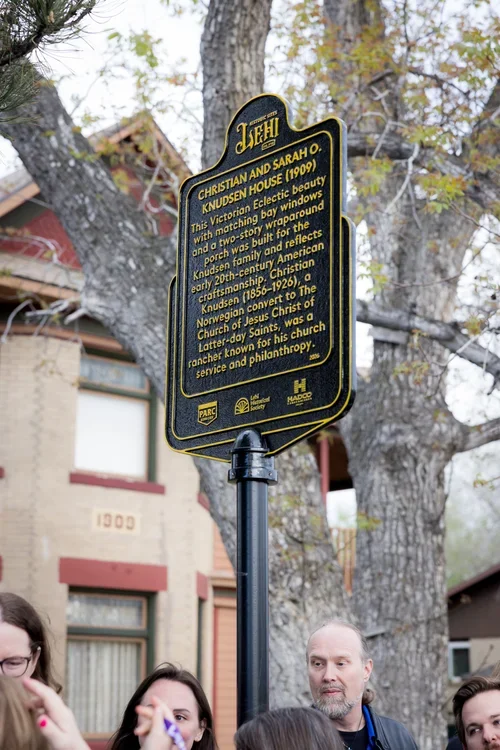
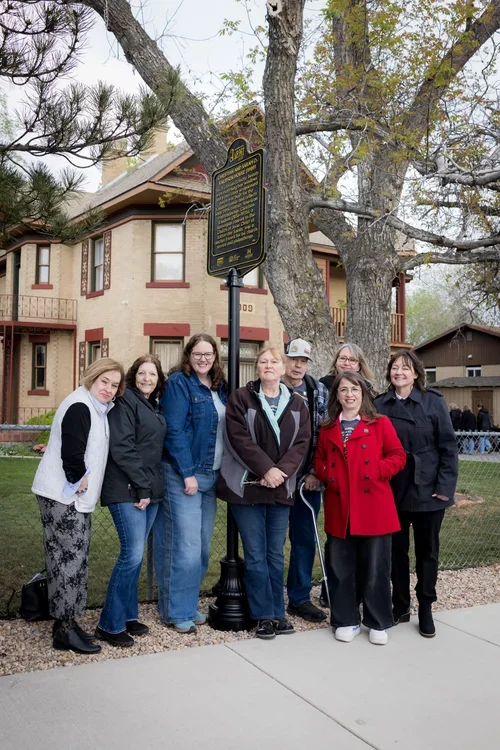
A surprise cold snap couldn’t keep the community away from the Christian and Sarah O. Knudsen House historical marker unveiling on April 16. Though the program was moved at the last minute to the old Lehi City Council Chambers, the event drew a full crowd and a warm response.
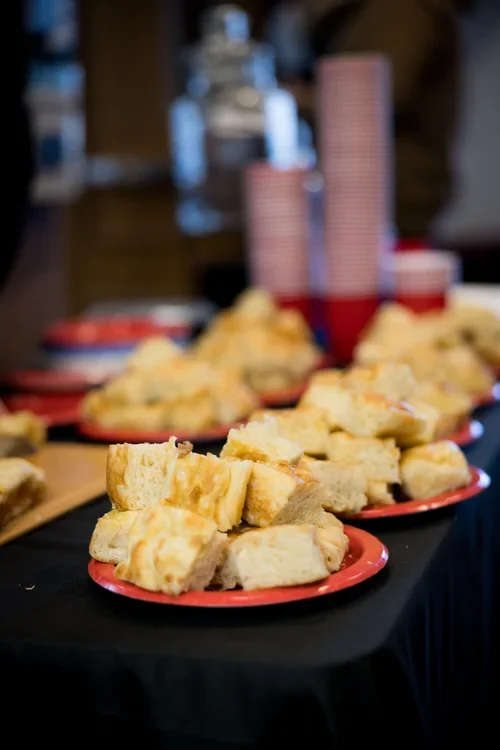
Following the program, attendees traveled to the home at 123 S. Center St., where owners Ron and Charlotte Ottosen welcomed the public for the unveiling and tours.
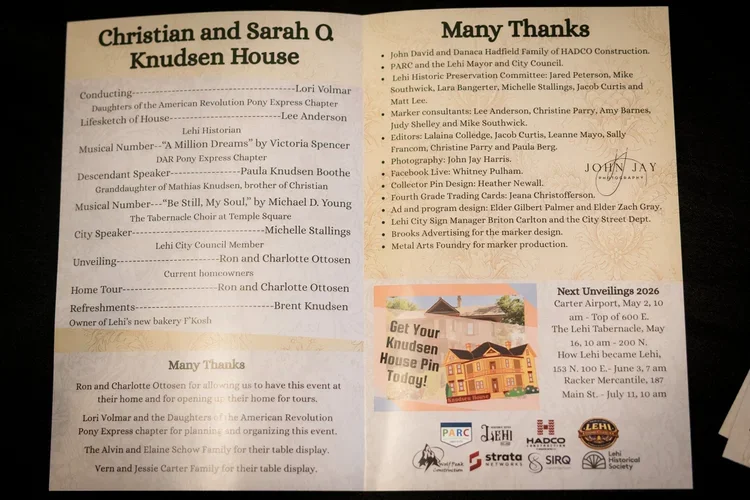
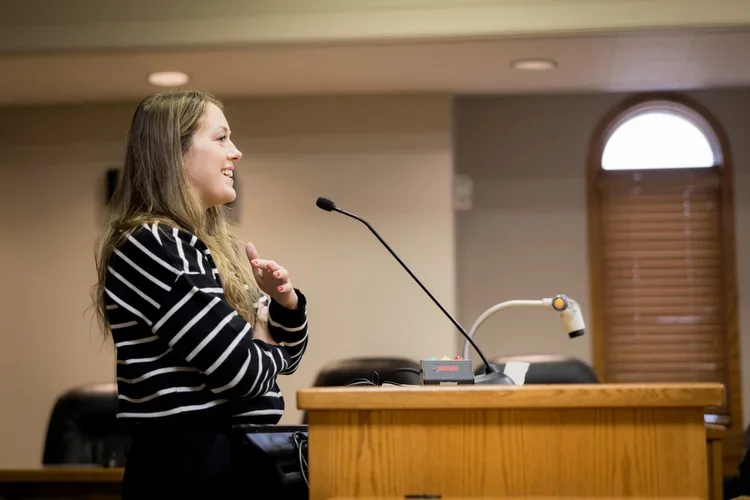
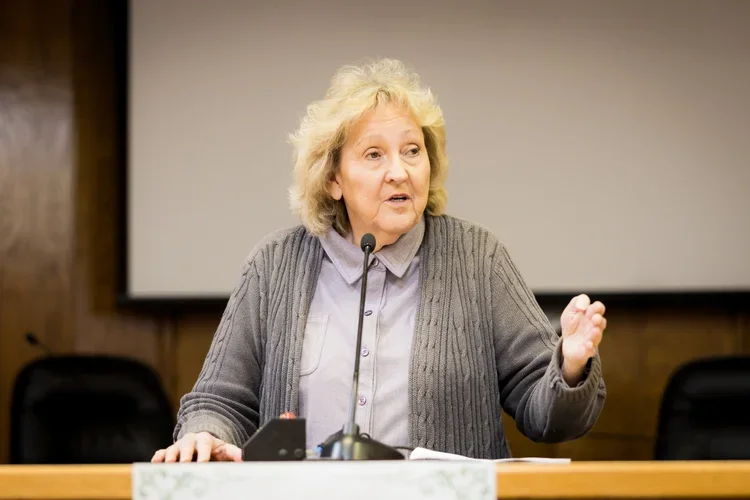
Program highlights included a historical sketch by Lee Anderson. Paula Knudsen Boothe, a descendant of the Knudsen family, spoke about the faith and determination of early immigrants. Lehi City Council member Michelle Stallings reflected on the home’s long-standing role as a place of welcome, noting a tradition of caring for neighbors and those in transition.


Learn More
Investigate our online archive for more information on the Knudsen House

Content Contributors

——, Lehi Historical Society
Steffanie Takata Jordan, University of Utah
Alex Goeckeritz, University of Utah
Alix Christenson, University of Utah
Kasia May, University of Utah
Support our Mission
Purchase collector marker pins to show your Lehi spirit! Your purchase will support the Lehi Historical Marker Program and the Lehi Historical Society. There are currently 15 pins available in our gift shop
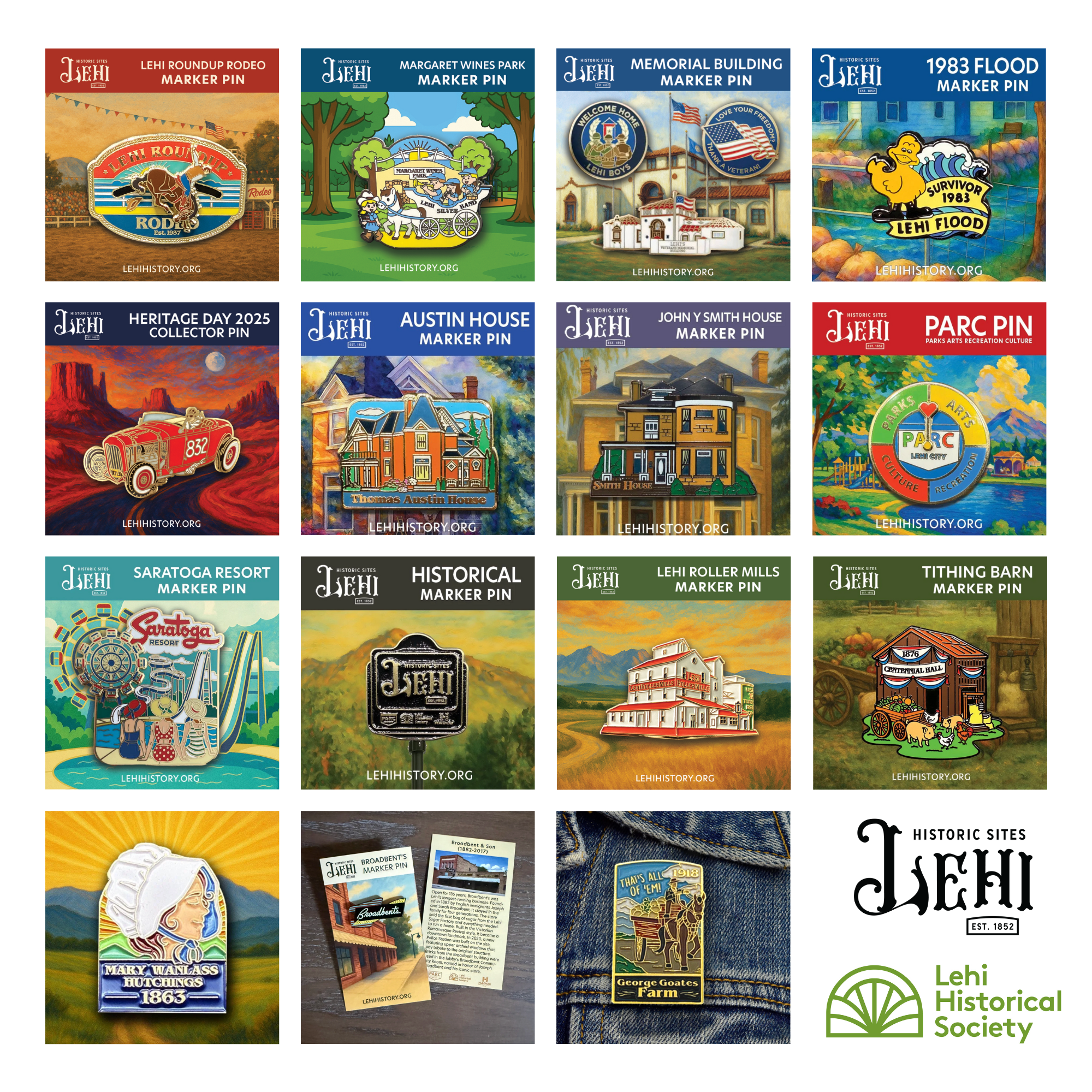
Celebrate Lehi’s history with our complete 15-pin collection. This special bundle includes one of each enamel pin from the Historical Marker Collection.
Pins included in the full set:
• Lehi Roundup Rodeo Marker Pin
• Margaret Wines Park Marker Pin
• Memorial Building Marker Pin
• 1983 Flood Marker Pin
• Heritage Day 2025 Collector Pin
• Austin House Marker Pin
• John Y Smith House Marker Pin
• PARC Pin
• Saratoga Resort Marker Pin
• Historical Marker Pin
• Lehi Roller Mills Marker Pin
• Tithing Barn Marker Pin
• Mary Wanlass Hutchings 1863 Pin
• Broadbent’s Marker Pin
• George Goates Farm Marker Pin
Each pin reflects a real story from Lehi’s past. Landmarks, founders, the rodeo, community legends, floods, and the places that shaped our city. This full set brings together every marker design in one place. It is perfect for collectors, teachers, longtime Lehi families, newcomers wanting to learn the stories behind our city, or anyone looking for a meaningful gift that supports local history.
Take home the complete collection and own 15 pieces of Lehi’s story.
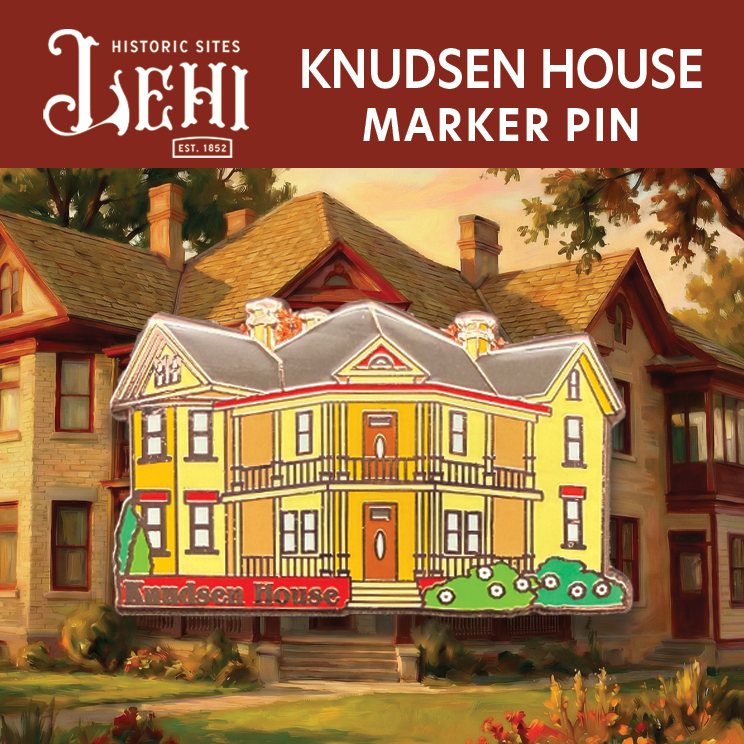
Celebrate one of Lehi's grandest historic homes with this beautifully crafted Christian & Sarah O. Knudsen House enamel pin. Built in 1909, this Victorian Eclectic landmark honors the legacy of Christian and Sarah Knudsen, whose hard work, generosity, and community service helped shape early Lehi.
This 1.5-inch hard enamel pin faithfully captures the home's distinctive architecture, from its wraparound porch and projecting bays to its clipped-corner entrance. Finished with elegant copper plating, it highlights the warmth and character of this beloved historic landmark.
Whether you're a Lehi history enthusiast, architecture lover, pin collector, or looking for a meaningful Utah keepsake, this pin is a timeless tribute to one of the city's most significant homes.
Features
1.5" hard enamel pin
Premium copper plating
A perfect gift for local history buffs, preservation advocates, architecture enthusiasts, and anyone who loves collecting the stories that built our communities. Every purchase helps celebrate and preserve Lehi's rich heritage.
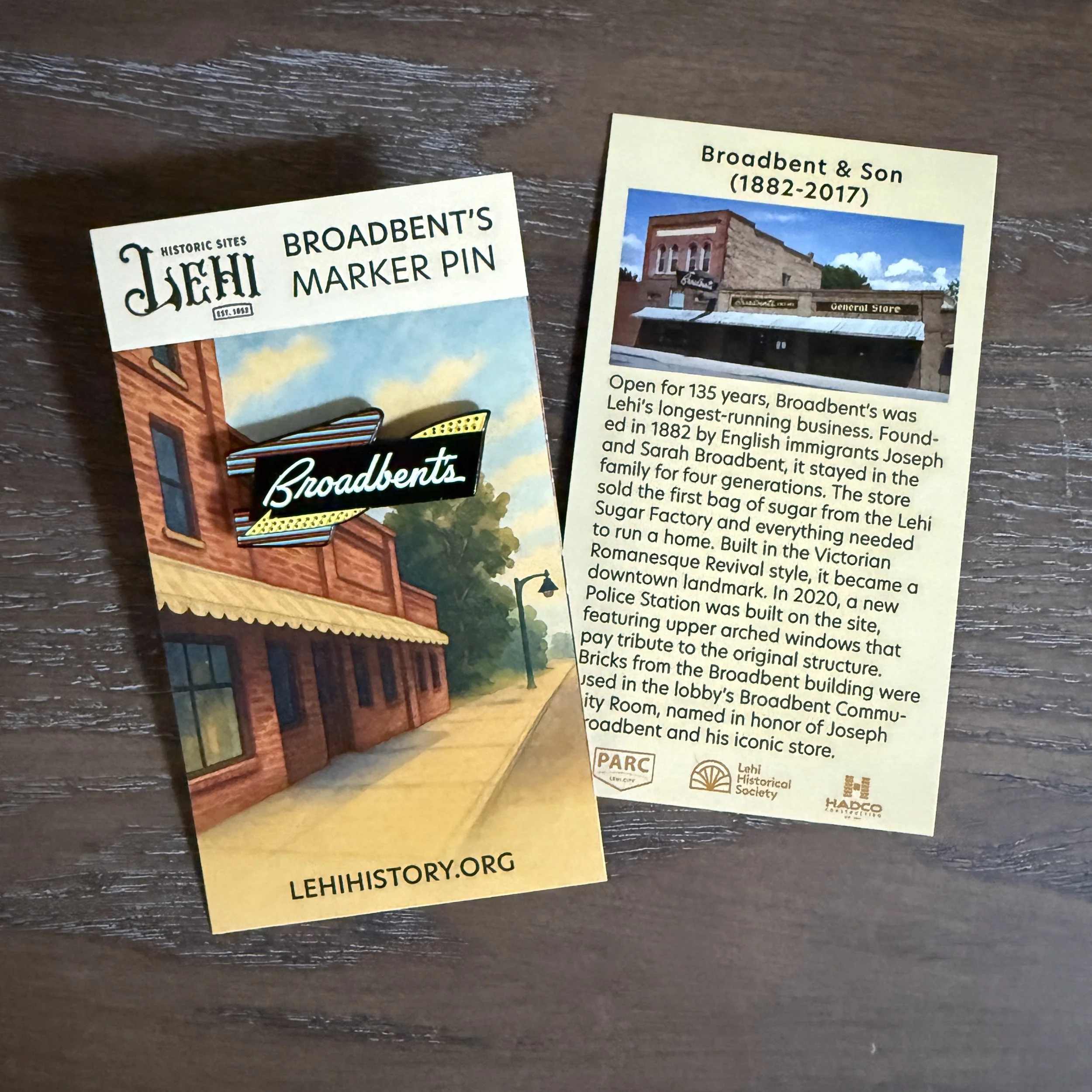
Celebrate a Lehi icon with this Historical Marker collector pin honoring Broadbent’s Store, the longest-running business in Lehi’s history and a cornerstone of the community for 135 years.
Soft enamel with black dyed metal plating
Features the vintage neon Broadbent’s sign installed in 1954
Measures 1.25 inches in length
Single-post backing with secure rubber cover
Perfect for collectors, history lovers, and proud Lehi locals
Founded in 1882 by English immigrants Joseph and Sarah Broadbent, the store was passed down through four generations and became known for offering everything from dry goods to fine fabrics. It sold the first bag of sugar produced by the Lehi Sugar Factory and served as a trusted hub for generations of families. The iconic neon sign, featured in this pin, hung proudly from 1954 until the store’s closing in 2017. Today, the arched windows of the Lehi Police Department pay tribute to the building that once stood in its place.
A nostalgic keepsake celebrating a legacy of service, family, and small-town pride.