
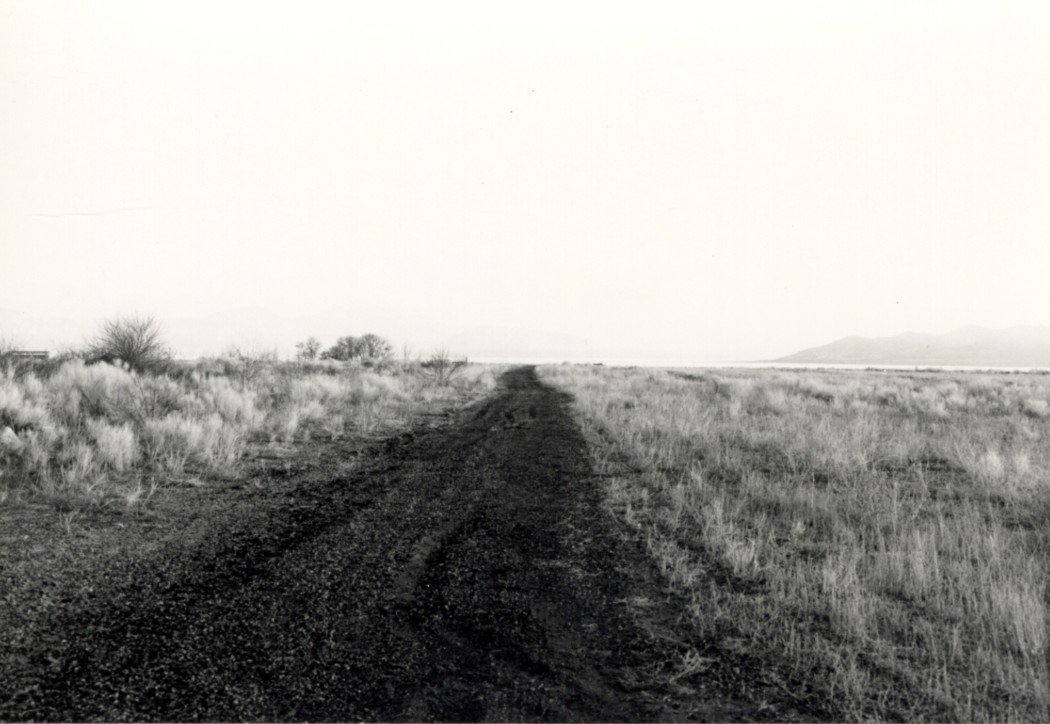
Carter Airport
1962-1972
600 East and Airport Drive Lehi, Utah
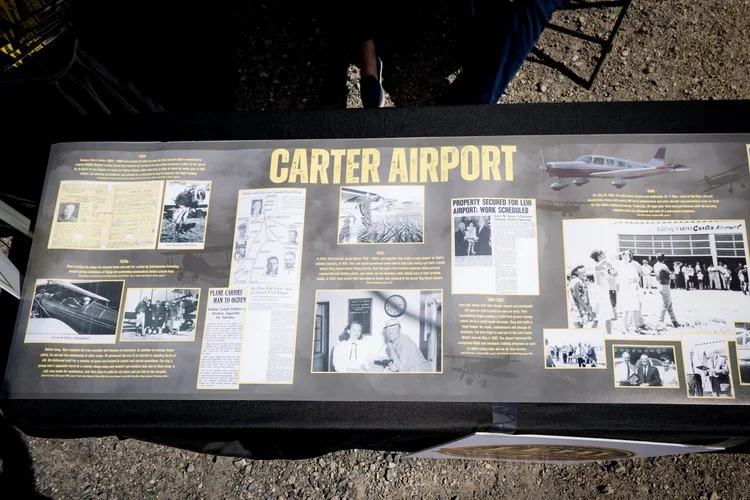
Vern and Jessie Carter were aviation pioneers in Utah. Their impact is felt throughout the Lehi community to this day.
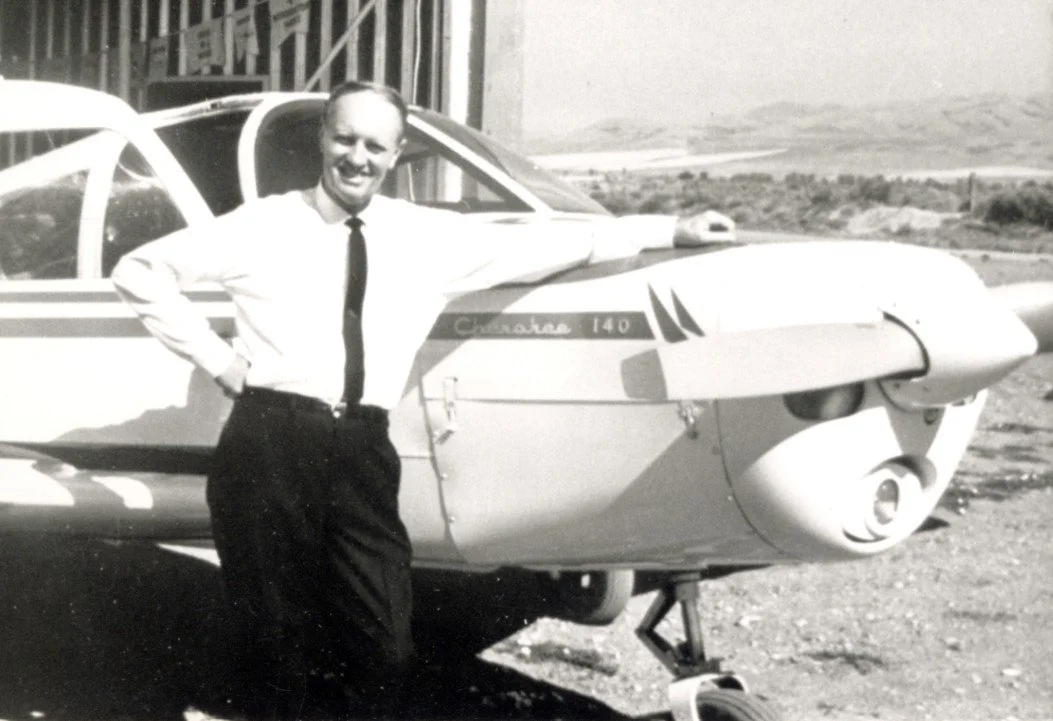
Meet Vern Carter
Verenus (Vern) Carter, 1904 – 1966, was approximately 13 years old when he saw his first aircraft, which resembled the original Wright Brother’s plane. From that moment on, he knew he was going to become a pilot. At the age of 16, he drove to Los Angeles to begin flying lessons. After completing his senior year of high school in Utah, he returned to California to work as a mechanic to pay to complete his flight training.
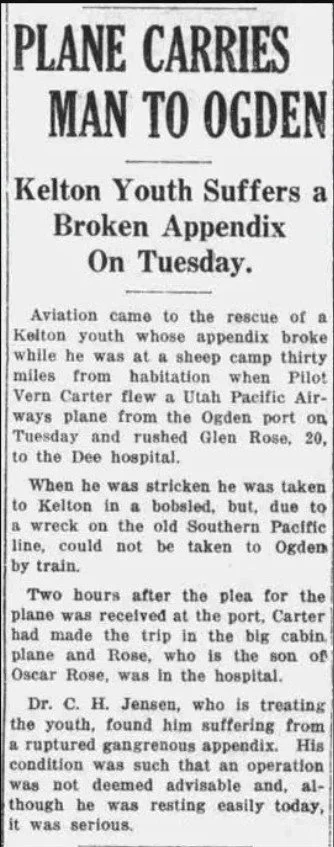
After earning his wings, he returned home and paid for a plane by barnstorming, or traveling around giving exhibitions of flying and performing aeronautical stunts, around Utah. Before long, Vern realized his true vocation and became an instructor. In addition to training future pilots, he served the community in other ways. He pioneered the use of an aircraft in counting herds of elk. He delivered mail for a number of years and helped in search and rescue operations. One day, a young man’s appendix burst in a remote sheep camp. He couldn’t get medical help due to deep snow. A call was made for assistance, and Vern flew in with his ski plane and got him to the hospital.
In 1929, Vern married Jessie Welsh, 1910-1994, and together they made a major impact on Utah’s aviation industry. In 1935, Vern and Jessie purchased some land in Salt Lake Valley and built a small airport they named Carter Flying Service. Over the years Vern trained countless future private, commercial and military pilots while Jessie ran the business and took care of their growing family. In 1953, they moved their operation to Draper and renamed it the Carter Sky Ranch Airport.
In 1962, Vern and Jessie sold their Draper airport and purchased 60 acres in Lehi to build an open-air strip. Vern immediately began grading a 3,900-foot gravel runway which ran in a north-south direction. They also built a large hanger for repair, maintenance and storage of airplanes. The airport featured FFA-recognized flight training programs as well as sight-seeing trips and an air taxi service.
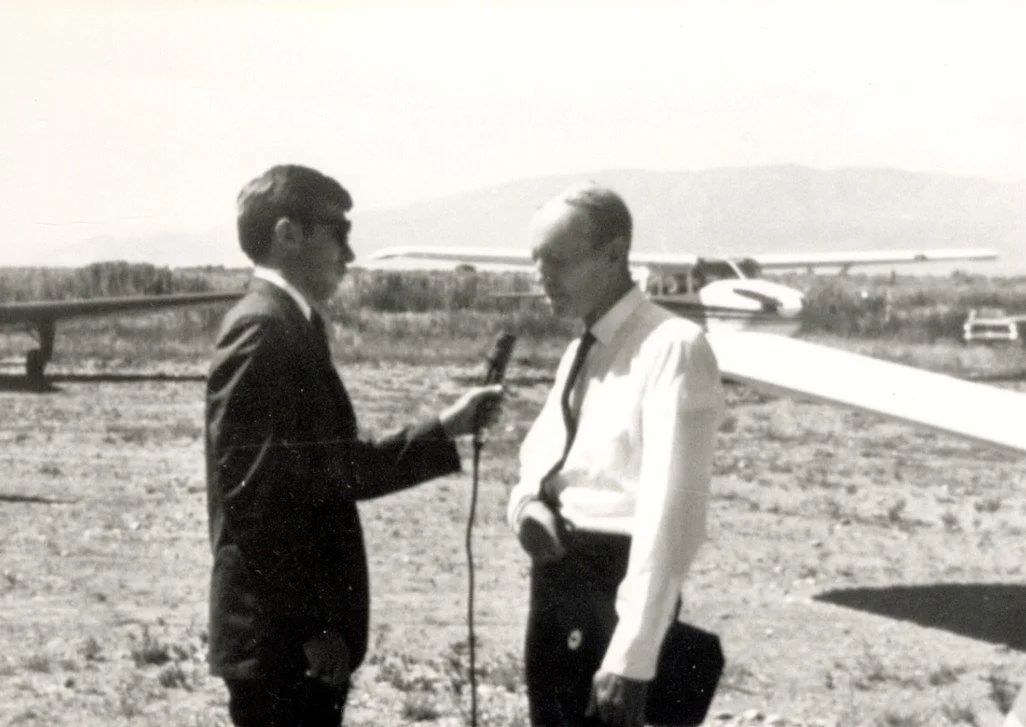
On July 26, 1966, the Lehi Carter Airport was dedicated. W. T. Piper, head of the Piper Aircraft Corporation along with nearly 100 local businessmen and civic aircraft representatives were on hand for the ribbon cutting ceremony. Tragically, 20 days later Vern had just finished with his morning students when he collapsed and died of a pulmonary embolism.
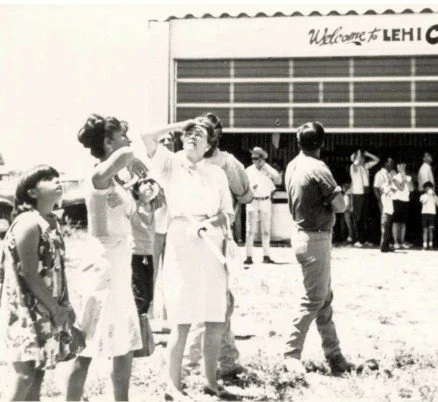
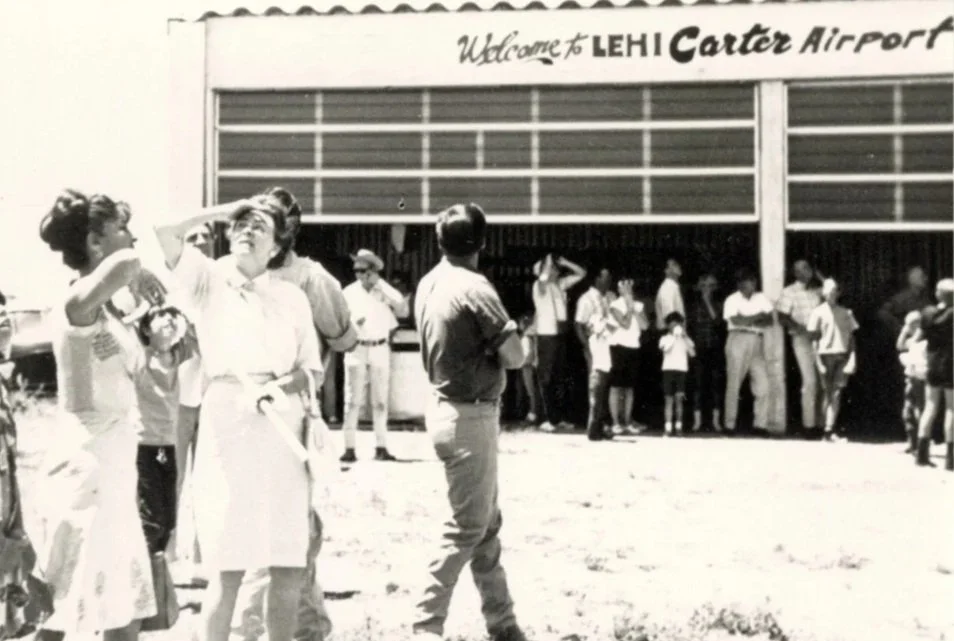
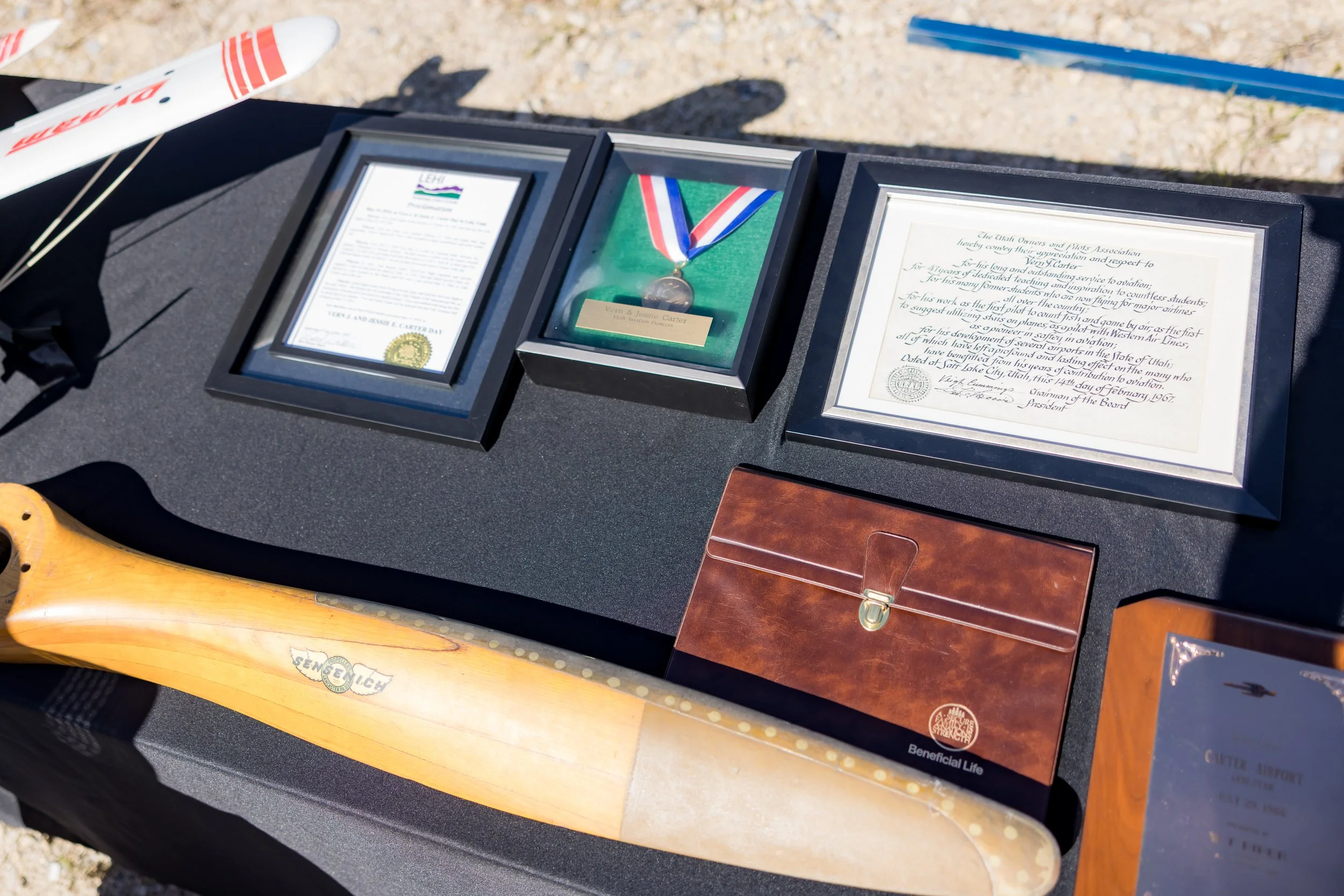
A year later, Jessie leased the airport to Sheridan Owens and Maynard Meyers of AA Aviation. The official opening included a “fly in” of nearly 50 planes. During the celebration, George C. Morris, resident of the Utah Owners and Pilots Association, presented an award to Jessie on behalf of her late husband, honoring his long and outstanding service to aviation. AA Aviation didn’t last long and the airport was leased to Jerry W. Brailsford, who along with local pilots Grant B. Smith and Abe Ekins, reopened the airport under the name of Lehi Aviation on Oct. 10, 1968. Though the various leases, the airport continued to be Carter Airport.
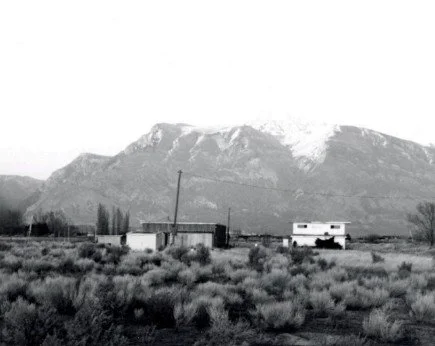
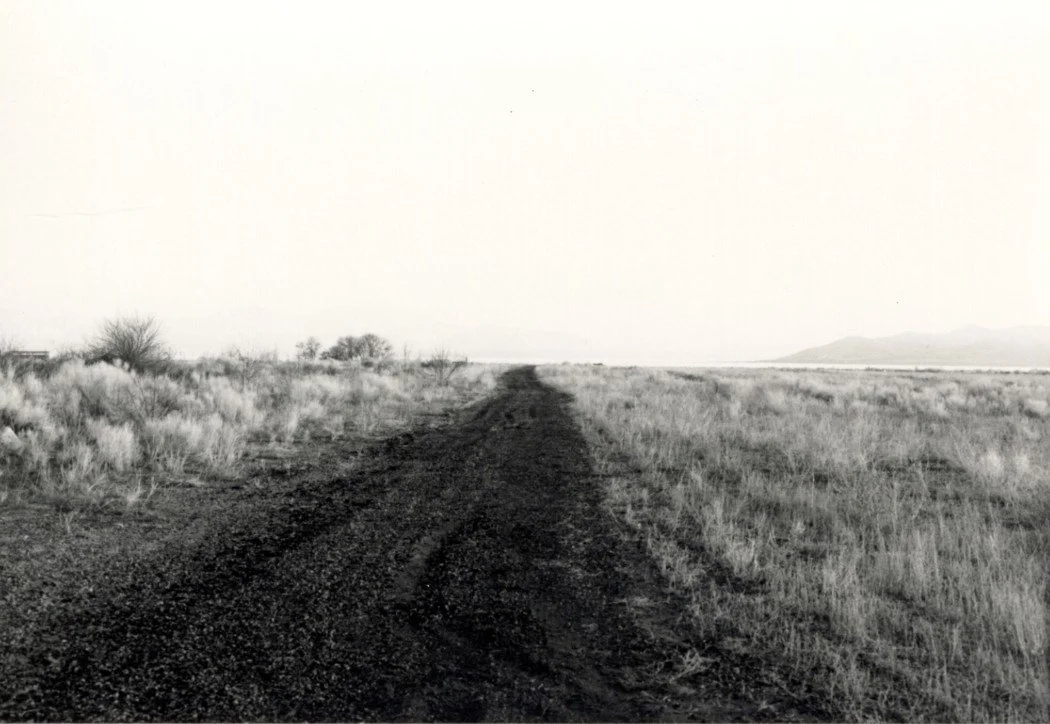
Jessie sold the property to Jess Peck and Gary Elton in 1972, and the airport ceased operation and fell into disrepair. Today all that remains of Carter Airport is the name of the road, Airport Drive, which bisects the original runway. Vern and Jessie Carter’s influence on Utah’s aviation, however, continues to be celebrated as they were inducted into the Utah Aviation Hall of Fame in 2014.
Explore the Life of Carter Airport
-
![Advertisement from The Morning Oregonian, July 28, 1914.]()
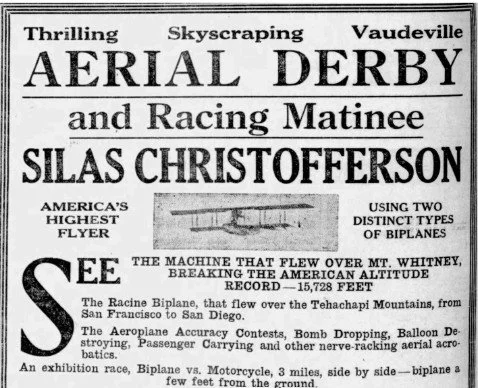
1913-1916: Silas Christofferson and Flying Dare Devils
Silas “Birdman” Christofferson flew to Lehi in 1913, making him the first person to do so. Early pilots packed fairgrounds with crowds who gathered to see the novelty of human flight. Flight maneuvers, stunts, aeroplane races, and bomb dropping demonstrations “captured the hearts” of Americans. Pilots who did these tricks were called barnstormers.
It is not hard to understand how a twelve-year-old seeing Silas Christofferson barnstorming would have been deeply affected. This was the case for Verenus Joseph Carter, or Vern. When Christofferson returned to Utah in 1916, Vern’s imagination took flight; he wanted to be a pilot. In the early days of aeroplanes, not many regulations were in place, and it was quite dangerous. Christofferson perished in 1916, the same year he made his visit to Utah,
-
![Redwood City Flight School in 1919. Image taken from “Airfield Period,” Redwood City, Stanford University, https://redwoodcity.stanford.edu/airfield-period.]()
1921: Vern Learning to Fly
Vern’s work ethic reflected his desire to fly and the spirit that made him a pioneer in aviation. He raised and sold cattle as a young man. He learned about engines while working at a car mechanic shop. Vern had a knack for mechanical work; not only would he become a pilot and teacher, but also a mechanic for his airplanes. He also found a job at Mercur Mines. In 1921, at the age of sixteen, before graduating high school, Vern drove himself to Los Angeles, California, to enroll in one of the early flight schools. After flight school, Vern stayed in California barnstorming.
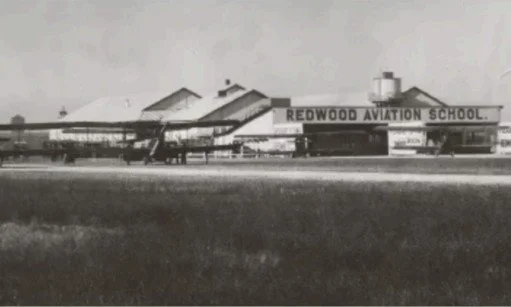
The 1920s were an exciting period for aviation, often considered a “golden age” thanks to the continued work of barnstormers, the return of World War I pilots. The West Coast saw the development of several flight schools. The first veteran pilots returned home from war, creating an influx of fliers. One example of a flight school was Redwood Aviation School. Silas Christofferson built Redwood Aviation in 1916. It was the airfield where Christofferson suffered his fatal crash. Redwood claims to be the first airport to train Chinese, Chinese-American, Korean, and Japanese pilots. It also trained Helen Hodge, who was the first woman to get her pilot's license on the West Coast, and graduated from Redwood.9 Again, this was an exciting time for aviation, especially on the West Coast.
-
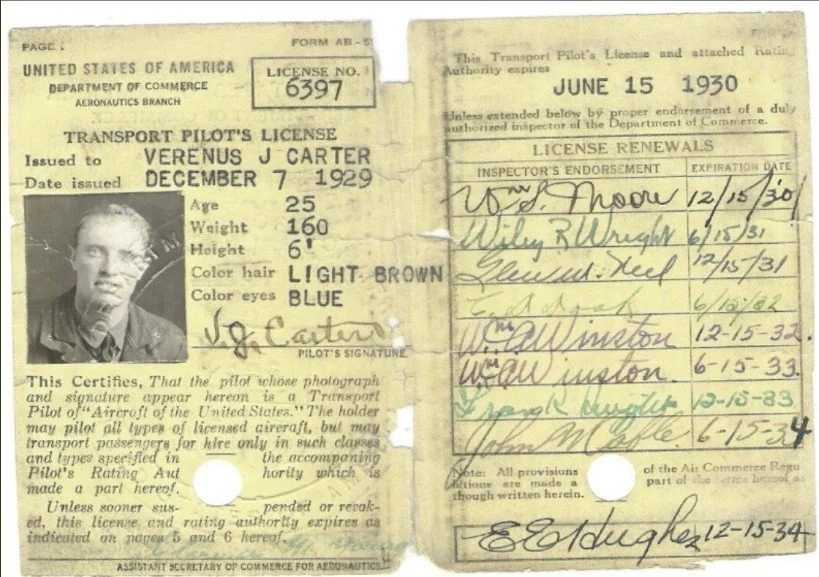
![Vern Carter’s flying license, issued in 1929. Image taken from the Carters’ Utah Aviation Hall of Fame Nomination.Vern Carter’s flying license, issued in 1929. Image taken from the Carters’ Utah Aviation Hall of Fame Nomination.]()
1929: The Return to Utah and Meeting Jessie
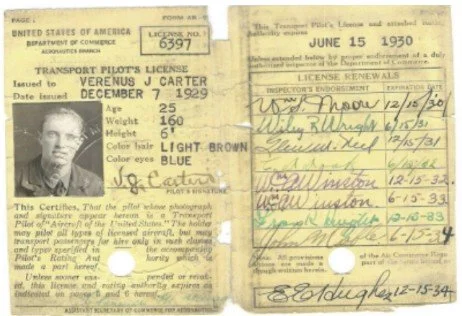
Vern bought his first airplane in 1928, a Hisso Standard, with the intention of teaching flight school in Los Angeles. However, the large number of pilots on the West Coast presented a problem. With so many instructors in California, Vern decided to return to Utah. In 1929, Vern moved to Ogden to teach flying. Being a pilot made him somewhat of a hero in the area. Francis Welsh was one of the young boys caught up in the excitement surrounding the new pilot. One day, he brought Vern to his house to meet his older sister Jessie. After six weeks, Jessie and Vern married in Brigham City on February 21, 1929. Dangerous plane crashes in the early years of flying were not the only threat to the Carters’ flying careers. The economic crash of 1929 set off the Great Depression and created financial difficulties for pilots, just like many other workers. The company Vern flew for closed in 1932, leaving the young Carter family with no income. Vern found work flying in Salt Lake and Pocatello until he invested in his own flying business in 1935.
-
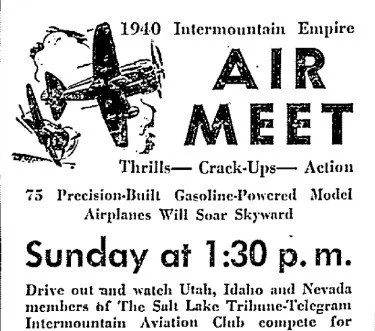
![Utah Central Airport Ad. Salt Lake Telegram, September 28, 1940.]()
1935: The Carters’ First Airport—Utah Central Airport
The Carters saved during the early depression years and bought land at 3200 West 2100 South on the border of Salt Lake City and West Valley City. They built Utah Central Airport, complete with a hangar, runway, and office, and ran their business, Carter Flying Services, from the site. Having an airport presented business advantages not held by private pilots who previously worked as barnstormers. And, the Carters took full advantage. They trained pilots, offered passenger flights, sold Piper airplanes, and had airshows. Jessie ran the business, managing the office. The aviation industry saw advancements that helped stabilize the industry during the Depression, such as the development of affordable, reliable plane engines. Business applications for flight were further solidified, such as crop dusting and business travel.
-
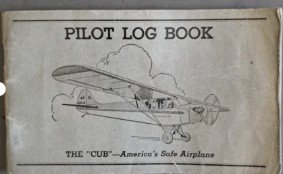
![1939 logbook for sale on eBay. https://www.ebay.com/itm/156808198682.]()
1930s: Winged Hero
The 1926 Air Commerce Act led to the demise of the barnstorming era in 1926-1927. The act regulated the industry that was proving quite dangerous. As part of the regulations, it required pilots to keep logbooks to track their flight hours. Vern began keeping a logbook the same day. Though perhaps not explicitly written about in the logbook, the hours logged show Vern's skilled flying proved invaluable to Utahns who found themselves in trouble. On one occasion, Vern saved a young man, Glen Rose, who was herding sheep thirty-three miles from Kelton. Rose’s appendix burst, and he was carried on a sled to Kelton. Unfortunately for Rose, a crash blocked the railroad, leaving him stranded. Vern swooped to the rescue and flew Rose to the hospital. In another instance, Vern flew in the search and rescue operation of two boys who went missing while sailing on the Great Salt Lake. Vern reported both boys were found safe while another boat towed them home.
-
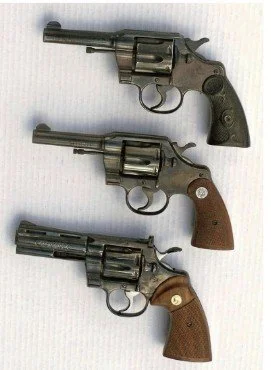
![Colt Revolvers, 1908, 1927, and 1955, examples of revolvers popular among law enforcement in the early and mid-twentieth century. Photo taken from https://gunsmagazine.com/wheelgun-wednesday/the-colt-official-police/.]()
1943: Deputies Jessie and Vern
Days after the Japanese attack on Pearl Harbor, President Franklin D. Roosevelt issued Executive Order 8972 on December 12, 1942. The order allowed the Navy to establish guard requirements for protecting “national-defense material, national-defense premises, and national-defense utilities.” In 1942, the Navy told the Carters that if they wanted to train Navy pilots, they needed police guards to protect the air school from sabotage. The Salt Lake City police informed the Carters that they did not have the resources to place guards at the airport. Instead, they offered the Carters training courses. When the Carters finished the courses, they were deputized. The police gave them badges and revolvers to guard the airport, and the Carters’ flight school provided flight training to World War II pilots. Jessie saw an increase in work that came with wartime pilot training. The influx of wartime students, time spent training to be police, and extra flying time to train the pilots were all part of the Carters’ sacrifices to the war effort. One notable role of U.S. pilots in World War II was the use of SBD Dauntless dive-bombers. Bombing runs turned the tide of the War in the Pacific theater in battles like Midway.
-
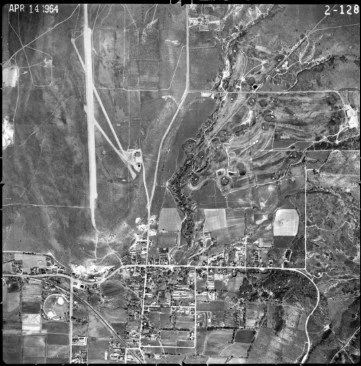
![Aerial view of the address for the Carter Sky Ranch in 1964. Three runways can be seen in the upper left half of the photo. Taken from Utah Geological Survey at https://imagery.geology.utah.gov/pages/search.php?search=!geo40p52769654824518bm111p864]()
1950: The Carters’ Second Airport—Carter Sky Ranch
After World War II ended, the United States once again experienced a spike in the pilot population from veterans returning home. Many pilots went on to fly commercial jobs. Flight became increasingly popular in the 1950s. Passenger jets allowed for the huge growth of larger-scale airliner travel. Over the next two decades, the growth was massive. Passenger numbers ballooned, quadrupling from the mid-fifties to the early-seventies. Still, small airports fared quite well in Utah. By the late 1950s, Utah boasted twenty-seven flight schools and four airports near Salt Lake, two of which were started by the Carters.
For their second airport, the Carters purchased land in Draper and opened Carter Sky Ranch in 1950. They built the airport from the ground up, including three runways, a hangar, an office, and a home.25 The Piper airplanes Carter sold at Utah Central Airport and Carter Sky Ranch were completely different from the canvas and wooden airplanes Vern flew in the 1920s.
-
![Jessie Carter with the 1963 99’s Club in Cedar City. Photo from The Iron County Record, October 17, 1963.]()
1963: Chairwoman Jessie
In 1929, a group of women established the Ninety-Nines, an organization dedicated to Women pilots. The Carters’ flight school taught women to fly since at least 1939. The Salt Lake City Chamber of Commerce partnered with the University of Utah, creating a scholarship for ten young pilots who would train at Carter’s Utah Central Airport. However, of the ten scholarships, only one could be awarded to a woman. In the 1950s, Jessie learned to fly. Once a pilot, Jessie used her skills to boost women’s flying in Utah. In 1960, she joined the Ninety Nines. In 1963, she served as chairwoman for Utah’s chapter and oversaw the group's efforts to improve some Utah airports by air marking them. Air marking meant painting the runways so they could be seen from the air.
-
![Onlookers look to the sky during the “fly-in” under the reopening of the airport under AA Aviation in 1967. Photo from Lehi Historical Society.]()
1966: An Airport in Lehi
The Carters bought more land in 1960 for a new airport, this time in Lehi. The Carters set themselves to the task of building an airport from scratch. After two years of work, Lehi Carter Airport was ready for its first flight. In 1966, the Carters dedicated the airport. W. T. Piper, head of the Piper Aircraft and long-time friend of the Carters, came to Lehi to perform the dedication.33 The Carters were among the first Piper airplane dealers. Sadly, Vern died less than a month after the dedication. The airport reopened a year later with ceremonies acknowledging Vern’s dedication to aviation.
-
![Lehi Carter Airport in 1988. Photo by Richard Van Wagoner.]()
2014: Aviation Hall of Famers
Lehi's Carter Airport closed in 1972, but its history, and that of its founders, reminds us of the power individuals can have in sparking industries, like aviation, that profoundly shaped Utah. Because of this, the Utah Aviation Hall of Fame officially inducted the Carters in 2014.
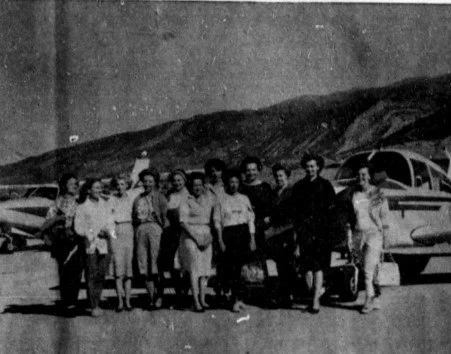
BARNSTORMING
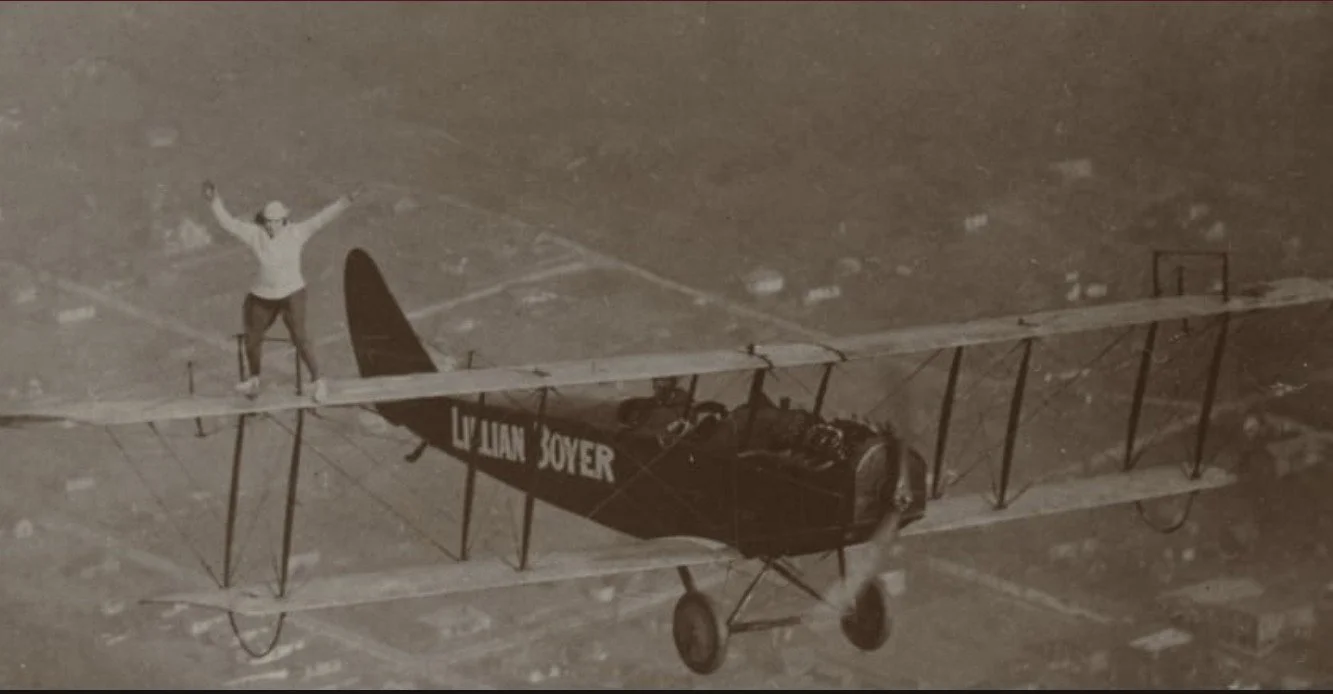
The term “barnstorming” comes from the theater groups that would tour the country in the early 20th-century. Some of their tour stops did not have a “proper” theater so they would perform in barns, hence the name. While these pilots were not flying in or out of barns, the term describes the traveling nature of their act and ability to make do as many pilots used military surplus planes for their act. They were easy to find and in decent enough shape.
Though it was no way to make a living, in the 1920s audiences were fascinated watching the bold stunts. Few performers found fame through their dance with death. For many Americans, their first time experiencing the wonder of flight was by watching the traveling barnstormers. However exciting the act first appeared, by the end of the 20s, planes started to show their age and crowds lost interest.
Marker Location
600 East and Airport Drive Lehi, UT
Marker Unveiling
May 2, 2026
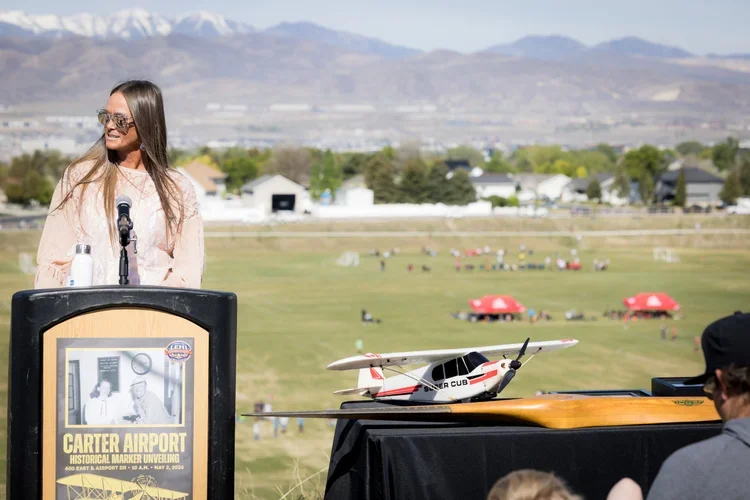
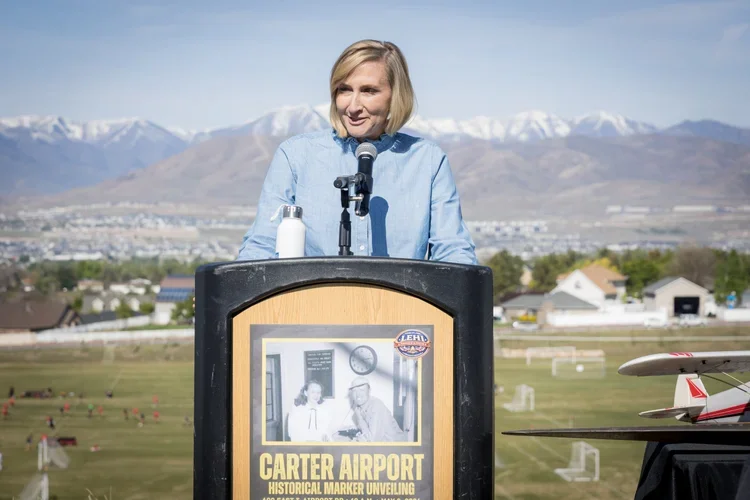
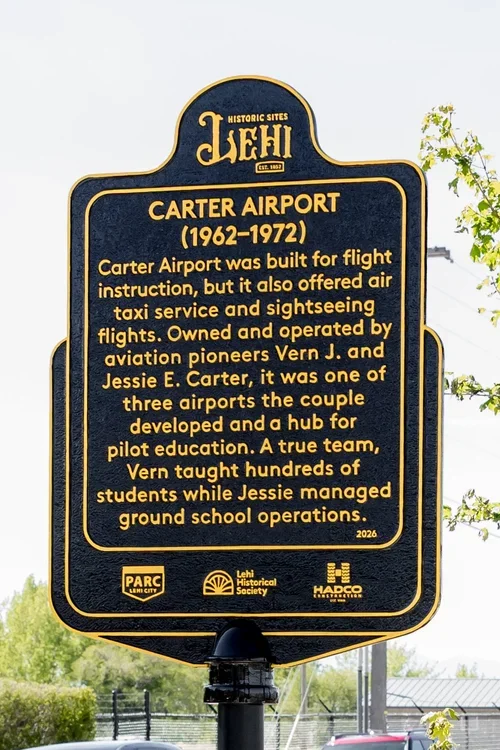
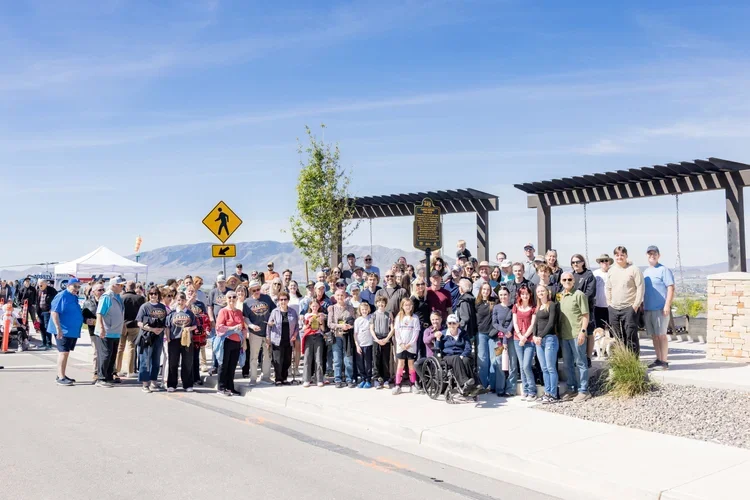
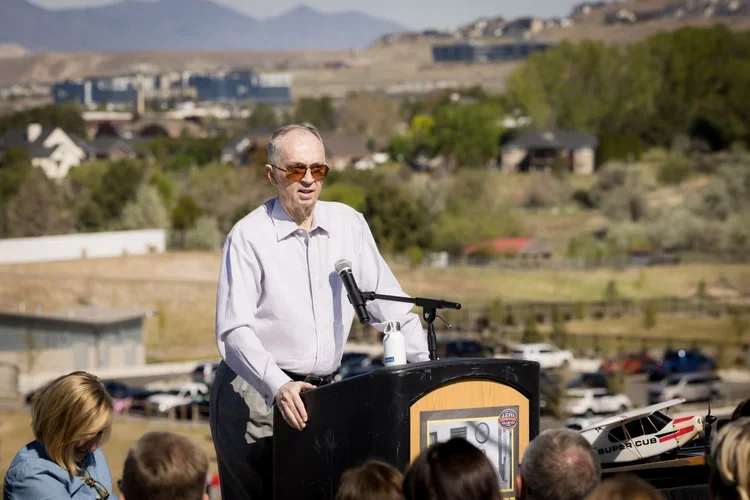
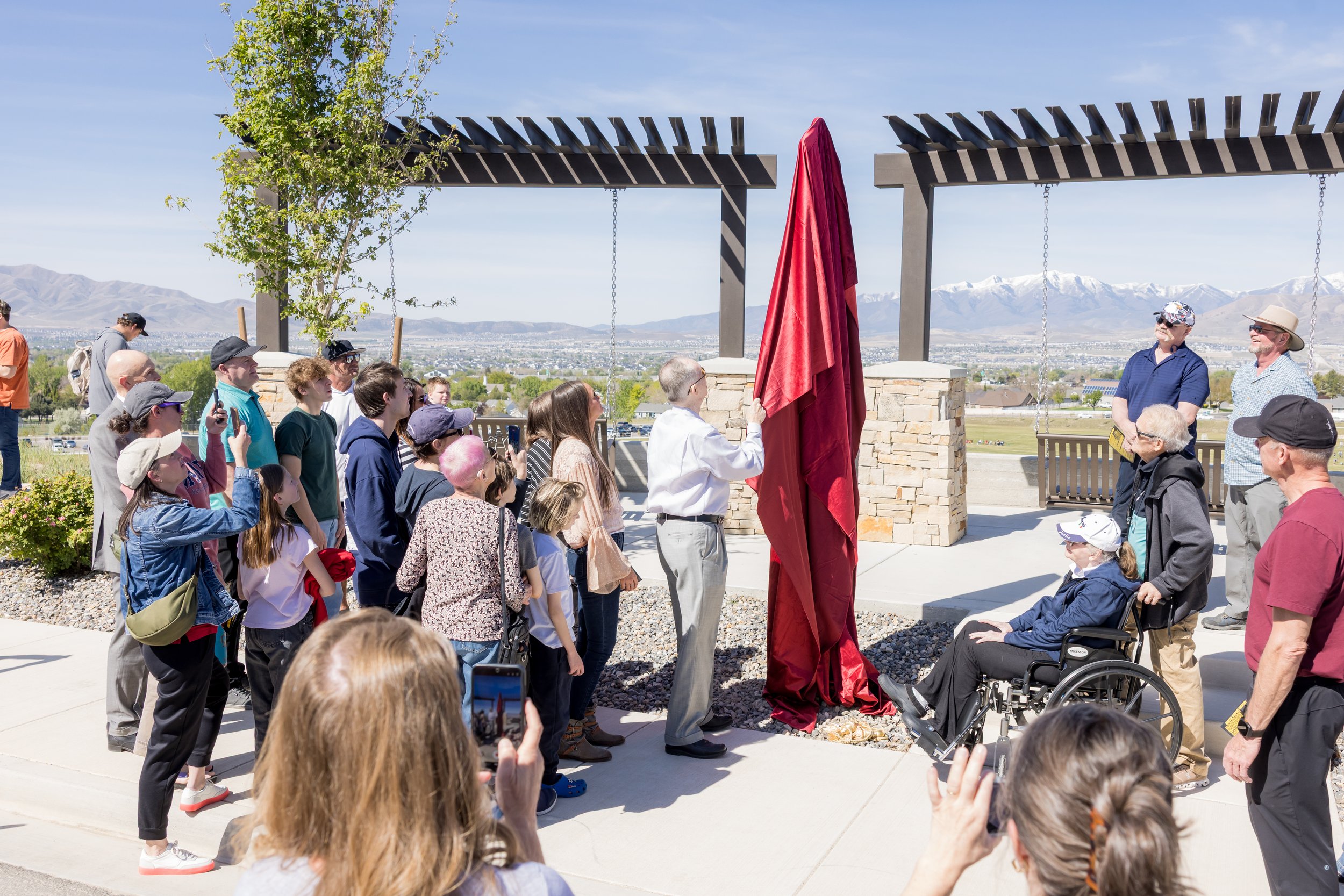
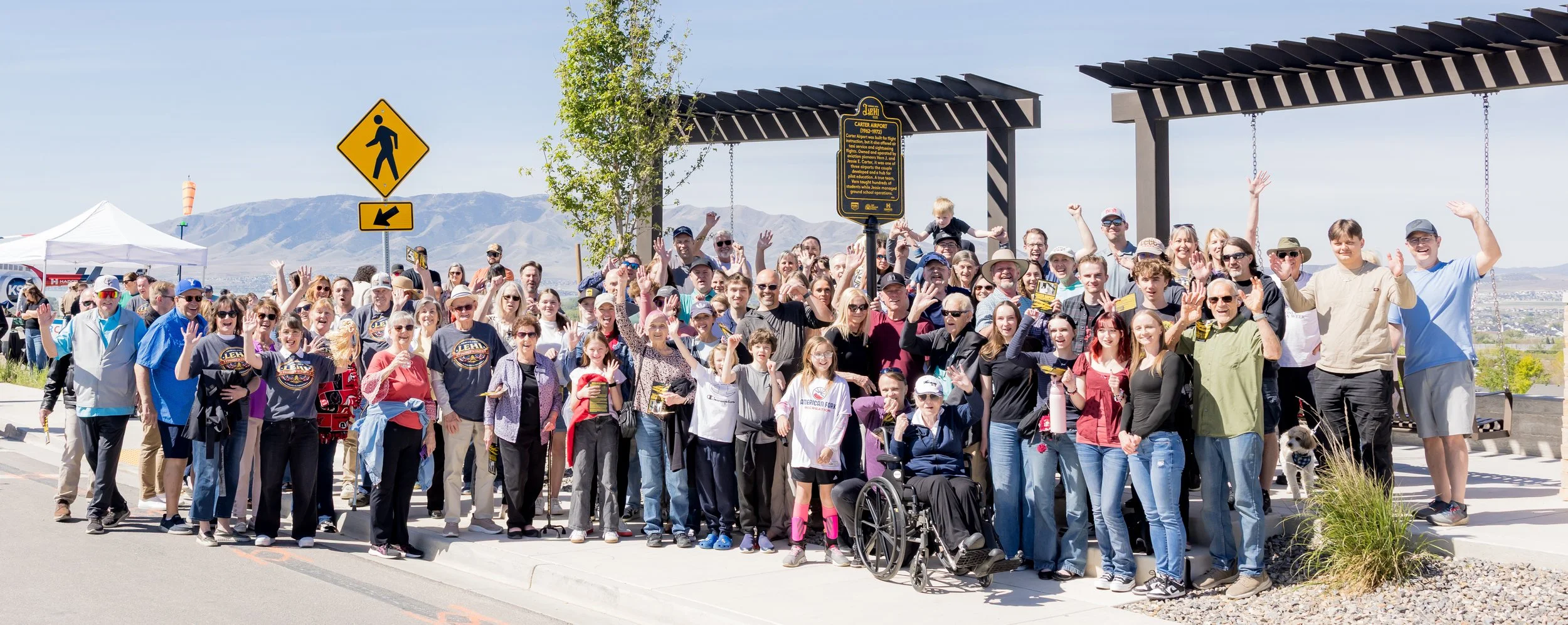
The historical marker for Carter Airport was unveiled Saturday morning at the top of Airport Drive and 600 East with a beautiful view of the valley and KSL’s Chopper Five parked nearby.
“I love where the marker is placed, it’s the perfect spot,” said Danaca Hadfield, a member of the Lehi Historical Marker Unveiling Committee, as she conducted the short event. “It really reminds you of flight.” The location of the new marker is at what was once the entrance to Carter Airport.
In 1962, Vern and Jessie Carter purchased 60 acres in Lehi to build an open airstrip. It was their third airport to establish in Utah. They built a large hangar for repairs, maintenance and airplane storage. The airport featured FFA-recognized flight training programs as well as sight-seeing trips and an air taxi service. All of the Carter airports were built for flight instruction with Vern teaching in the air and Jessie running the ground school.
The Carter Airport historical marker is the 18th marker of the Lehi Historical Marker Program. The program was founded in 2022 when the Lehi Historical Society won funding and continued support from the John David and Danaca Hadfield family of HADCO Construction and a large Lehi City PARC grant. Event sponsors for 2026 include Strata Networks and SIRQ Construction. Chick-fil-A sponsored this unveiling with 100 free sandwiches.
For more information on the unveiling program or Lehi history, call 801-768-1570.
Learn More
Investigate our online archive for more information on the Carter Airport

Content Contributors
——, Lehi Historical Society
Drew Holley, University of Utah
Kasia May, University of Utah
Support our Mission
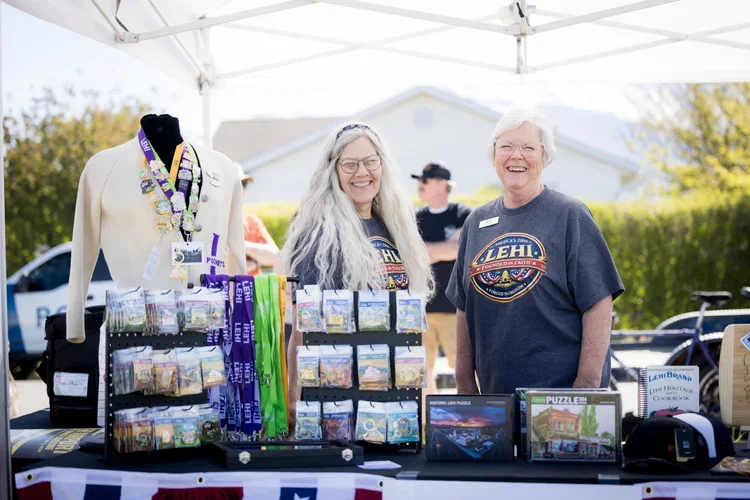
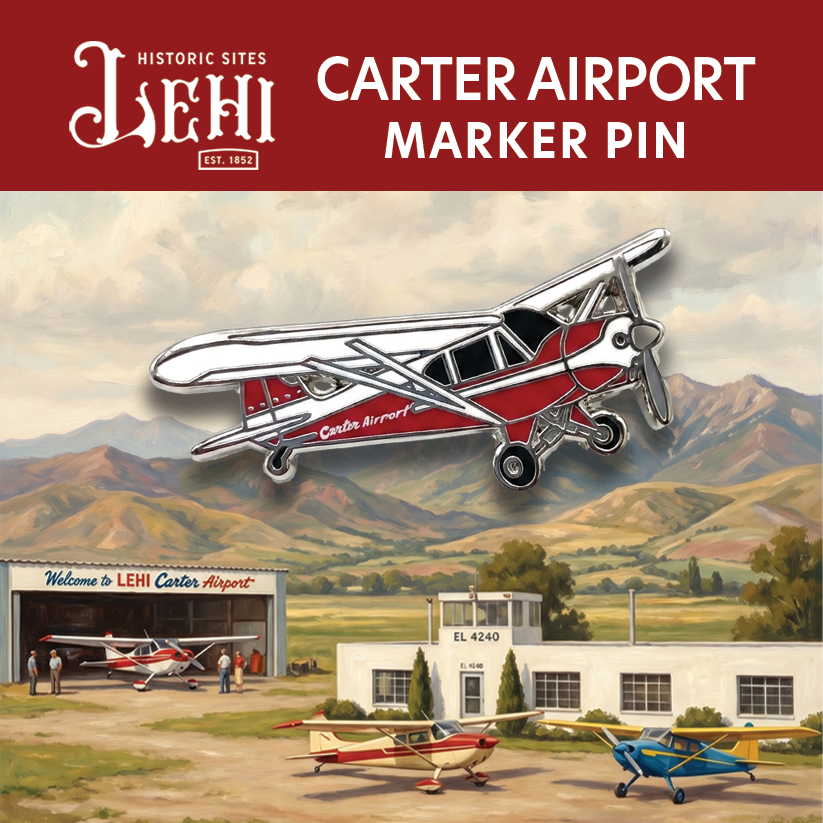
Purchase collector marker pins to show your Lehi spirit! Your purchase will support the Lehi Historical Marker Program and the Lehi Historical Society. There are currently 15 pins available in our gift shop
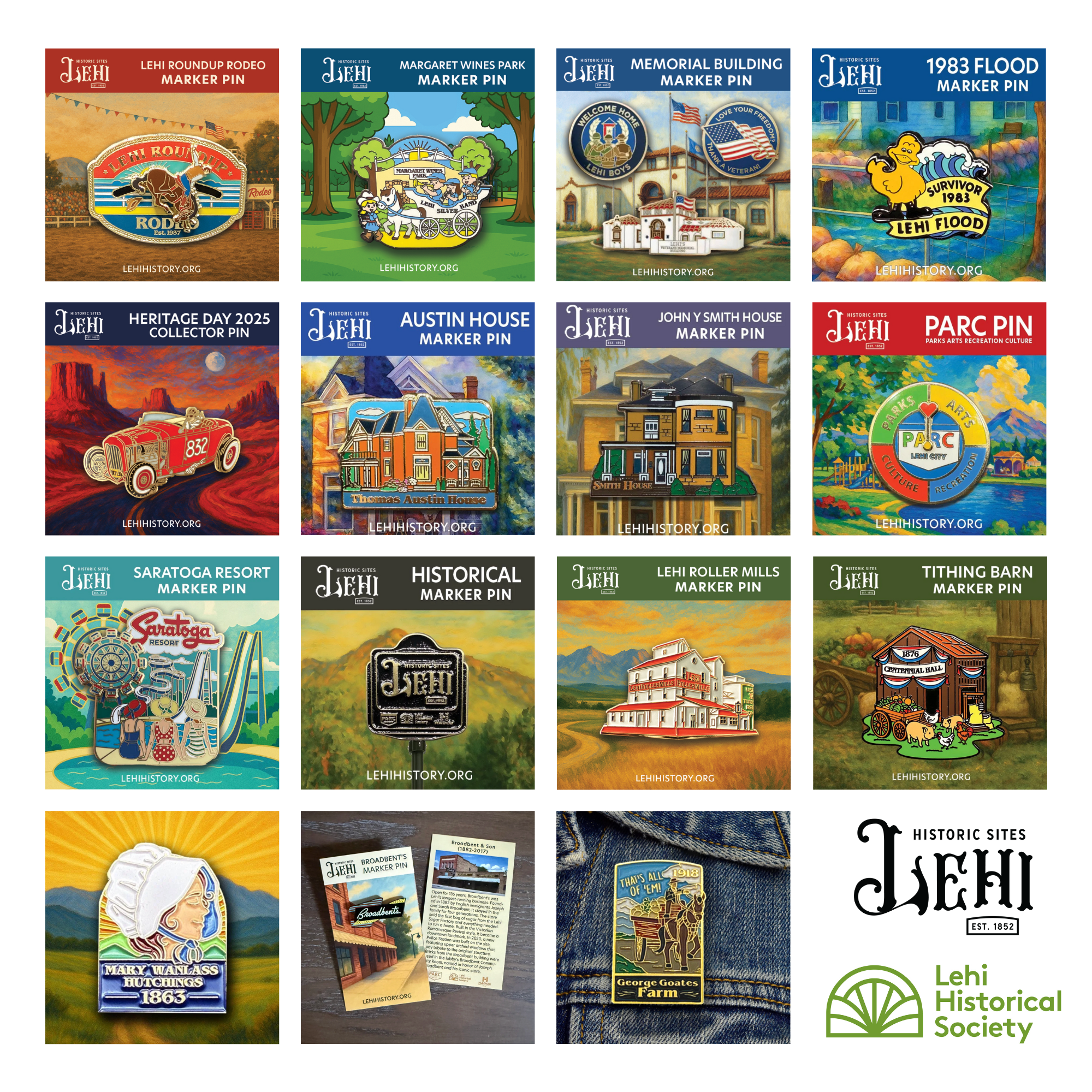
Celebrate Lehi’s history with our complete 15-pin collection. This special bundle includes one of each enamel pin from the Historical Marker Collection.
Pins included in the full set:
• Lehi Roundup Rodeo Marker Pin
• Margaret Wines Park Marker Pin
• Memorial Building Marker Pin
• 1983 Flood Marker Pin
• Heritage Day 2025 Collector Pin
• Austin House Marker Pin
• John Y Smith House Marker Pin
• PARC Pin
• Saratoga Resort Marker Pin
• Historical Marker Pin
• Lehi Roller Mills Marker Pin
• Tithing Barn Marker Pin
• Mary Wanlass Hutchings 1863 Pin
• Broadbent’s Marker Pin
• George Goates Farm Marker Pin
Each pin reflects a real story from Lehi’s past. Landmarks, founders, the rodeo, community legends, floods, and the places that shaped our city. This full set brings together every marker design in one place. It is perfect for collectors, teachers, longtime Lehi families, newcomers wanting to learn the stories behind our city, or anyone looking for a meaningful gift that supports local history.
Take home the complete collection and own 15 pieces of Lehi’s story.
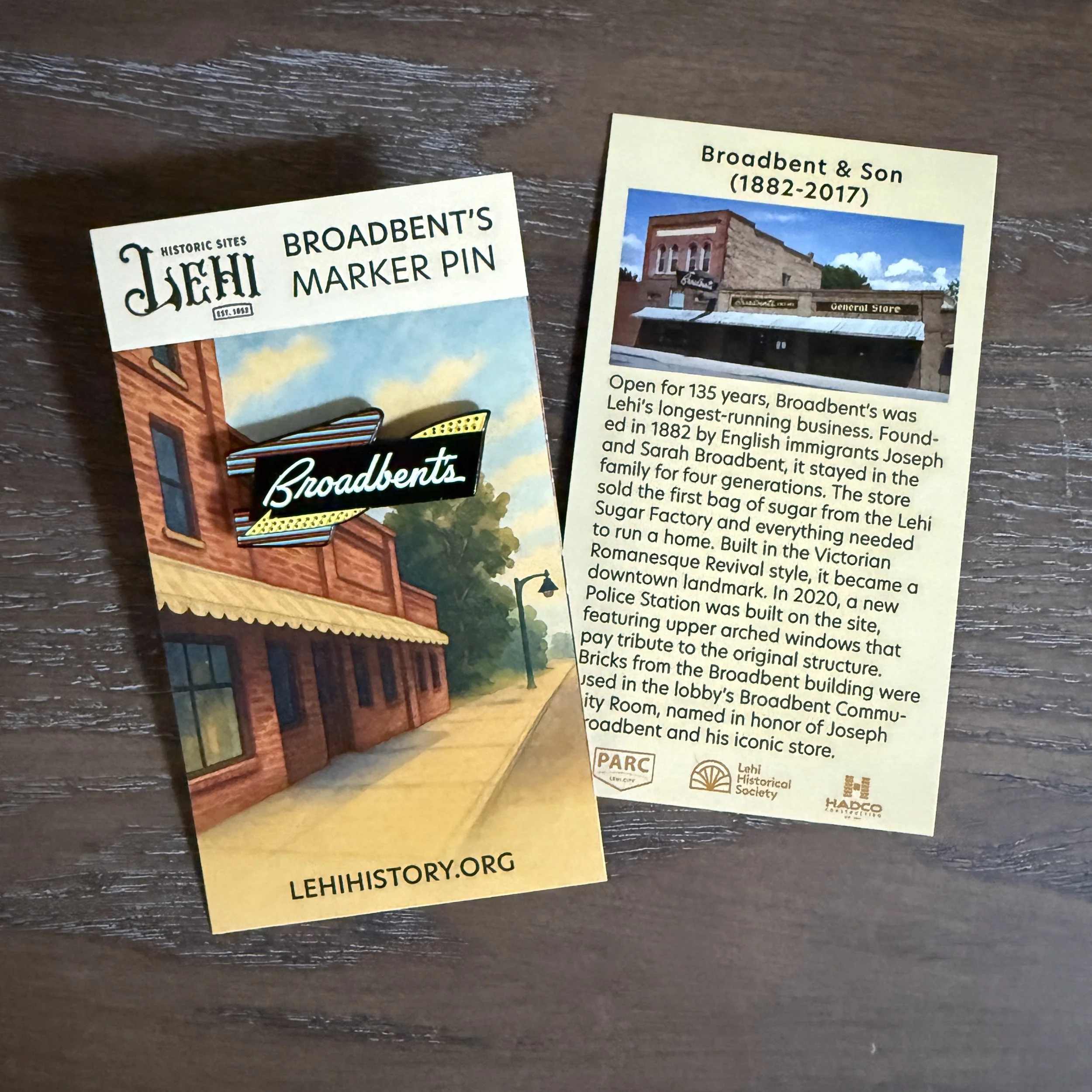
Celebrate a Lehi icon with this Historical Marker collector pin honoring Broadbent’s Store, the longest-running business in Lehi’s history and a cornerstone of the community for 135 years.
Soft enamel with black dyed metal plating
Features the vintage neon Broadbent’s sign installed in 1954
Measures 1.25 inches in length
Single-post backing with secure rubber cover
Perfect for collectors, history lovers, and proud Lehi locals
Founded in 1882 by English immigrants Joseph and Sarah Broadbent, the store was passed down through four generations and became known for offering everything from dry goods to fine fabrics. It sold the first bag of sugar produced by the Lehi Sugar Factory and served as a trusted hub for generations of families. The iconic neon sign, featured in this pin, hung proudly from 1954 until the store’s closing in 2017. Today, the arched windows of the Lehi Police Department pay tribute to the building that once stood in its place.
A nostalgic keepsake celebrating a legacy of service, family, and small-town pride.