Lehi City Fort
Est. 1853
Lehi has had three forts through its history. The first was at Sulpher Springs, (later named Snow Springs) in 1850 where 15 homes were built in a three sided fort offering a little protection. The second was in 1853 during the Walker War. The second fort was built near 100 South and 200 west because no one had built there yet. It was constructed by simply moving the settlers existing log homes to the site. It took two weeks for the men to move sixty homes which were placed end to end forming a hollow square, each side being seventy rods (385 yards) long. The log schoolhouse was torn down and rebuilt near the northeast corner of the fort. Corrals, stackyards, and stables were built in the center of the enclosure and a large cedar “snubbing post” was driven in the center of the stockyard for subduing difficult animals. As formidable as the second fort seemed, it was not very practical for defensive purposes.
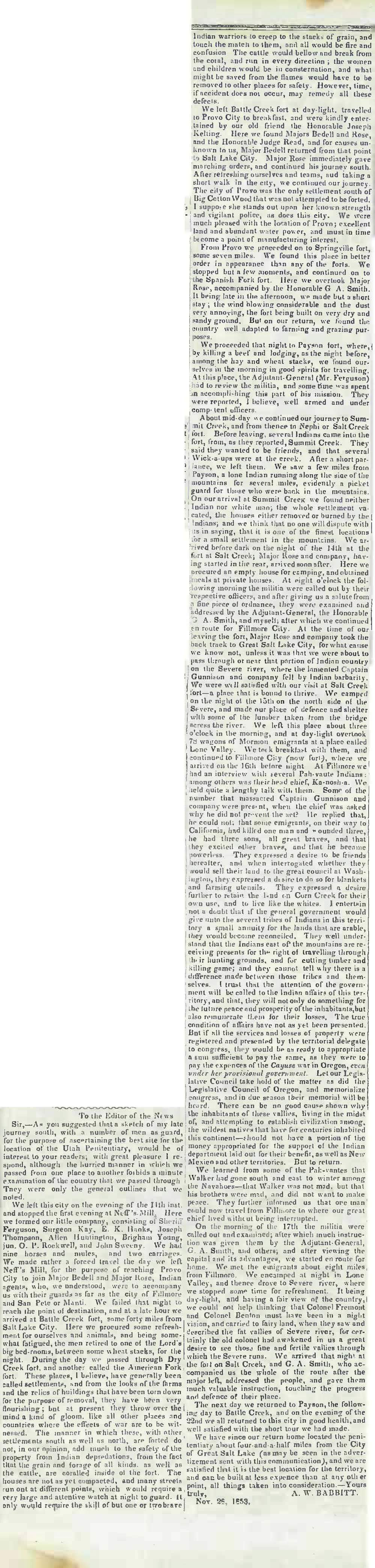
On June 4, 1854, a treaty with Chief Walker was signed. On his way back from signing the treaty, President Brigham Young and his party were traveling along the western side of the Utah Lake and due to a heavy snow storm, had to spend the night in Lehi. While in Lehi, he counseled the citizens to immediately begin building a fort. The future had no guarantee of peace.
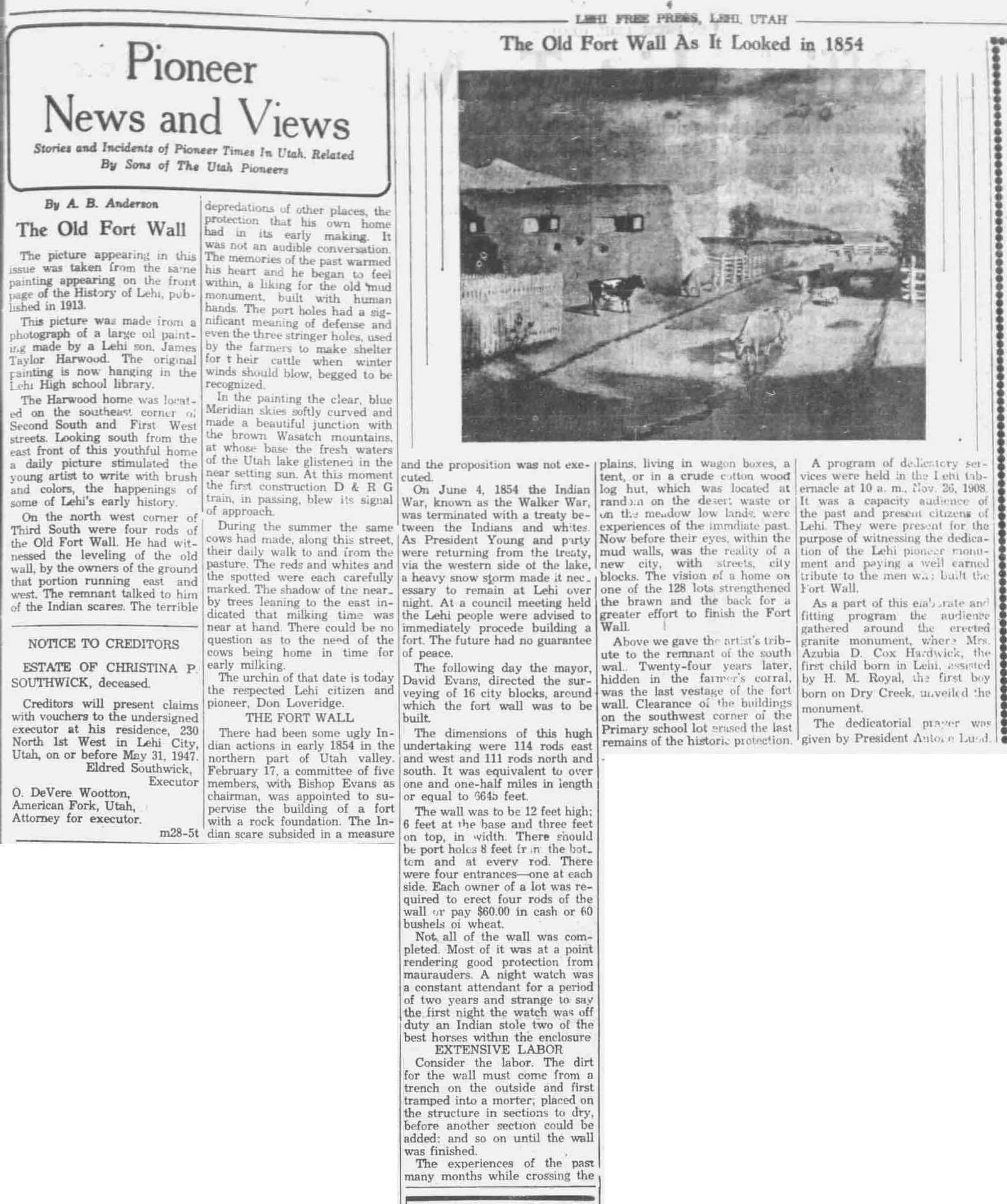
The following day, using a compass and a square, David Evans directed the surveying of 16 city blocks around which the fort would be built. Each block was 20 rods or 330 feet square, and the streets were 6 rods or 99 feet wide. The fort wall was going to be a huge undertaking, the perimeter of which would be over one and one-half miles. The wall was to be 12 feet high; six feet wide at the base and three feet at the top.. A port hole was built eight feet from the bottom every 16 feet. There were four entrances, one on each side. The meeting house was built in the center of the fort.
Each owner of a lot inside the fort was required to help build it. They were required to build four rods, or 66 feet of wall. If they could not do that they were required to pay $60.00 in cash or 60 bushels of wheat. The fort was to be made of dirt. The dirt was tramped into a mortar and placed on the wall in sections where it had to dry before the next layer could be added. Not all of the wall was completed but most of it was high enough to offer protection from enemy forces. The fort was never needed for defense, bit served a greater purpose. As David Evans’ grandson Andrew B. Anderson wrote, “Now before their eyes, within the mud walls, was the reality of a new city, with streets [and] city blocks.” It was the beginning of the Lehi we know.
100 North 300 South 400 West Lehi, Utah 84043
MARKER LOCATION