Lehi Cemetery
Since 1851
John Griggs White was the first person to die in the community that would become Lehi in February 1851. David Savage, (who was a carpenter) made a coffin from a wagon box. He was buried on the west bank of Dry Creek in what would be Lehi’s first cemetery located at 190-200 West State. The early residents of Lehi used the Pioneer Cemetery (as it was later called) to bury their dead for twenty years. When the Utah Southern Railroad came into town in 1871, its surveyed path went right through the cemetery. The State road was also due to be widened so the city leaders decided to relocate the cemetery to the northeast. Many of the bodies in the Pioneer Cemetery were exhumed and reburied in a common grave in the new cemetery. Some families had moved away, some did not want their loved ones relocated, and other graves such as John G. White, could not be located.
In May 1872, William F. Greenwood of American Fork laid out streets and blocks in the new cemetery under the direction of Alderman Israel Evans and Sexton George W. Thurman. Tragically, seven months later George W. Thurman would be murdered and became one of the first to be buried in the new cemetery.[3] In those early years, the supervision of burials were rather unstructured. Many families buried their own dead and a record of the burial was not recorded. The 2 January 1873 Sexton Ordinance required families or friends of deceased persons to purchase a lot and report the burial to the City Sexton. Those not adhering to this rule risked having to pay a fine and exhume the body.
Due to the lack of water, the new cemetery was quite desolate. In 1899 a windmill was installed to provide water from a well and the plan was to pipe water throughout the cemetery. The Lehi Banner reported, “This sacred ‘God’s Acre’ should be made a place of beauty. This has been impossible in the past because of the lack of water. Now this difficulty has been overcome and a plentiful supply of water has been secured the citizens should unite and make an effort to change this waste to a place of beauty.”
Though water was available and piped through the cemetery, the pipes soon fell into disrepair. In 1907, the city repaired the pipes and cleaned up the cemetery in preparation for Decoration Day. This prompted several citizens to express the desire to “hire someone who would spend their whole time at the cemetery in caring for the trees, shrubs, lawns, etc., that might be planted by the people.” Unfortunately, the efforts to clean up the cemetery remained centered around Decoration Day.
The 29 April 1911 edition of the Lehi Banner noted that water mains of the new city water works were brought to the cemetery. The paper predicted that “inside of five years the Lehi Cemetery will present such a beautiful appearance that no one will regret to die if he knows he is to be buried there.” Though many efforts were made to keep the cemetery in good condition year round, it wasn’t until after World War II until it became a reality.
In 1949, representatives of Lehi’s Athenian, Auctus, Liahionian and Olympic clubs presented a plan for the cemetery beautification to Mayor Daryl Fowler and the city council. Their plan was approved but they soon realized that it raised other problems such as fencing, sufficient water supply, pipe lines for sprinklers, methods for financing, etc. To address these issues, representatives of all the civic clubs were contacted to help and they pledged their support.
The city provided a water supply and purchased the sprinkler and fencing materials. The fence was erected by the Lehi Riding club and the Lehi Lions Club laid the sprinkler lines. The Lehi camps of the Daughters of the Utah Pioneers contacted the plot owners to finance the future perpetual care of the cemetery. The various “ladies clubs” raised funds and provided the landscaping at the cemetery entrance and around the fence. The Lehi Civic Improvement Association contributed to building a cemetery custodial building. In August, a call went out to all citizens to come and clear the weeds from the cemetery in preparation of planting grass.
The original cemetery was the area west of 400 east and was interlaced with roads running north to south. As the need for more space grew, more ground was purchased to the east. Around 1970, many of the roads were removed and replaced with graves. Over the next five decades, the Lehi Cemetery has continued to expand to the east and north and eventually ground north of Cedar Hollow Road was purchased. Thanks to the hard work and forethought of Lehi’s clubs, civic organizations and city officials, our cemetery continues to be a beautiful resting place for our loved ones.
Margaret Wines Park Historical Marker Unveiling
July 18, 2024
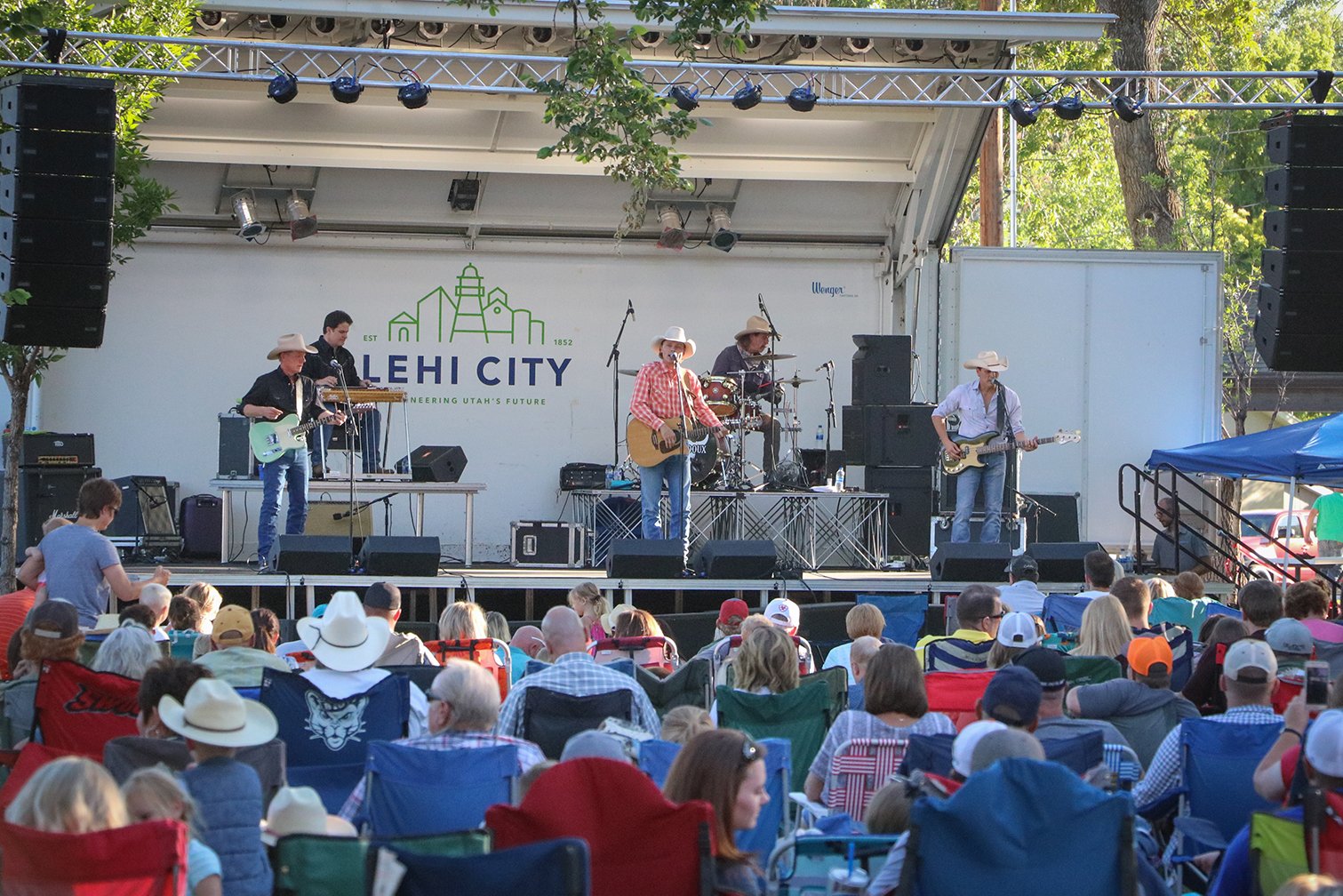
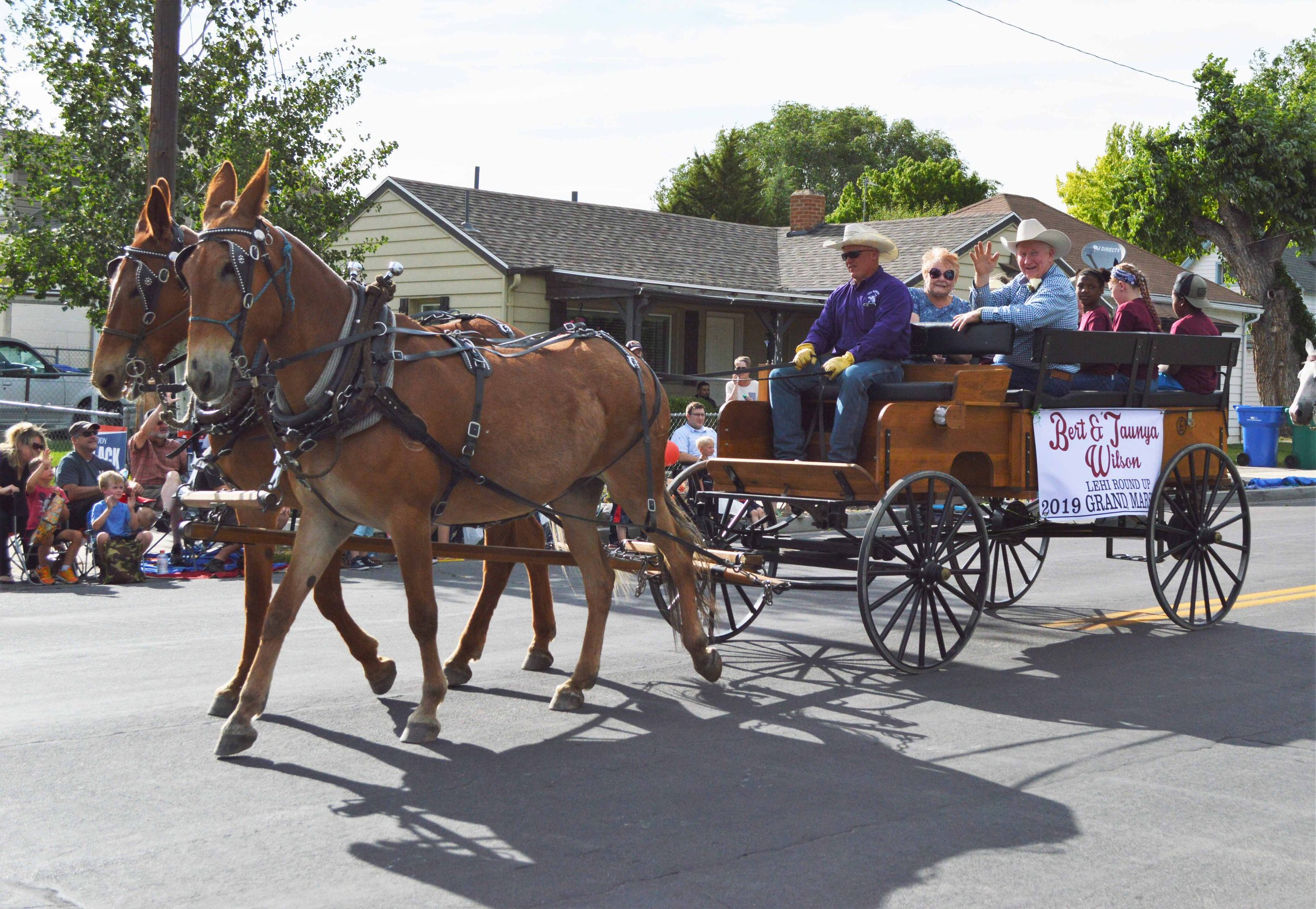
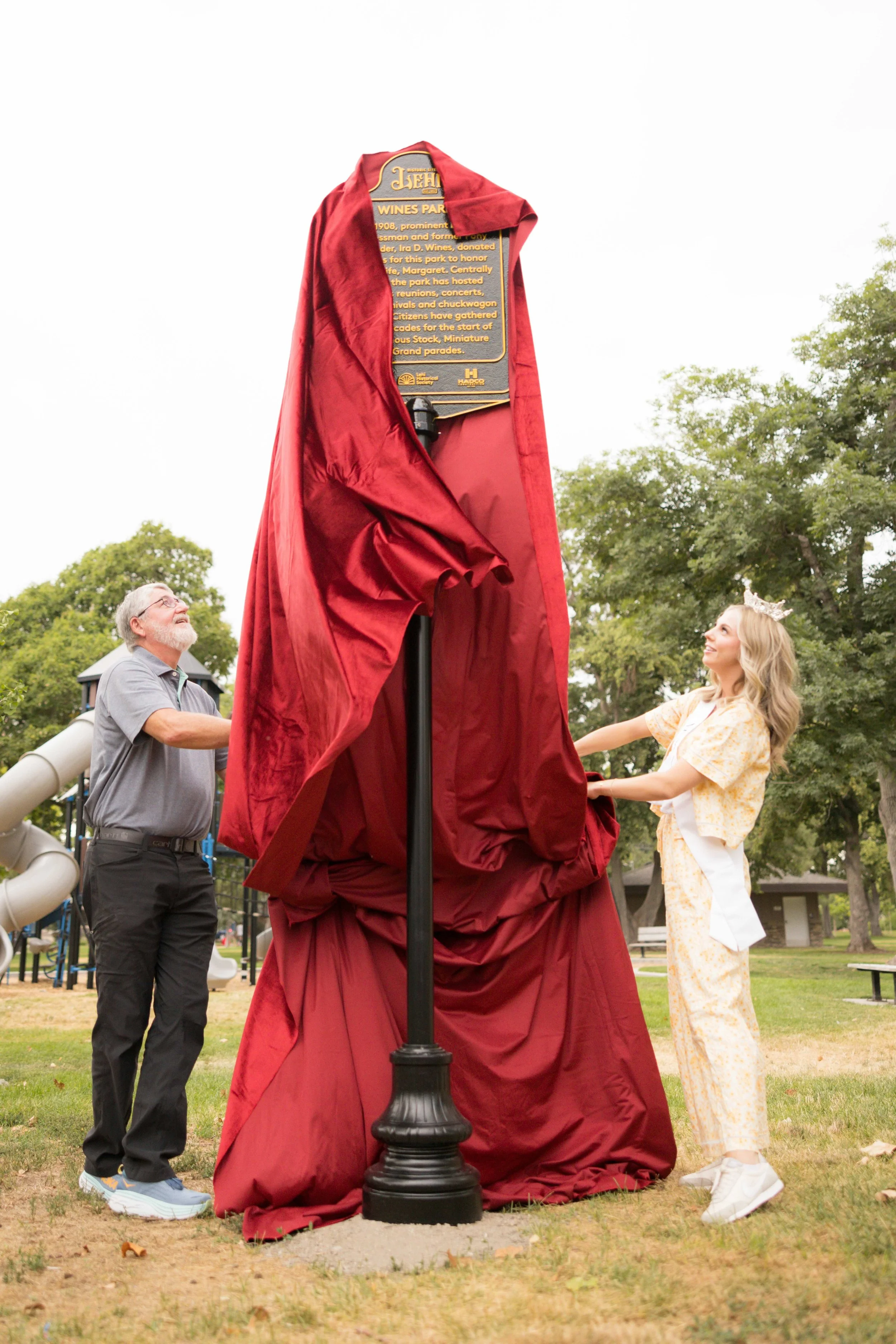
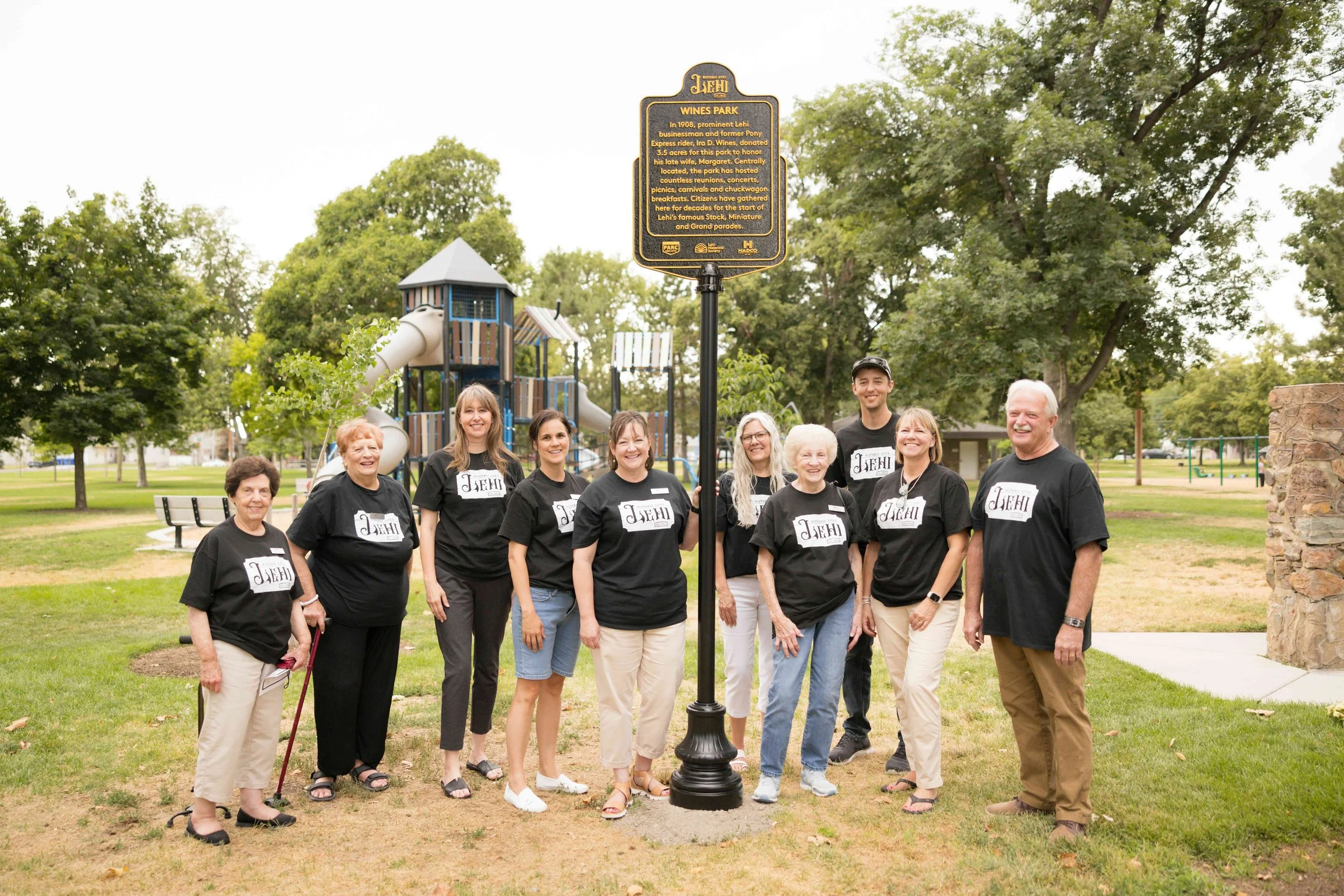
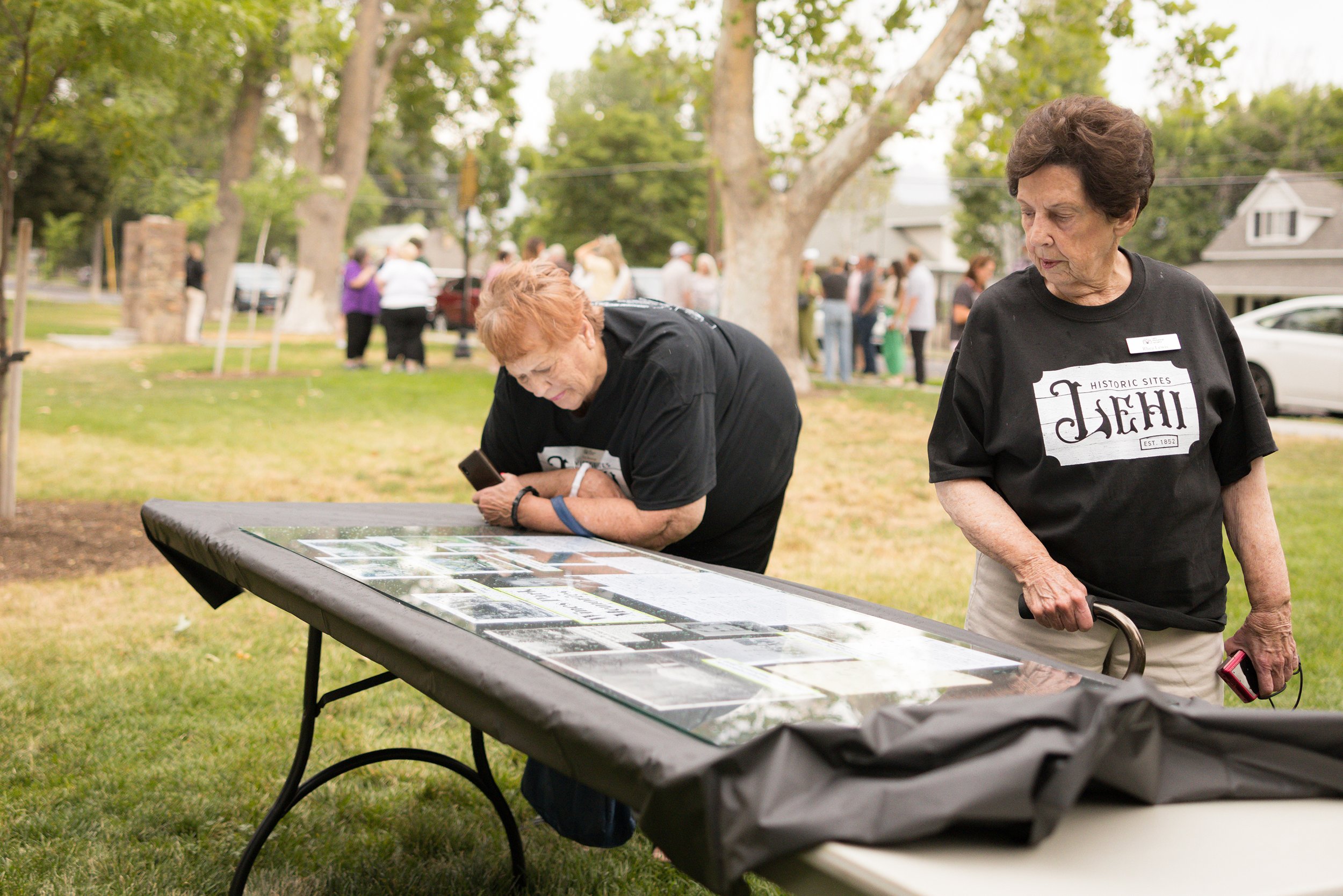
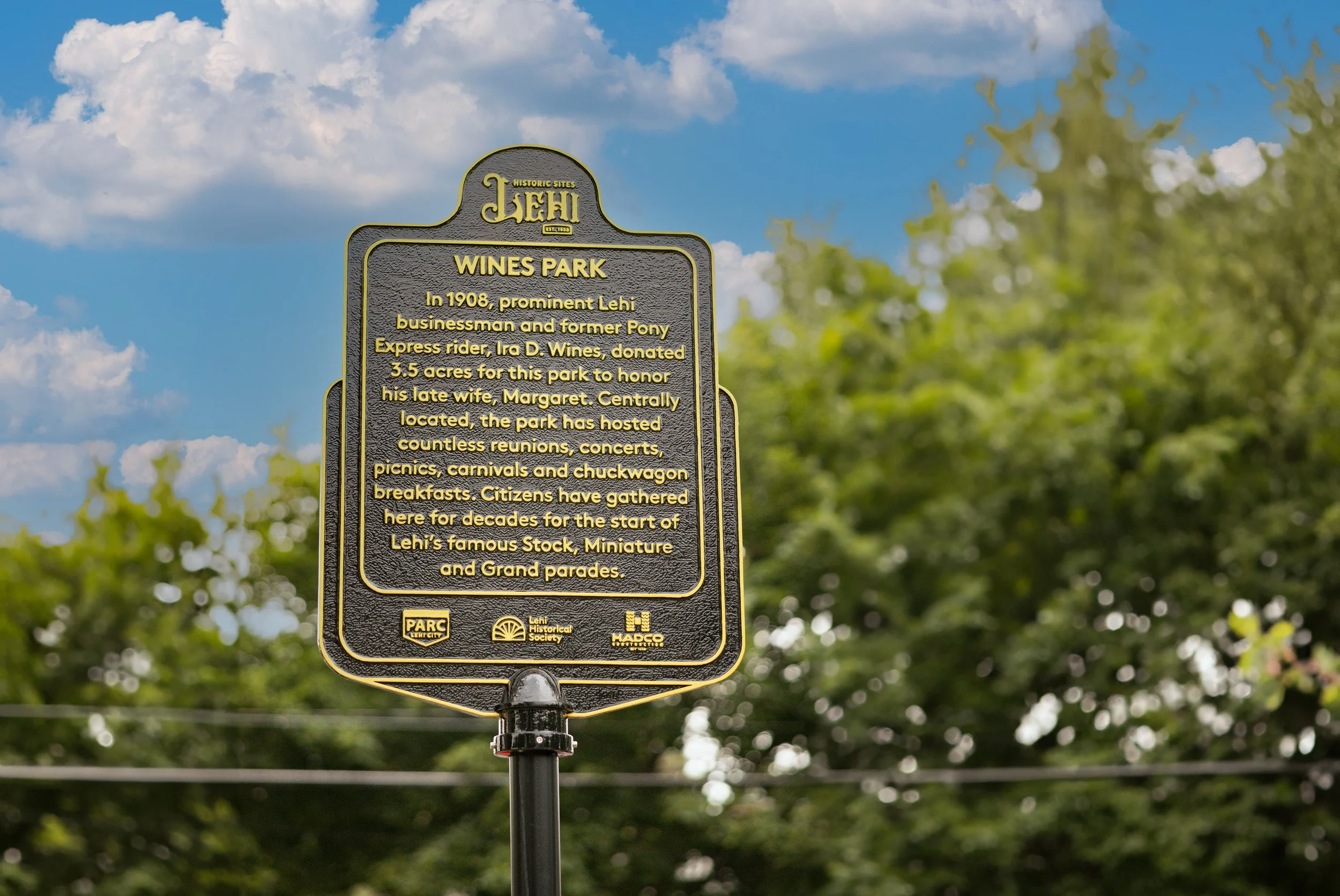
Fifty people gathered to honor Margaret Wines Park, Lehi’s oldest existing park and center of many Lehi celebrations. The park was created in 1908, when Ira D. Wines gifted the land to the city if it would maintain it as a park in honor of his late wife, Margaret. The park is Lehi’s oldest existing park and the center of many of Lehi’s celebrations.
City Councilwoman Michelle Stallings paid tribute to the many local groups and clubs that have funded trees, playground equipment, rose bushes, fireplaces, tables, concrete platforms and drinking fountains. “Even though this park began as a gift by one man,” she said, “it became a gift by many over the years.”
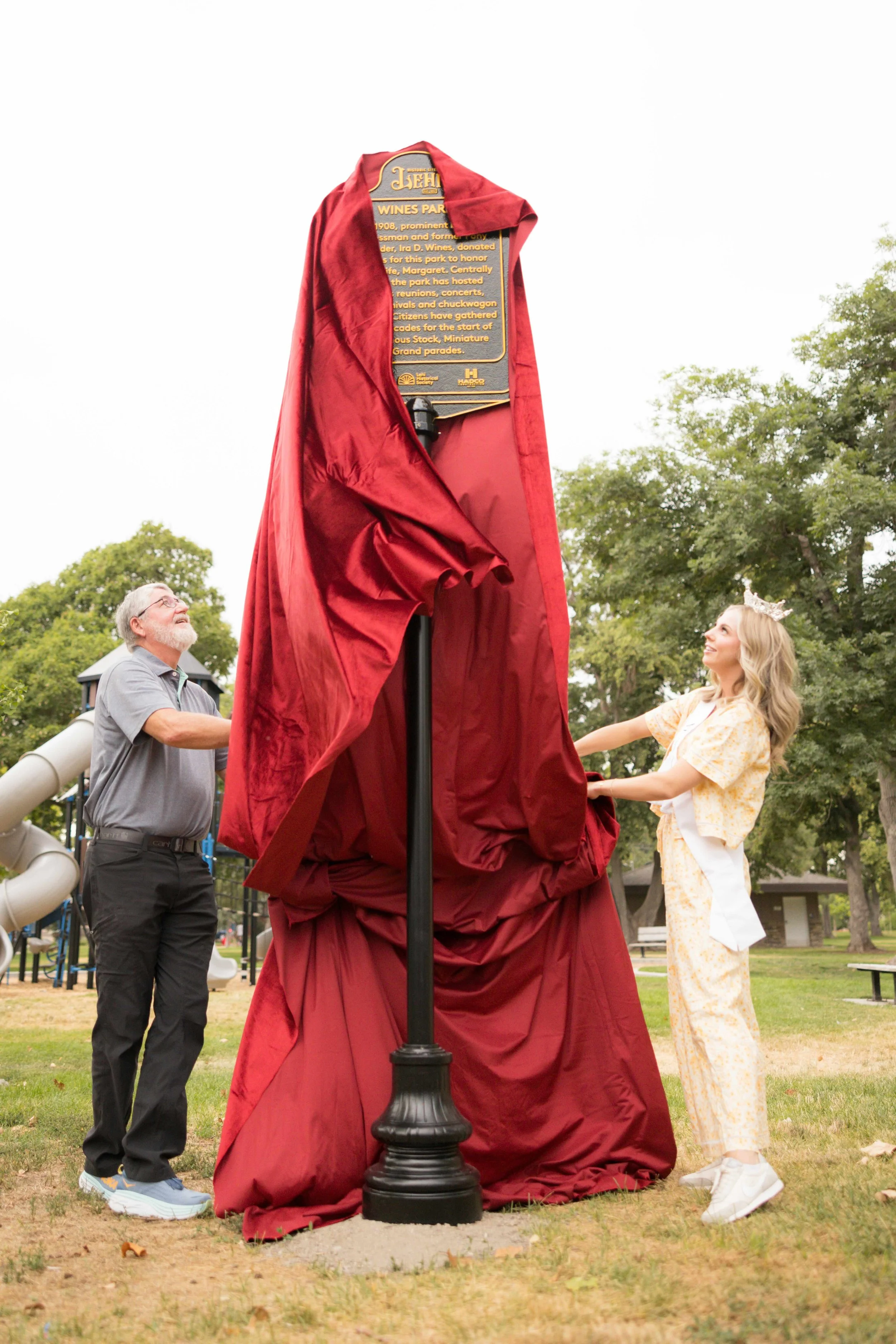
The marker is the second of the Lehi Historical Marker Program.
-
![]()
Unveiling of the Wines Park marker
-
![]()
Historical Society
-
![]()
Wines Park Historical unveiling event
-
![]()
Wines Park Historical Marker
100 East 600 North Lehi, Utah 84043
MARKER LOCATION