Auxiliary Police and Ambulance
Since 1851
The roots of the Lehi Auxiliary police began in the Lehi Civil Defense program. In those days their purpose was to help handle the citizens' needs during an atomic attack. The Lehi Civil Defense Auxiliary Police force was officially organized in 1958. Their primary purpose was to take care of emergency situations involving police work in case of a disaster and fill in when regular police were unavailable. They also assisted the police force wherever they were needed such as controlling traffic at the rodeo, assisting on raids, etc. They volunteered their time and received no pay.
One of the problems the Auxiliary Police faced was a lack of funds. The money to buy much needed equipment had to come from donations and fundraisers. In June 1959, they accepted a contract with the city to run a 30-inch water pipe under the railroad tracks on Fifth West to earn enough money to buy uniforms in time for the annual rodeo.
One of their duties was assisting with accidents and other emergencies. At that time, if someone was sick or injured they had to rely on the kindness of neighbors or strangers to get them to the hospital in their personal vehicles. Many times the Wing Mortuary was called to move people to the hospital in their hearse if other transportation was incapable. This practice had to stop when a lawyer told them they would be liable unless a doctor saw the patient first. The Auxiliary Police knew they needed an ambulance.
In March 1963, Auxiliary Police captain Waymon Winslow acquired an old war surplus 1951 Cadillac ambulance nicknamed “old Whitey” from the Civil Air Patrol. Local mortician Ralph Wing donated a stretcher. Money for other essential equipment was obtained through fundraisers. Newell Turner remembered, “It was old and worn out, but that is all we had. So we set ourselves up in the ambulance business. I doubt if over one or two of us had even a Red Cross first aid card.” At that time, the goal was to get them to the hospital as quickly as possible. When they had the opportunity, some of the members received first aid training. Then they would come back home and teach the rest of the crew. Over the years, they became highly trained in first aid and resuscitation.
The plan was to provide ambulance service to residents as a free service paid for through donations. Unfortunately, it didn’t work out that way. Newell Turner explained, “We were called upon to do all kinds of things. People even called us to take them to doctors’ appointments, as far as Salt Lake City. We had to wait around until they were done, and bring them home. We wound up being a free taxi service. We finally decided enough was enough and stopped being a taxi.” By February 1964 the ambulance service had not received any donations so they went to the city and got approval to charge a minimal fee to use the service.
During that first year the ambulance crew did the best they could with what they had. Newell Turner remembered, “Members would put their names on a list of when they would be available to take an ambulance call, and give it to the police dispatcher in Provo. We had to know where the ambulance was, because it could be in someone’s garage or in a downtown garage. We would jump in our cars and go racing to accept the ambulance call. We didn’t have any uniforms, so we went in our regular clothes. You couldn’t tell the ambulance people from the victims.” In July 1964 they finally were able to raise enough money to purchase white ambulance uniforms.
Through donations and fund raisers they were able to upgrade “Old Whitey” later that year when they acquired a 1961 Pontiac Consort ambulance. It only had 38½” headroom and as Gordon Bennett remembered, “Whenever we hit a bump carrying patients, they would bash their nose on the ceiling because the roof was so low.” In 1965 they bought a 1957 Plymouth ambulance which they painted red. Finally in 1966, they were able to purchase a brand new International Harvester Travelall ambulance. They used this ambulance for many years until 1973 when it was “retired” after traveling over twenty-seven thousand miles of service to Lehi and surrounding communities. In 1973 they upgraded to a brand new Dodge Medi-cruiser ambulance.
In 1967, the members of the Lehi Auxiliary Police wanted a garage to house their ambulance. Until then, the ambulance was primarily kept at someone’s home. They received approval to build one including a kitchen, rest room and meeting room next to the police station which was south of the Memorial Building at the time. In what little spare time they had after working their regular jobs, fundraisers, training classes and Auxiliary Police duties, they spent time working on their new garage. This gave them a designated location to get the ambulance to when an emergency call came and meet together for training.
For nearly two decades the Lehi Auxiliary Police Ambulance crew provided selfless service to Lehi and the surrounding communities. Their area of coverage was from the point of the mountain to the East city limit, West to the Tooele County line and on highway 68 to Elberta. In 1973, they answered 229 calls, spending 557 hours traveling 4,608 miles. In addition to their regular jobs, ambulance crews (which consisted of two men per crew,) were “on call” 11,230 hours which means not only did they have to stay near their land line phones, but their families couldn’t use the phone at the time either. They also donated 768 man hours of police service, including patrol duty and traffic control during celebrations. On top of all that, they spent countless hours fundraising and training. As a truly volunteer organization they worked without pay. Any money earned or received went back into the ambulance and equipment. In 1976, Utah State eliminated the function of the Auxiliary Police and they became known as the Lehi Ambulance Service.
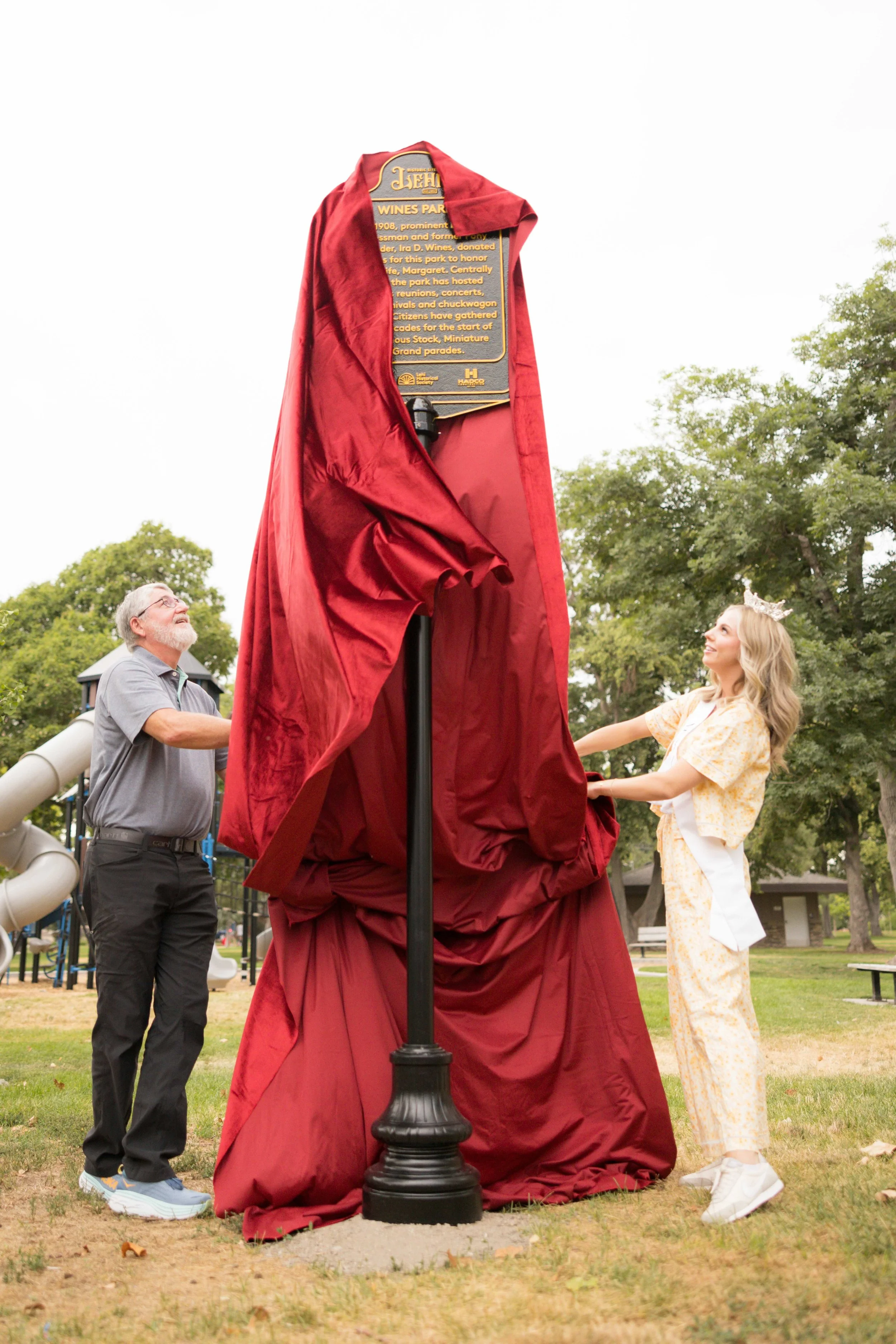
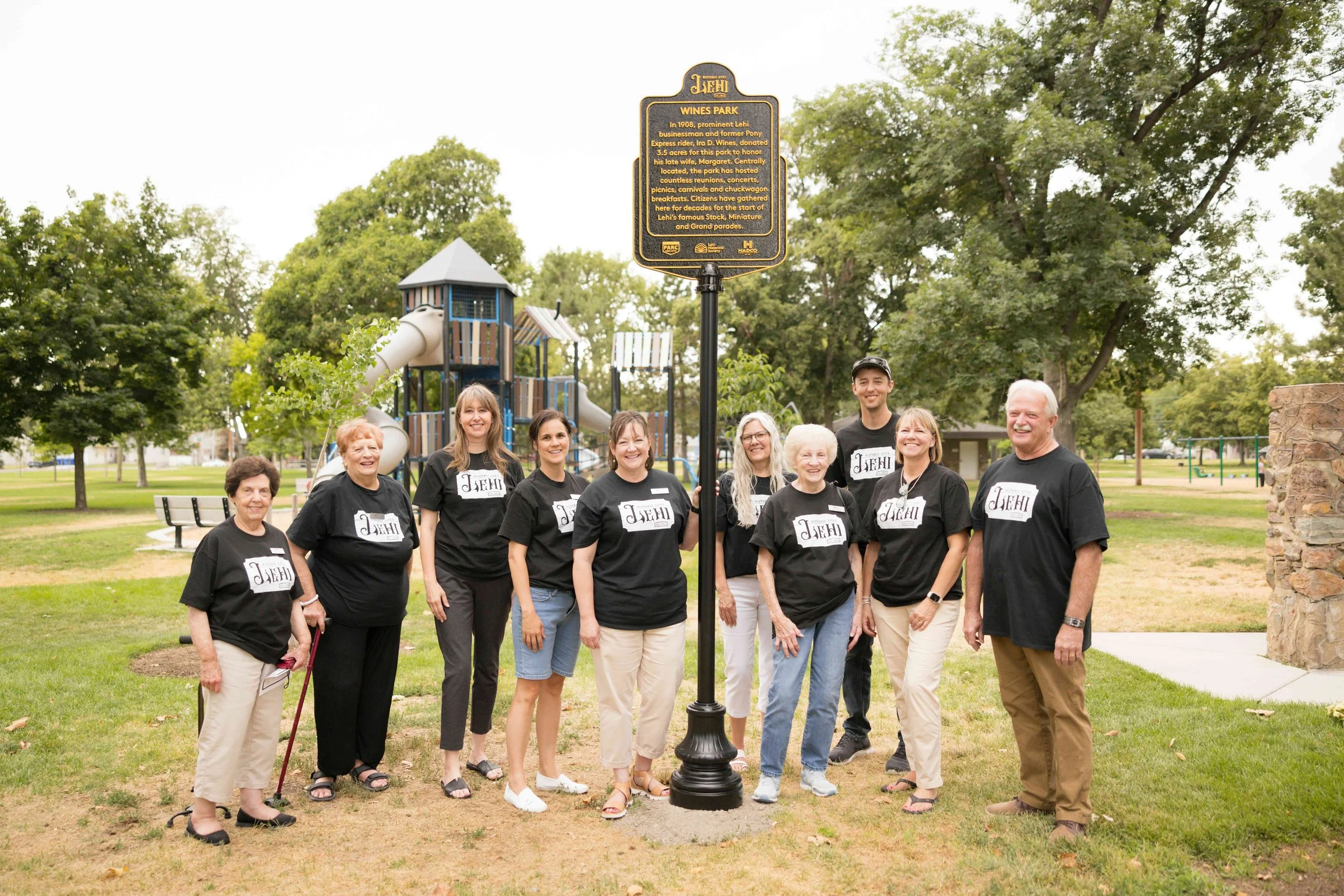
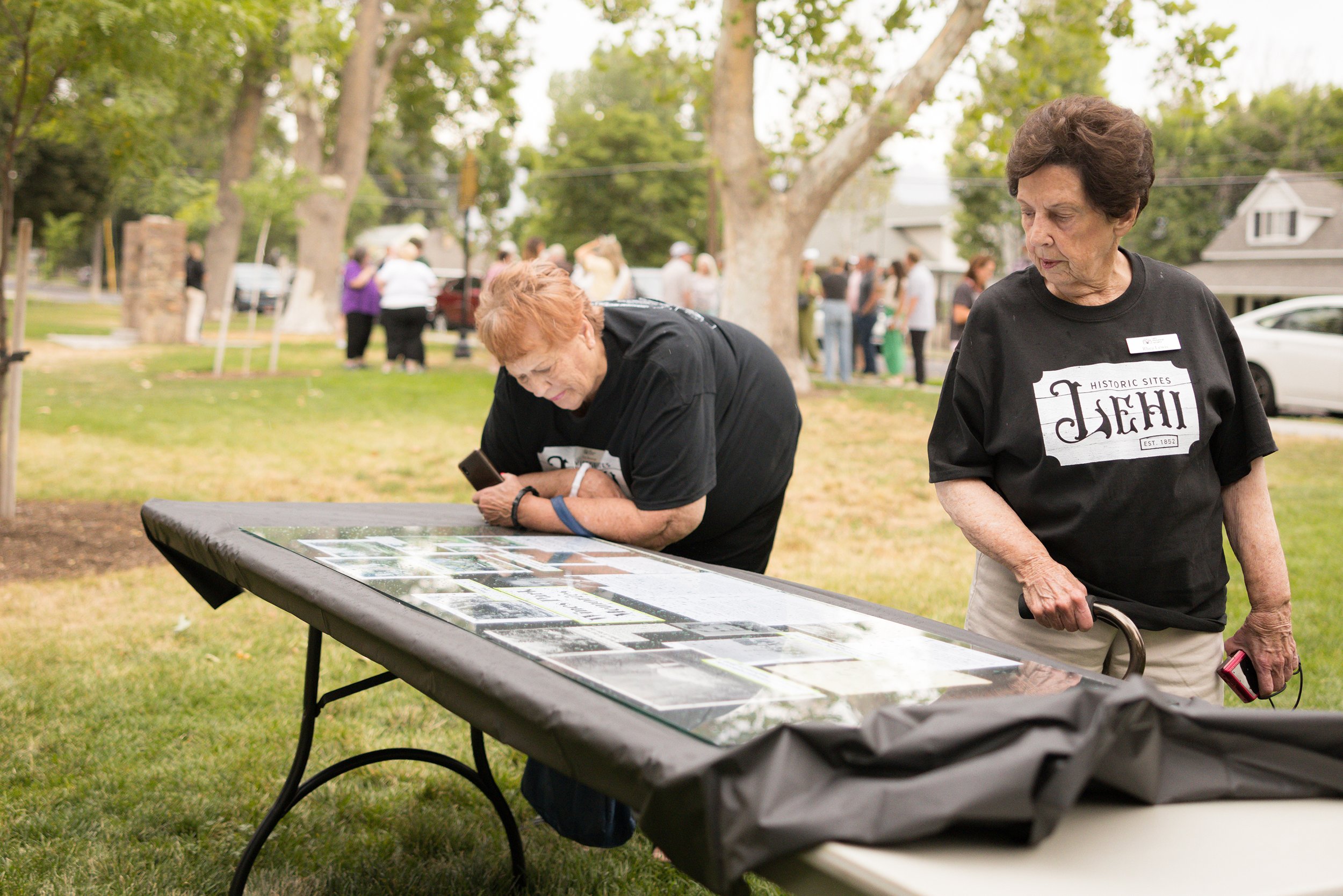
Margaret Wines Park Historical Marker Unveiling
July 18, 2024
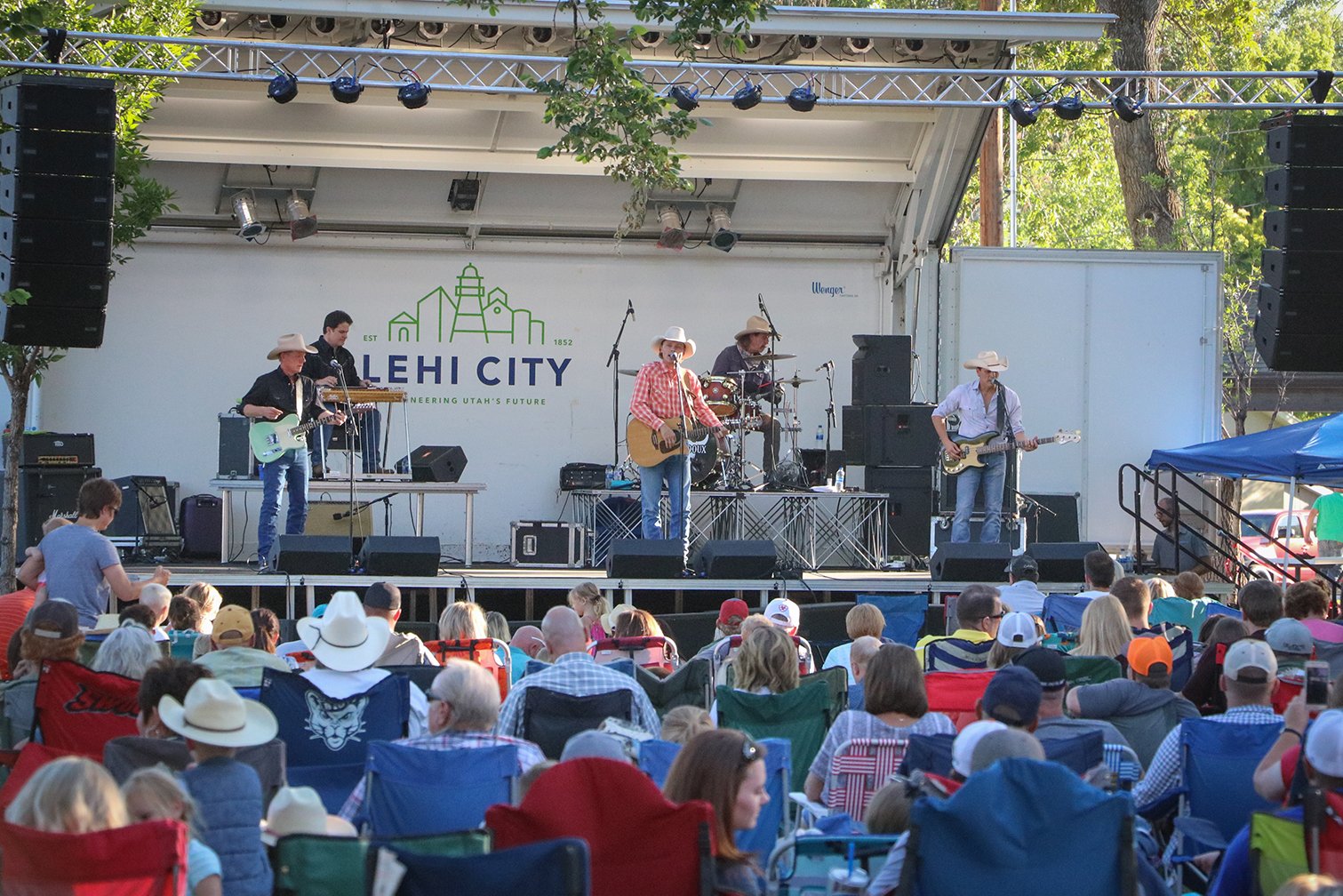
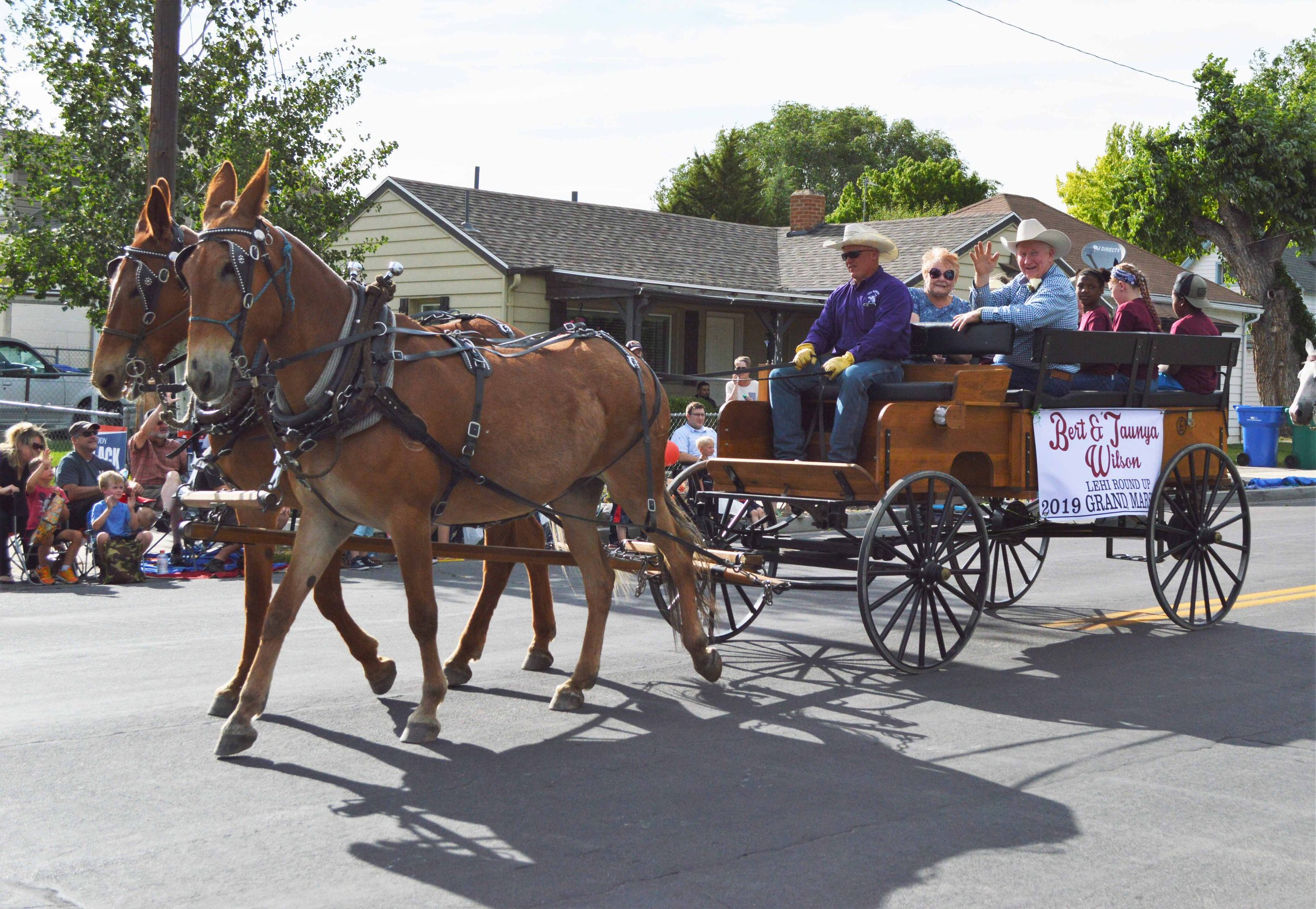
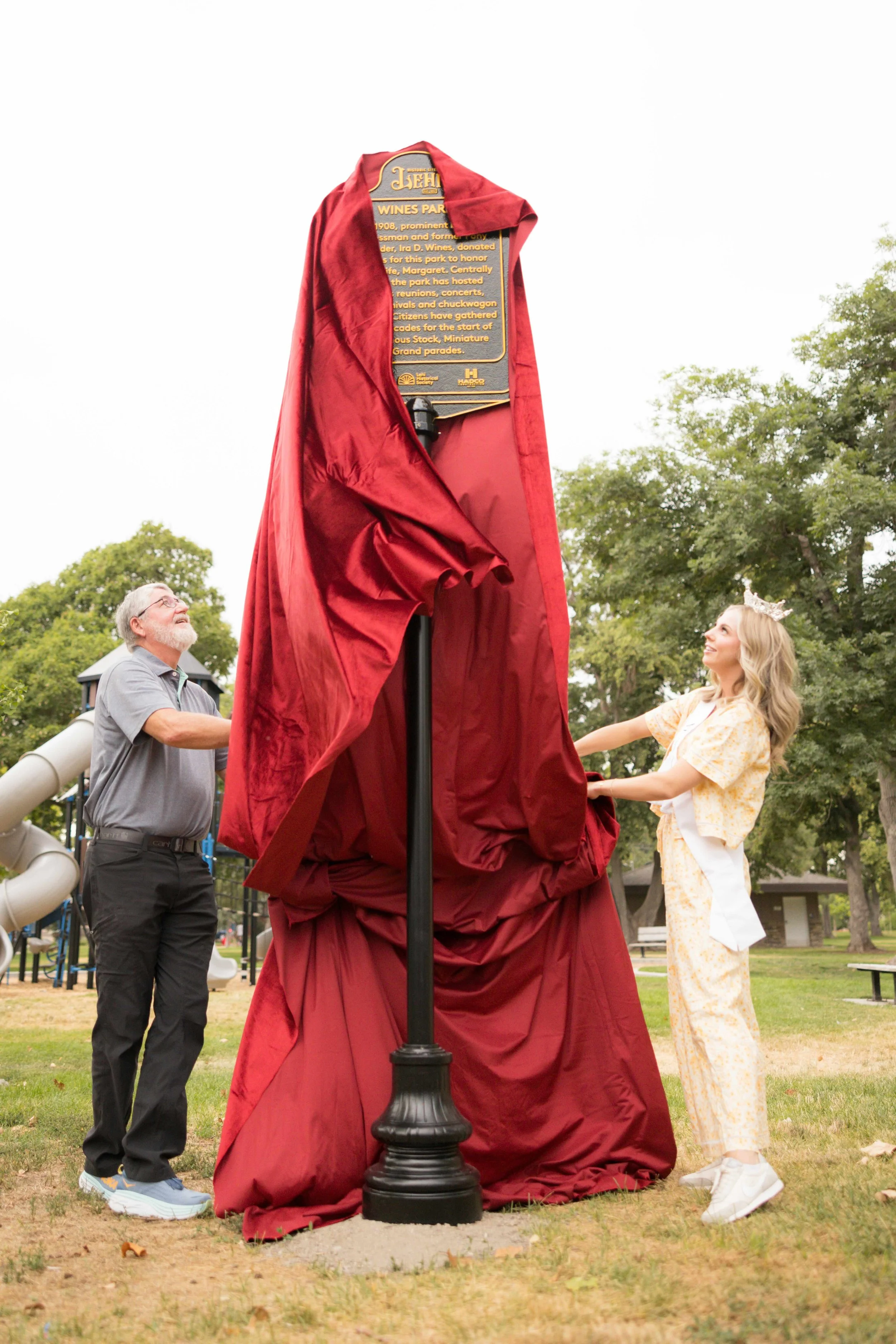
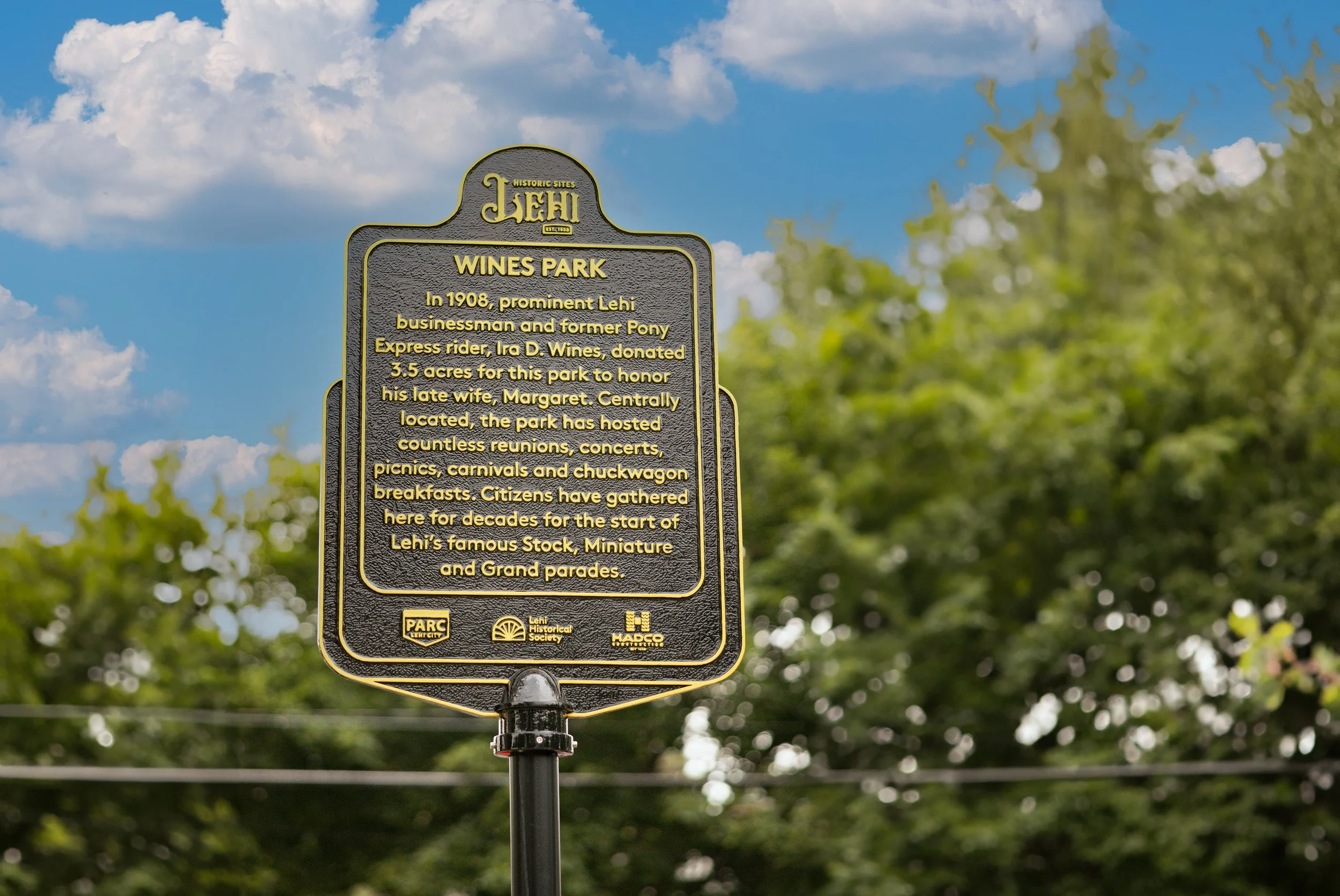
Fifty people gathered to honor Margaret Wines Park, Lehi’s oldest existing park and center of many Lehi celebrations. The park was created in 1908, when Ira D. Wines gifted the land to the city if it would maintain it as a park in honor of his late wife, Margaret. The park is Lehi’s oldest existing park and the center of many of Lehi’s celebrations.
City Councilwoman Michelle Stallings paid tribute to the many local groups and clubs that have funded trees, playground equipment, rose bushes, fireplaces, tables, concrete platforms and drinking fountains. “Even though this park began as a gift by one man,” she said, “it became a gift by many over the years.”
The marker is the second of the Lehi Historical Marker Program.
-
![]()
Unveiling of the Wines Park marker
-
![]()
Historical Society
-
![]()
Wines Park Historical unveiling event
-
![]()
Wines Park Historical Marker
100 East 600 North Lehi, Utah 84043
MARKER LOCATION