
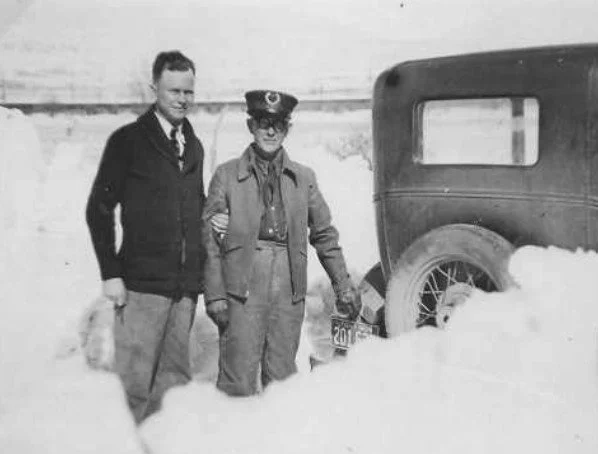
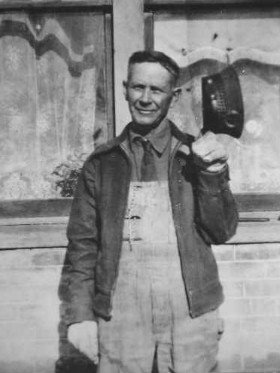
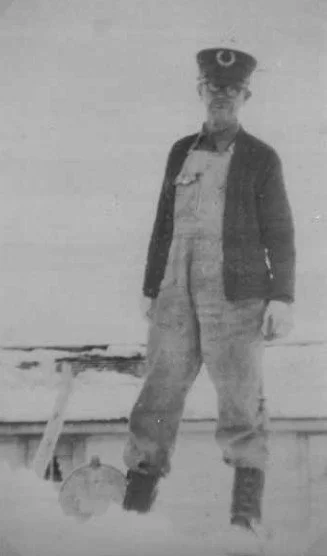
Postman William Hadfield
1907-1944
Address for marker?
William Hadfield’s story reflects the changes in communication and community in Utah. By contextualizing and situating Hadfield’s within the broader development of the postal service and rural life in the American West, we can understand how national currents and developments shaped Hadfield's life and career as a Postman. Hadfield's life coincides with major American developments, including increased federal infrastructure investment and the evolution of transportation technologies.
Neither Snow nor Dust nor Distance
William Hadfield stands among Lehi’s most significant community figures and mail carriers. He is remembered for his decades of service as a rural mail carrier and his leadership within the local church. Hadfield's life reflects the difficulties of rural life in Utah and the transformation of mail delivery and communication in the twentieth century.
Born on June 3, 1879, in Provo, Utah, Hadfield experienced significant challenges early in life. After losing his mother at age five, he experienced a difficult upbringing characterized by poverty and instability. At one point, the two other brothers stole canned food from an aunt, resulting in their aunt demanding their incarceration. The boys, only 12, 10, and 8, were saved through what Hadfield described as the
intervention of a kind old judge who wept upon learning of the boys' dire situation. They were kept in the courthouse until he was placed under the care of Thomas R. Jones in 1889. He describes this transition as the beginning of a new life.
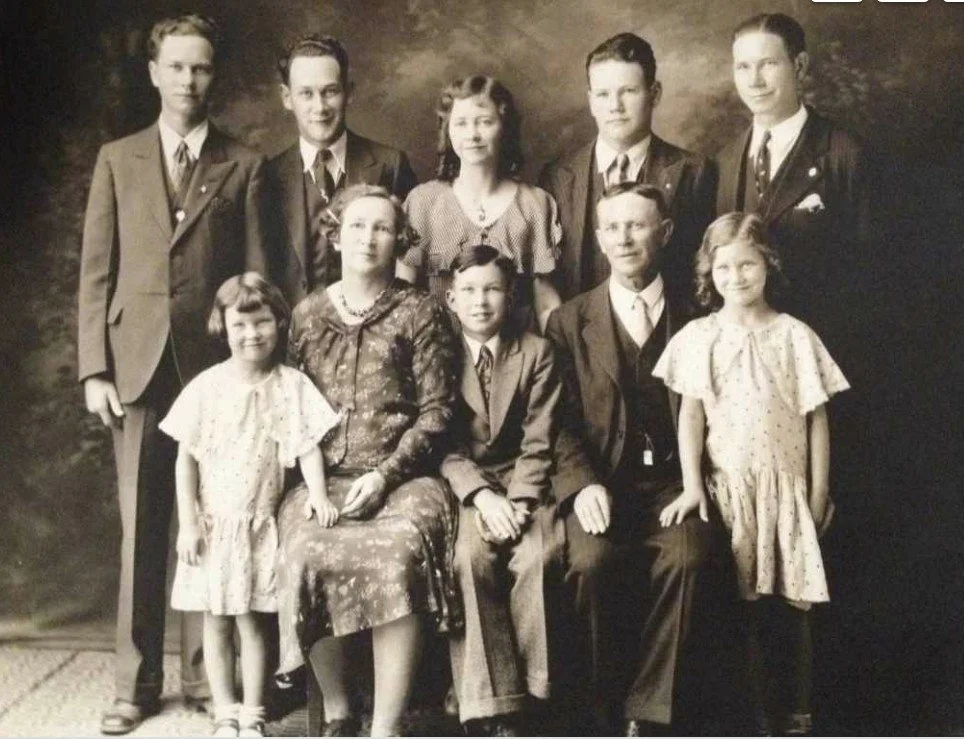
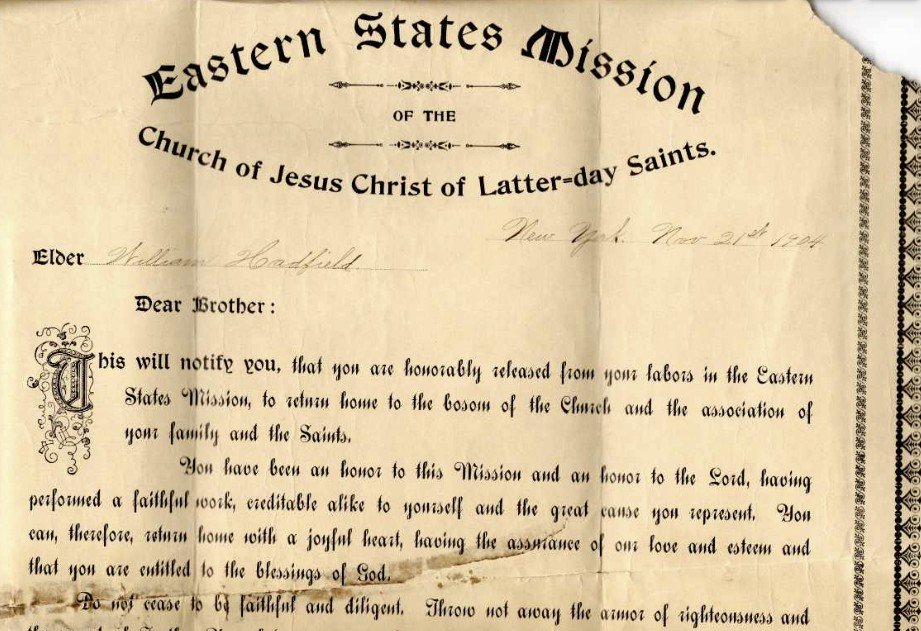
At the age of nine, Hadfield moved to Lehi, where he attended local schools and later studied at Brigham Young University. As a young adult, he served a two-year mission to New York from 1902 to 1904. When he returned to Lehi, Hadfield became deeply involved in church leadership, eventually serving as a counselor. He ultimately served as a bishop for over two decades. His religious service placed him at the center of community life. While his church service and work are extensive, Hadfield is mostly remembered for his decades as a rural mail carrier.
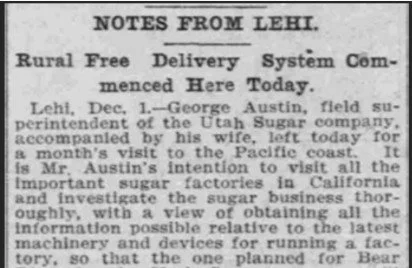
When mail delivery first started in Lehi, residents had to pick up their mail from Bishop David Evans’ home. Later, when a separate post office was constructed, residents could more easily access their mail, but farmers and those outside the city still faced significant difficulties. In 1902, the United States introduced Rural Free Delivery. This system was developed to deliver mail directly to residents living outside urban centers. This innovation transformed rural communities like Lehi, where farmers had previously been required to travel into town to collect their mail.
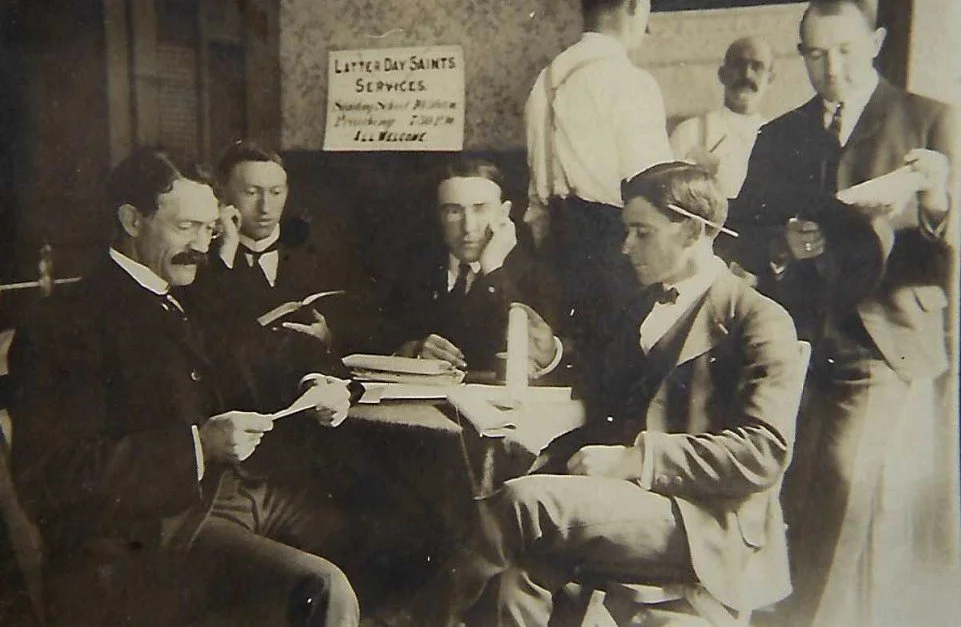
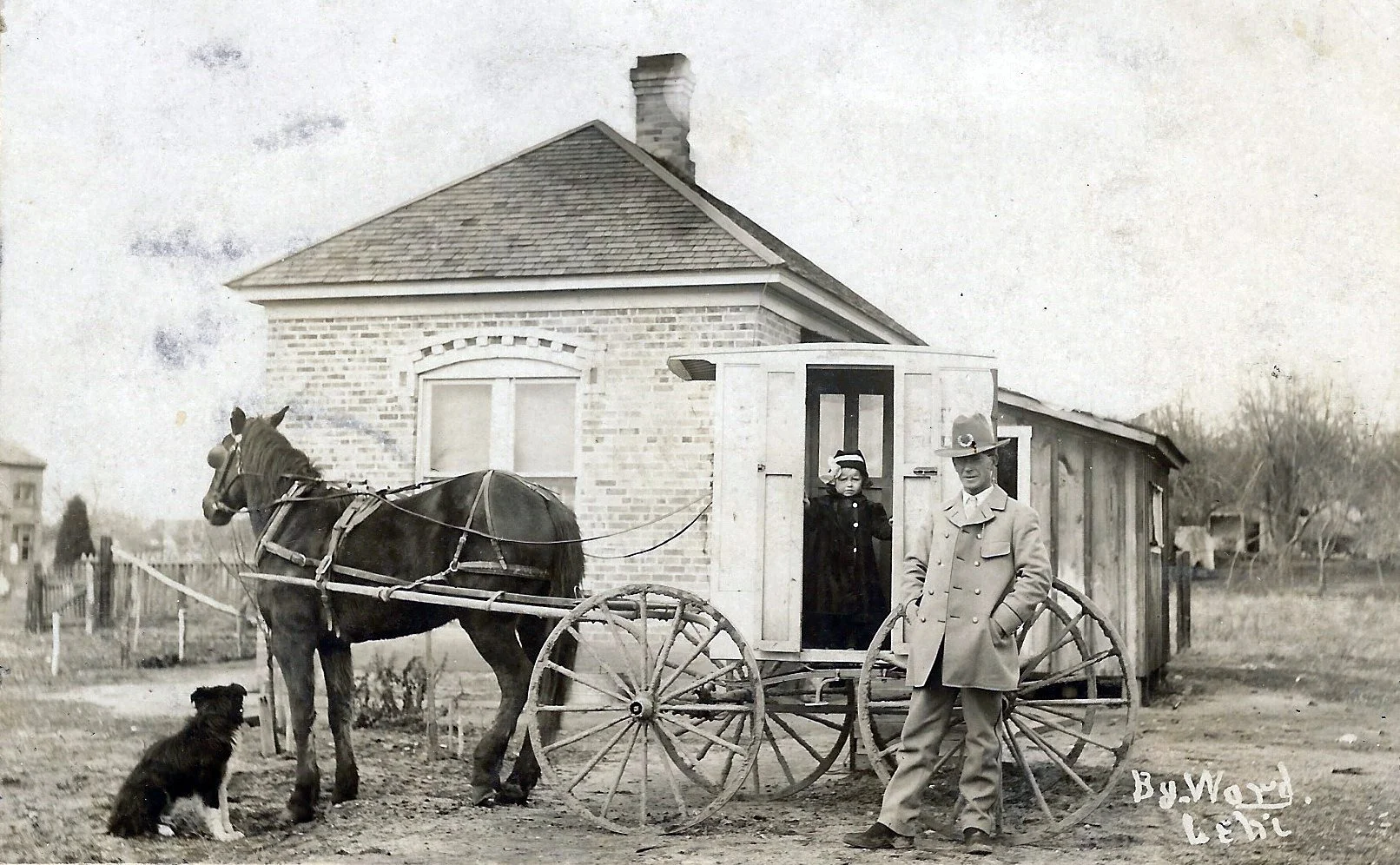
In 1907, Hadfield was one of 11 applicants selected as a rural mail carrier. Beginning his service on March 7 of that year, he quickly became responsible for delivering mail across town. Over time, his work strengthened communication in Lehi by helping connect farms, families, and businesses. Hadfield’s career also reflected broader technological change. He began delivering mail by horse and buggy, later transitioned to a closed mail cab, and eventually adopted early automobiles. In 1913, Hadfield attended the National Convention of Mail Carriers, where he was reportedly the only member of The Church of Jesus Christ of Latter-day Saints present. While details of his participation remain obscure and limited, he recalled experiencing some religious prejudice. Hadfield's deliveries ranged from routine mail to cherished Christmas gifts, and even live animals, such as turtles
shipped from California. In one instance, a community member named Betty Fowler recalled that, under strained circumstances, her husband, Don Fowler, had run away from home with their family. When he found work in a sugar factory in Montana, he saved enough to select gifts for each member of his family back home. That Christmas was hard for the family, as they could not afford gifts and could not manage to fulfill the kids' Christmas wishes. Then, just as they were preparing for bed at dusk on Christmas Eve, Mr. Hadfield arrived, bringing with him the gifts that Don Fowler had sent.
After more than 37 years of service, Hadfield retired in July 1944. By that time, he had witnessed significant changes in both transportation and communication, as rural mail delivery became a part of everyday life. His long career made him a familiar and trusted figure to many of Lehi's residents. Today, William Hadfield is remembered for his personal impact on the community. The stories preserved in local histories and newspapers reflect the relationships he built along his route, demonstrating how a humble mail carrier could become a link connecting a small town like Lehi.
Hadfield left a few voice recordings for his family where he sang songs from his youth that give us a unique insight into his personal life. Originally written between the 1910s and 20s, we can only imagine Hadfield humming his version of “I Had But 50 Cents” as he worked along his mail route.
The Life and Work of Postman Hadfield
-
![Bishop David Evan from Lehi Free Press]()
1853: Establishment of Mail Service in Lehi
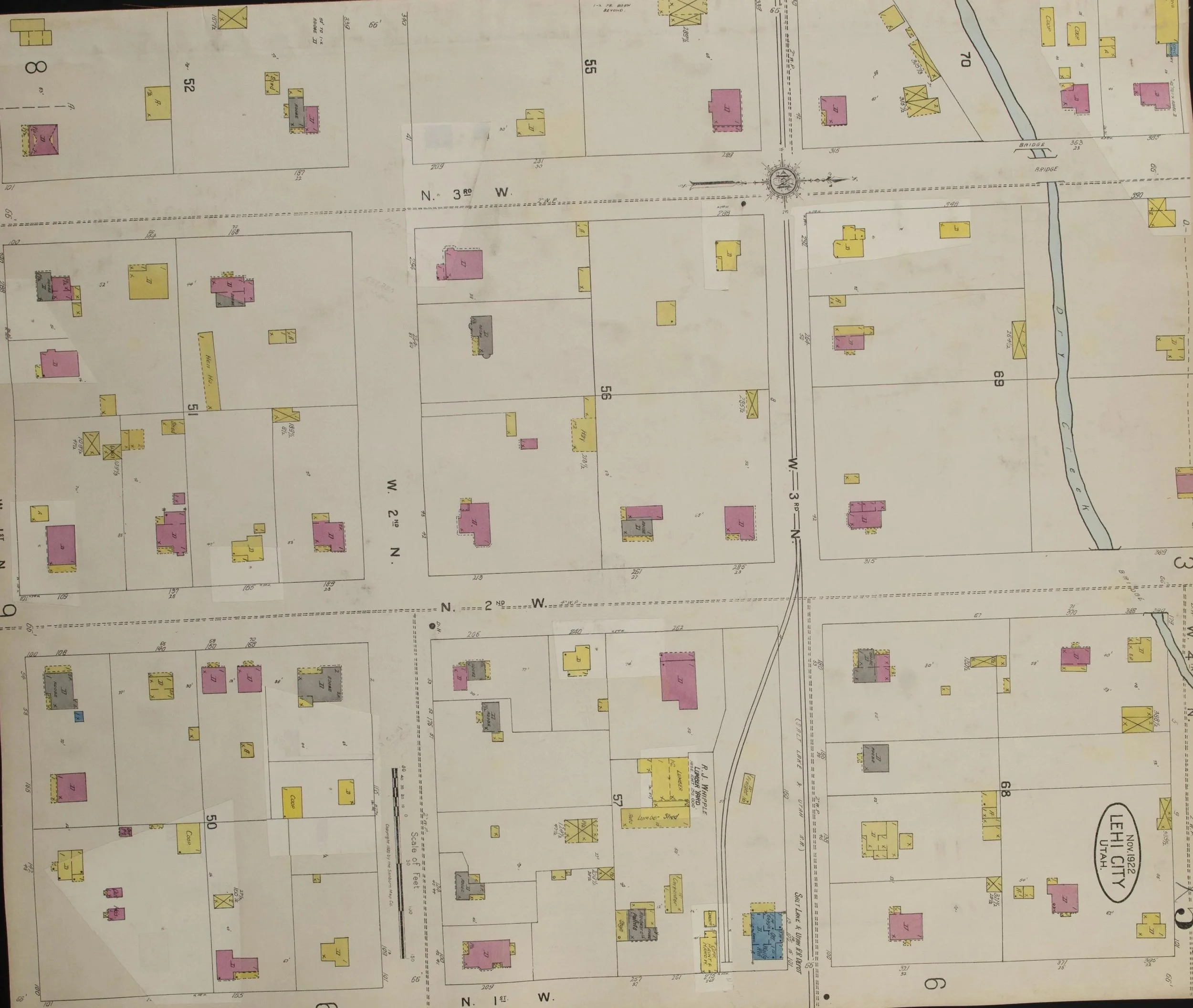
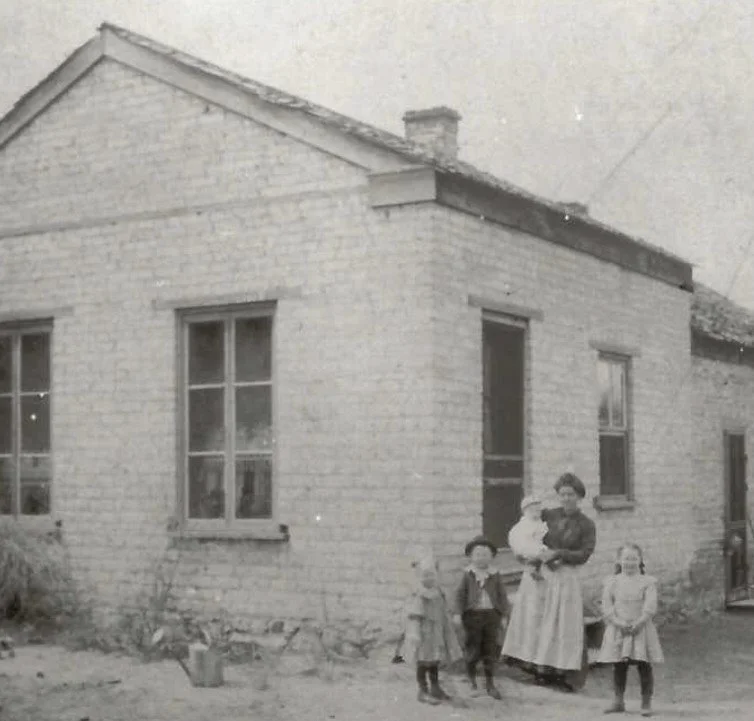
Mail service in Lehi began in 1853, when residents were required to pick up their letters from a small post office located inside Bishop David Evan’s home. A separate, dedicated building solely for mail services was not construction until 1966, nearly a century after Lehi’s founding. Until Rural Free Delivery was introduced in 1902, access to mail services remained difficult for farmers living outside the town center.
-
![Sam Hadfield's provo home from Family Search]()
1879-1888: Birth, Hardship, and Childhood Poverty
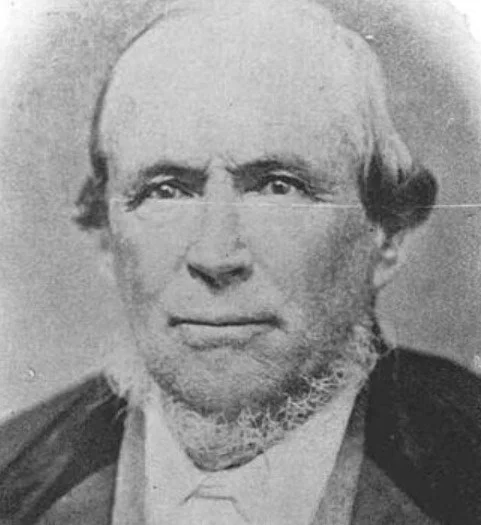
William Hadfield was born on June 3, 1879, in Provo, Utah, to Samuel hadfield and Alice Baker. Hadfield’s ealry life was one of hardship and instability. After his mother died when he was only five years old due to complications related to the birth of his younger brother Walter, his family struggled to adjust. A Later stepmother became mentally ill and was institutionalized, and in 1887, his grandmother, who was an important caretaker, died from a tragic and sudden head injury.
-
![Find caption and photo credit information]()
1902: Rural Free Delivery Introduced to Lehi
In 1902, the United States government introduced the Rural Free Delivery (RFD) system, revolutionizing mail service for rural communities. That same year, Lehi Postmaster S. W. Ross was instructed to establish a rural route. Andrew Fjeld became the first carrier, delivering mail to farmers across the region.10 Rural Free Delivery improved communication and brought a national social and economic life to rural areas.
-
![Find caption and photo credit information]()
1904: Religious Service and Life before Mail
Around the same time, Hadfield served a two-year mission to New York. After returning home in 1904, he became deeply involved in church leadership. He eventually served as a Sunday School Superintendent and later as a counselor. By 1906, Hadfield stopped working on TR. Jones' farm, and began working at the Lehi Sugar Factory.
-
![Find caption and photo credit information]()
1907: Becoming a Rural Mail Carrier
In January 1907, after the resignation of Joseph F. Russon, Hadfield applied for a position as a rural mail carrier. On March 7, 1907, the Deseret News announced Hadfield as the newly appointed rural mail carrier in Lehi. This came after an application process involving other Lehi men and a Civil Service test, in which Hadfield passed with a score of 93/100. Hadfield described his start as a mailman as rough, with him stuck in a deep mudhole for hours trying to free his buggy and horses. At this moment, Hadfield considered quitting until he learned that the previous carrier had taken a detour that allowed him to complete the route much more expeditiously. Once Hadfield learned this, he continued this job on a 22-and-a-half-mile route.
-
![Find caption and photo credit information]()
1913 -1944: Adapting to Life on the Route
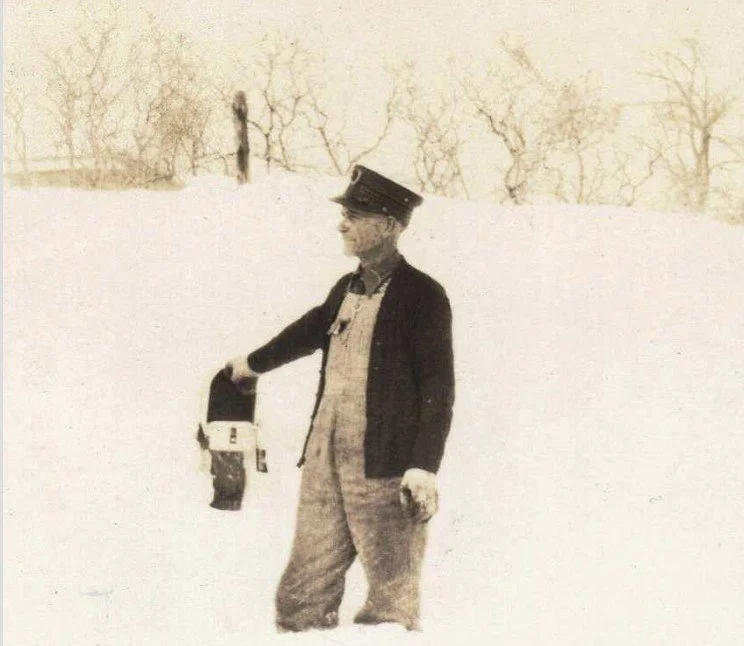
Throughout his career, Hadfield adapted to major technological changes in transportation. When he first started delivering mail, he was given no equipment allowance and began delivering with his own horse and buggy. He later upgraded to a red mail wagon and eventually transitioned to early automobiles. This did not end the challenges Hadfield faced. The 1913 winter, for instance, was so severe, forcing Hadfield to finish the route on hand sleighs.
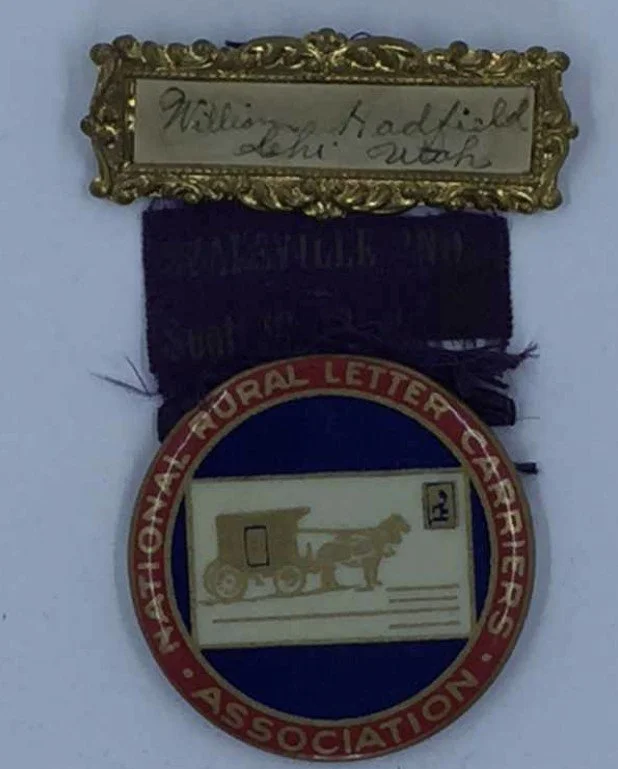
By 1910, mail delivery had advanced to the point that the first organization of Utah’s rural mail carriers was founded. Hadfield was a member of that organization and attended its meetings. In 1913, Hadfield attended the National Convention of Mail Carriers in Evansville, Indiana, where he was reportedly the only Mormon present. Although details of his attendance are unclear, he noted that some attendees ridiculed his religion, as some joked about polygamy. As we can see, Hadfield experienced multiple changes as mail delivery expanded, not just in Lehi but nationwide.
-
![Find caption and photo credit information]()
1944-1971: Life After Mail
In 1944, Postman William Hadfield retired from the U.S Postal Service after serving for 37 years. He served on church missions in several Northwestern states after he retired from October 1945 to April 1946. In the year 1950, his wife was diagnosed with cancer, and on April 17, 1954, a year after an operation at the LDS Hospital, she tragically passed away, ending a nearly 50-year-long marriage. Hadfield stayed in Utah for the remainder of his life and eventually became a Salt Lake Temple ordinance worker in July 1956. He developed an ulcer in April 1960 that eventually culminated in an honorable release from his service at the Temple and an amputation of his left leg. Hadfield kept treading on, just as he did before, as a mailman, this time, in a wheelchair with his son, Dale Hadfield, as his caretaker. He describes this period as difficult, but he entertained himself with games and his family's activities. William Hadfield eventually died in Dale’s home in October 1971.
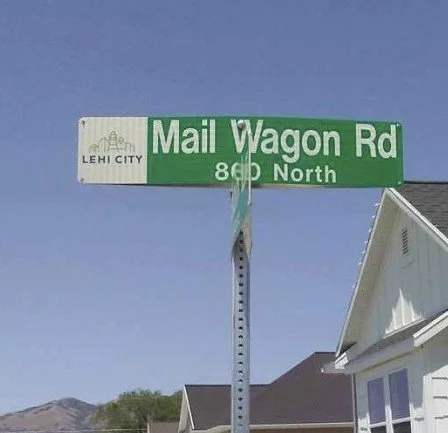
Mailed with Care
During the 19th century private shipping companies began accepting large parcel packages. As this started to take off, the Post Office started their own parcel post program in January 1913. This service addition was huge for rural communities across the United States. These hard to reach areas now had access to goods like never before! However, parents quickly picked up on a chance to “game the system” by sending their young kids to relatives through the mail.
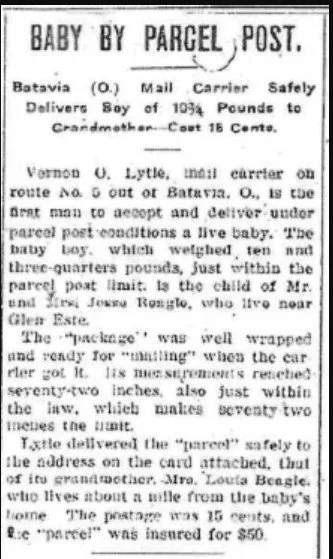
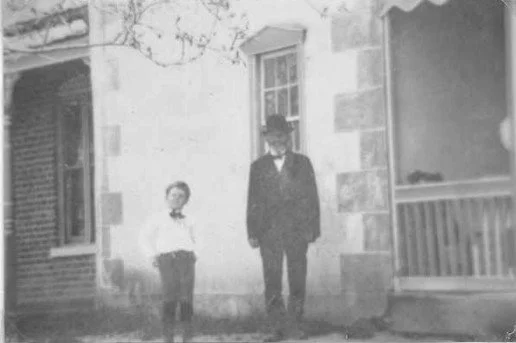
When Jesse and Mathilda Beagle saw the chance to send their 8-month-old to his grandmother for less than the price of a train ticket, 15 cents in postage and $50 to insure the precious package, the story quickly made headlines. A handful of similar stories can be found around the country and by June 1913 the postmaster general stated children could not be mailed.
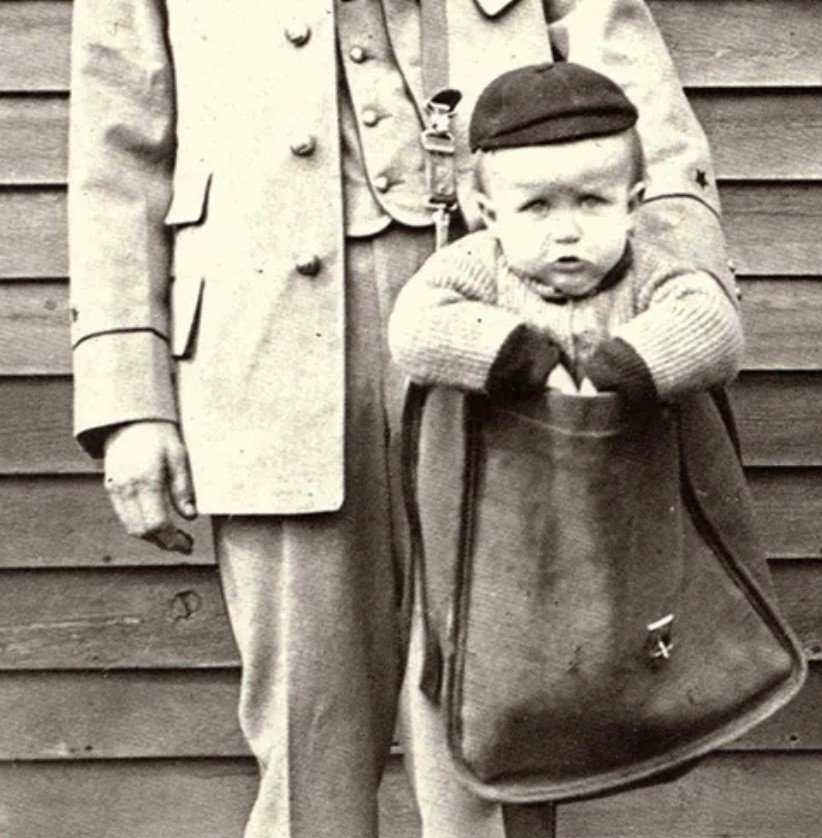
The postmaster’s announcement was ignored by some persistent parents and reports of kids hitching a ride with their local postman continued for almost a decade. Those wanting to keep using the postal service for their children typically had close relationships with carriers who were willing to bend the rules. It might be easy to accuse parents willing to mail their kids of risking their lives, but we might instead see the great trust families had in their mailmen. Specifically in rural communities, mailmen like William Hadfield may be the only person to see (or check-on) households. We don’t have any proof that William hosted any children in his satchel, but he would have certainly been aware of the practice!
Marker Location
Address
Marker Unveiling
Blurb about Marker Unveiling
-
![]()
Caption
-
![]()
Caption
-
![]()
Caption
-
![]()
Caption




Learn More
Investigate our online archive for more information on William Hadfield

Content Contributors
——, Lehi Historical Society
Julio Irungaray, University of Utah
Sam Ivie, University of Utah
Kasia May, University of Utah
Support our Mission
Purchase collector marker pins to show your Lehi spirit! Your purchase will support the Lehi Historical Marker Program and the Lehi Historical Society. There are currently 15 pins available in our gift shop
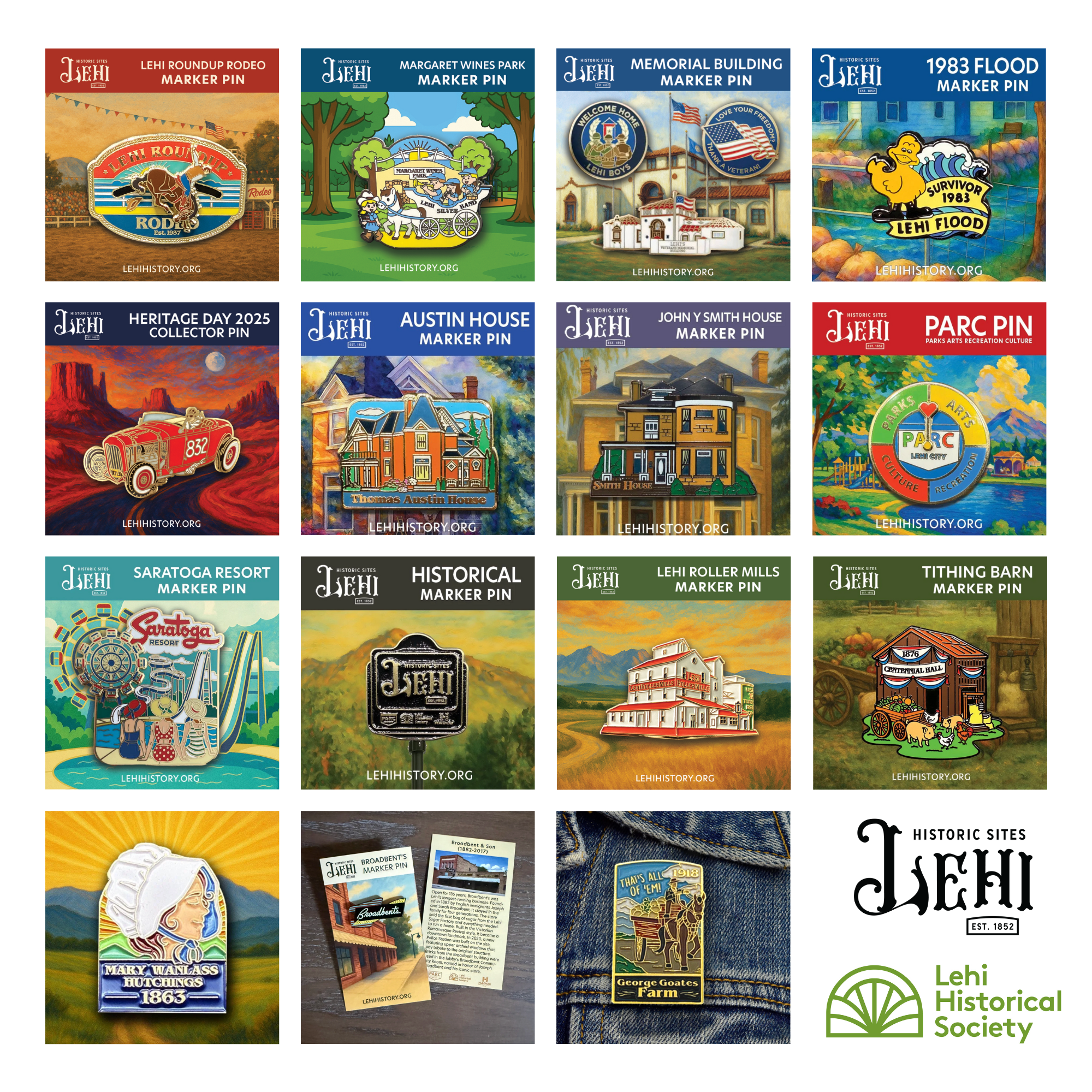
Celebrate Lehi’s history with our complete 15-pin collection. This special bundle includes one of each enamel pin from the Historical Marker Collection.
Pins included in the full set:
• Lehi Roundup Rodeo Marker Pin
• Margaret Wines Park Marker Pin
• Memorial Building Marker Pin
• 1983 Flood Marker Pin
• Heritage Day 2025 Collector Pin
• Austin House Marker Pin
• John Y Smith House Marker Pin
• PARC Pin
• Saratoga Resort Marker Pin
• Historical Marker Pin
• Lehi Roller Mills Marker Pin
• Tithing Barn Marker Pin
• Mary Wanlass Hutchings 1863 Pin
• Broadbent’s Marker Pin
• George Goates Farm Marker Pin
Each pin reflects a real story from Lehi’s past. Landmarks, founders, the rodeo, community legends, floods, and the places that shaped our city. This full set brings together every marker design in one place. It is perfect for collectors, teachers, longtime Lehi families, newcomers wanting to learn the stories behind our city, or anyone looking for a meaningful gift that supports local history.
Take home the complete collection and own 15 pieces of Lehi’s story.

Celebrate one of Utah’s most iconic landmarks with this beautifully crafted Historical Marker collector pin. Featuring the historic Lehi Roller Mills in striking detail, this enamel pin captures the distinctive architecture and nostalgic charm of the century-old mill, known for its role in Footloose and its deep roots in Lehi’s agricultural heritage.
Premium soft enamel with gold-toned metal
Accurate architectural rendering of the Roller Mills
Measures 2 in wide
Double-post backing with secure rubber covers for added stability
Perfect for collectors, history lovers, and proud Lehi locals
A timeless keepsake honoring the heart of Lehi’s past.
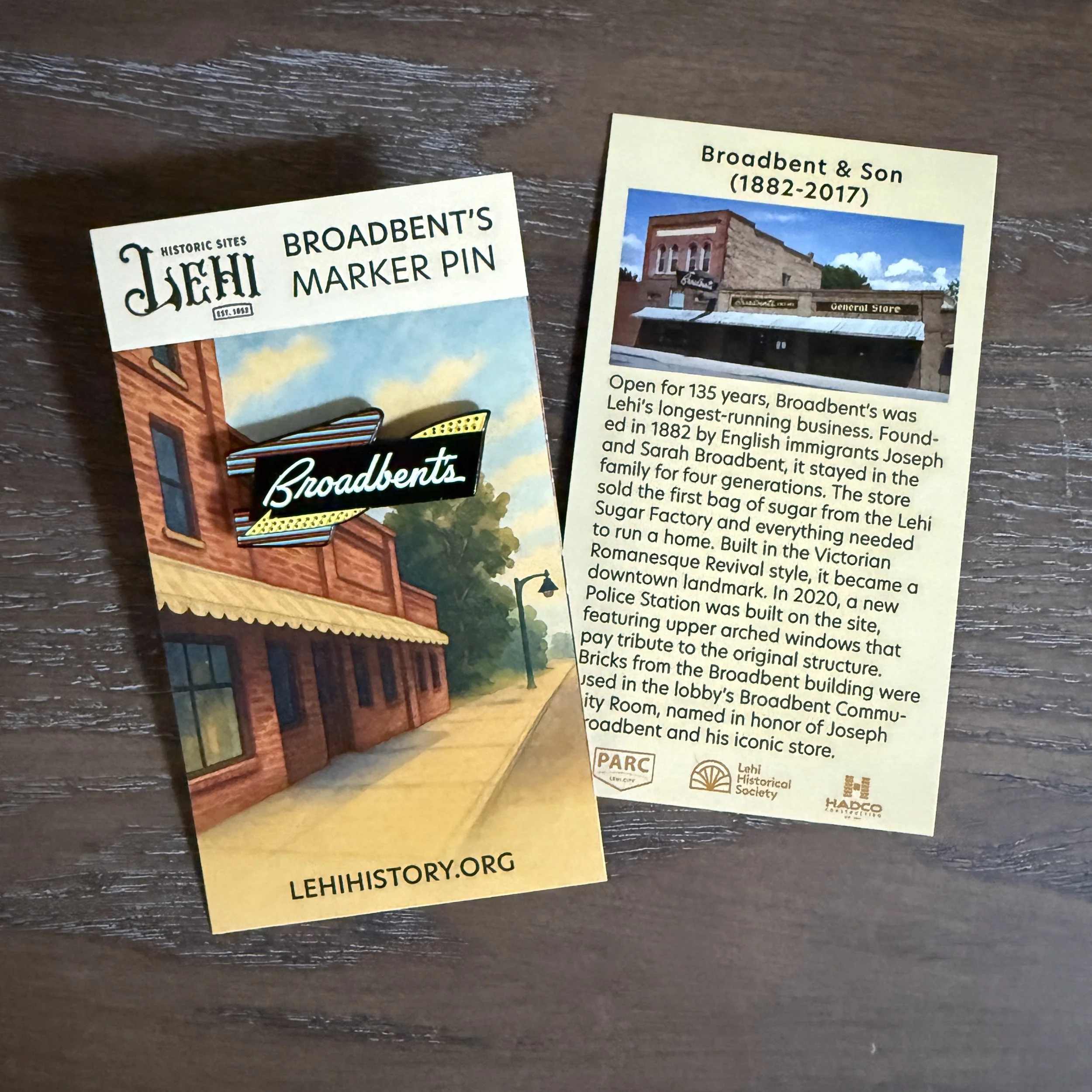
Celebrate a Lehi icon with this Historical Marker collector pin honoring Broadbent’s Store, the longest-running business in Lehi’s history and a cornerstone of the community for 135 years.
Soft enamel with black dyed metal plating
Features the vintage neon Broadbent’s sign installed in 1954
Measures 1.25 inches in length
Single-post backing with secure rubber cover
Perfect for collectors, history lovers, and proud Lehi locals
Founded in 1882 by English immigrants Joseph and Sarah Broadbent, the store was passed down through four generations and became known for offering everything from dry goods to fine fabrics. It sold the first bag of sugar produced by the Lehi Sugar Factory and served as a trusted hub for generations of families. The iconic neon sign, featured in this pin, hung proudly from 1954 until the store’s closing in 2017. Today, the arched windows of the Lehi Police Department pay tribute to the building that once stood in its place.
A nostalgic keepsake celebrating a legacy of service, family, and small-town pride.